
Table of Contents
Imagine pouring $50,000 into a highly targeted ad campaign. Your audience targeting is dialed in, your ad copy is persuasive, and your click-through rates are breaking industry records. But when thousands of users click the link, your landing page takes 6 seconds to load, the mobile layout is cluttered, and the lead form fails to submit. The result? You just paid thousands of dollars for bounced traffic. In today’s hyper-competitive digital ecosystem, marketing is not just about driving traffic; it is about converting that traffic into revenue. This is where the intersection of precise Performance Marketing and high-speed, custom Web Design & Development becomes the ultimate deciding factor between massive Return on Ad Spend (ROAS) and a catastrophic budget drain. Performance marketing empowers brands to pay only for measurable results clicks, leads, or sales. However, those results rely entirely on the technical stability, speed, and user experience of your digital platforms. In this comprehensive guide, we break down everything you need to know about performance marketing in 2026. From mastering the right KPIs and channels to understanding why a flawless website infrastructure is mandatory for scaling your campaigns.
What is Performance Marketing?
Performance marketing is a comprehensive, data-driven digital advertising strategy where businesses pay marketing platforms or agencies only when a specific, measurable action occurs. These actions include clicks, lead generations, or completed sales. Unlike traditional advertising, performance marketing offers real-time ROI tracking, allowing brands to optimize ad spend efficiently and scale profitable campaigns dynamically.
How Performance Marketing Works
Performance marketing operates on a clear, data-driven ecosystem involving four primary entities. Understanding this flow is crucial to mastering the strategy. 1. The Advertiser (Brand/Retailer): The company looking to sell products, generate B2B leads, or increase application installations. 2. The Publisher (Platform/Affiliate): The entity displaying the advertisements. This includes search engines (Google), social networks (Meta, LinkedIn), niche blogs, or influencers. 3. The Tracking Network/Software: The technology layer that connects advertisers and publishers. It tracks clicks, attributes conversions, and manages the payout (e.g., Google Analytics 4, Meta Conversions API, Impact.com). 4. The Agency / Strategic Partner: The digital marketing experts managing the campaign, tweaking bids, and running A/B tests to ensure maximum profitability.
The Workflow in Action: Let’s say an advertiser wants to acquire free trial signups for their new SaaS product. They place a Cost Per Acquisition (CPA) bid on Google Ads. When a user searches for a relevant keyword, the ad appears. If the user clicks and completes the signup form, a tracking pixel fires. The advertiser then pays Google for that specific, completed conversion.
Why Performance Marketing Matters
In traditional marketing formats such as billboards, magazine spreads, or television commercials you pay strictly for exposure. You spend the budget upfront and hope it translates into foot traffic or sales. It is notoriously difficult to measure. Performance marketing flips this model, providing immense value to modern businesses:
- Predictable Scaling: Marketing becomes a math equation. If data proves that spending $1 generates $4 in gross profit (a 4:1 ROAS), you can confidently scale your daily budget without fear of wasting money.
- Total Transparency: Every dollar spent is tracked. You can trace a sale back to the exact search term the user typed, the specific image they clicked, and the time of day they converted.
- Risk Mitigation: You do not pay for empty impressions or low-intent viewers. If an advertisement fails to generate your target action, your financial risk is tightly controlled.
- Agility: Campaigns can be paused, pivoted, or scaled up in minutes based on real-time data feeds.
Types of Performance Marketing
Performance marketing is an umbrella term encompassing various payment structures. Choosing the right one depends heavily on your business model and funnel stage.
| Pricing Model | How It Works | Best Used For |
|---|---|---|
| Cost Per Click (CPC) | The advertiser pays a fee each time a user clicks the ad. | Driving high-intent, targeted traffic directly to a specific landing page or product. |
| Cost Per Mille (CPM) | The advertiser pays per 1,000 views (impressions) of the advertisement. | Retargeting past website visitors or building initial brand awareness. |
| Cost Per Lead (CPL) | The advertiser pays when a user successfully submits their contact information. | B2B service providers, SaaS companies, and high-ticket service industries. |
| Cost Per Acquisition (CPA) | The advertiser pays only when a specific, high-value action is completed (like a software purchase). | Optimizing campaigns for the ultimate bottom-line revenue goal. |
| Cost Per Sales (CPS) | The advertiser pays a percentage or flat fee upon a verified, completed sale. | E-commerce stores and affiliate marketing networks. |
Popular Performance Marketing Channels
Executing a profitable strategy requires a diversified approach across highly measurable channels.
1. Search Engine Marketing (SEM)
Platforms like Google Ads and Microsoft Ads capture users at the exact moment of high commercial intent. When someone searches for "best enterprise CRM software," they are actively looking to buy. SEM ensures your brand appears at the top of that search.
2. Social Media Advertising
Social platforms primarily Meta (Facebook and Instagram), LinkedIn, and TikTok offer unparalleled audience targeting. You can target users based on precise demographics, job titles, interests, and past behaviors. Integrating a dedicated Social Media Marketing strategy is essential for capturing users in the 'Consideration' stage.
3. Native Advertising
Native ads seamlessly blend into the editorial content of a publisher's website (often powered by networks like Taboola or Outbrain). Because they do not look like traditional banner ads, they offer a less intrusive user experience and often yield higher engagement rates for long-form content.
4. Affiliate Marketing
This involves partnering with influencers, industry bloggers, or other businesses who promote your product to their audience in exchange for a commission on the sales they generate. It is a pure Cost Per Sale model.
5. Programmatic Display
Programmatic advertising involves automated, real-time bidding on digital display inventory across millions of websites. Algorithms decide which ad to show to which user in milliseconds, optimizing for the highest probability of conversion.
Benefits of Performance Marketing
- Unmatched ROI Tracking: Businesses can track campaigns down to the decimal point, proving the exact value of their marketing department.
- Audience Insights: Continuous testing reveals exactly what messaging, colors, layouts, and offers resonate best with your target market.
- Budget Flexibility: Whether you have $500 or $50,000 to spend, you can participate and gather meaningful data.
- Alignment with Revenue: By paying for results, marketing expenses align directly with the company's revenue generation, making it easier to secure budget approvals from stakeholders.
Challenges of Performance Marketing
While powerful, this methodology is not without its hurdles.
- Rising Acquisition Costs: As major ad platforms become more crowded, Cost Per Click (CPC) and Cost Per Acquisition (CPA) naturally increase. Businesses must work harder to optimize their funnels to maintain profitability.
- Privacy Regulations: The rollout of GDPR, CCPA, and Apple’s iOS privacy updates have made tracking user behavior across the web increasingly difficult. Marketers now require advanced server-side setups to capture data accurately.
- Ad Fraud: Click farms and bot traffic can artificially inflate clicks, draining budgets without providing real human intent.
- Technical Bottlenecks: A brilliant, expensive ad campaign will fail completely if the landing page experiences downtime or slow load speeds.
Performance Marketing KPIs You Must Track
To ensure your campaigns are generating real business value, you must religiously monitor these Key Performance Indicators (KPIs):
| KPI | Definition | Why It Matters |
|---|---|---|
| Click-Through Rate (CTR) | The percentage of people who clicked your ad after seeing it. | Indicates how relevant your ad copy and creative are to the targeted audience. |
| Conversion Rate (CR) | The percentage of visitors who complete the desired action after clicking. | Measures landing page effectiveness, UI/UX, and offer strength. |
| Cost Per Acquisition (CPA) | The total cost to acquire one paying customer or qualified lead. | Determines the baseline profitability of your specific campaign. |
| Return on Ad Spend (ROAS) | The gross revenue generated divided by the total ad spend. | The ultimate metric of marketing efficiency (e.g., $5 revenue per $1 spent = 500% ROAS). |
| Customer Lifetime Value (LTV) | The total net profit expected from a customer over their relationship with your brand. | Helps justify a higher initial CPA if the customer buys repeatedly over years. |
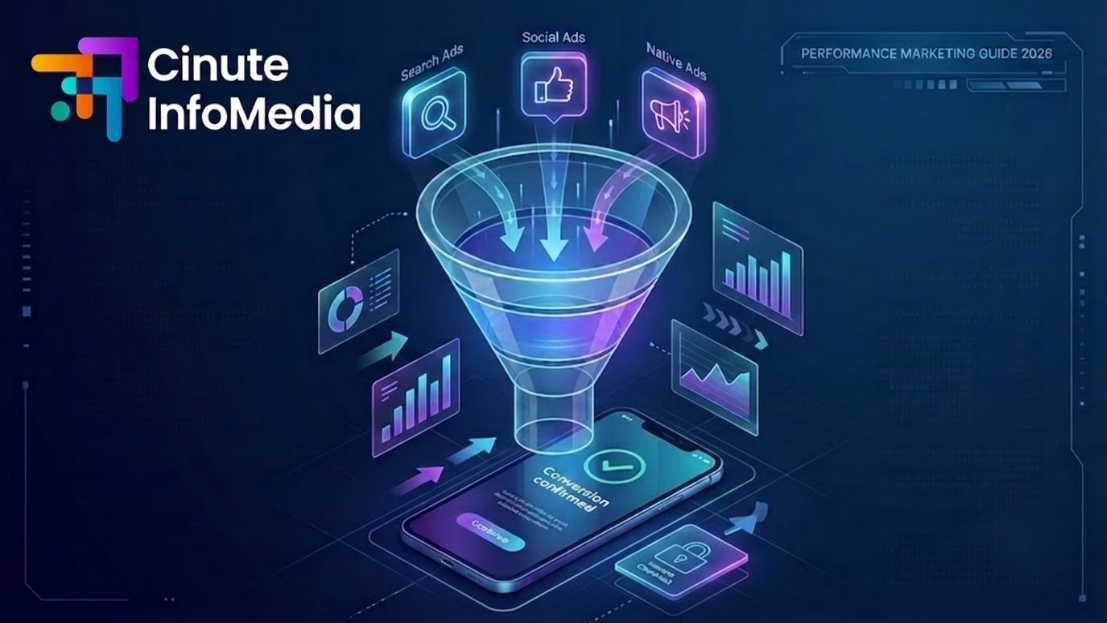
The Performance Marketing Funnel
A successful, scalable strategy requires aligning your ad types and bidding strategies with the user's specific stage in the buying journey:
1. Top of Funnel (Awareness)
At this stage, users do not know your brand.
- Channels: Social Media Video Views, Programmatic Display, Native Articles.
- Goal: Impressions, Clicks, Brand Recall.
- Metrics: CPM, CTR, Cost Per View (CPV).
2. Middle of Funnel (Consideration)
Users have engaged with your brand and are evaluating their options.
- Channels: Retargeting Ads (Meta/Google), Non-branded Search Campaigns.
- Goal: Email signups, webinar registrations, ebook downloads.
- Metrics: Cost Per Lead (CPL), Landing Page Conversion Rate.
3. Bottom of Funnel (Conversion)
Users are ready to purchase.
- Channels: Branded Search Campaigns, Google Shopping, Aggressive Retargeting with discounts.
- Goal: Sales, Free Trial Signups, Booked Consultations.
- Metrics: CPA, ROAS, CPS.
4. Post-Funnel (Retention & Expansion)
Maximizing the value of acquired users.
- Channels: Email marketing flows, SMS marketing, loyalty-based ad retargeting.
- Goal: Repeat purchases, upsells, referrals.
- Metrics: LTV, Retention Rate.
Best Tools for Performance Marketers
To execute high-level strategies in 2026, agencies and brands rely on sophisticated tech stacks:
- Analytics & Tracking: Google Analytics 4 (GA4), Mixpanel, Adobe Analytics.
- Ad Platform Management: Google Ads Editor, Meta Ads Manager, LinkedIn Campaign Manager.
- Attribution Modeling: Triple Whale, Northbeam, HubSpot.
- Conversion Rate Optimization (CRO): Hotjar, Crazy Egg, VWO, Optimizely.
- Automation: To connect these systems without manual data entry, the integration of AI Workflows & Automations is mandatory, bridging CRMs directly with ad platforms.
Common Mistakes to Avoid
1. Ignoring Landing Page Speed: A mere 1-second delay in page load time can result in a massive reduction in conversions.
2. "Set It and Forget It": Launching a campaign and not checking it for weeks. Performance marketing requires daily optimization, A/B testing of creatives, and bid adjustments.
3. Siloed Data Systems: Failing to integrate your sales CRM with your ad platforms. This leads algorithms to optimize for cheap, low-quality leads rather than actual paying customers.
4. Neglecting Mobile UX: With over 60% of all web traffic occurring on mobile devices, poor mobile responsiveness will destroy your mobile ad ROI. Buttons must be clickable, text must be readable without zooming, and checkout must be frictionless.
Best Practices for 2026
To stay ahead of the competition, adopt these modern strategies:
Implement Server-Side Tracking (CAPI): With third-party browser cookies becoming obsolete, moving tracking to the server side (like Meta's Conversions API) ensures data accuracy and feeds platform algorithms the correct signals.
Leverage AI Bidding but Control the Inputs: Trust platform machine learning algorithms (such as Google's Performance Max), but ensure you feed them high-quality, zero-party data to guide their learning phase.
Align Marketing with Web Development: Never launch a major traffic campaign without ensuring your servers can handle the load and your UI is technically flawless.
Creative Diversification: Use a broad mix of User-Generated Content (UGC), high-production video, and static graphic designs to combat rapidly increasing ad fatigue.
Performance Marketing Trends in 2026
1. AI-Generated Creatives & Copy at Scale
AI tools are no longer a novelty; they are standard. Platforms can now instantly iterate thousands of ad copy and visual variations, identifying the highest-converting combinations in a fraction of the time it takes a human.
2. Predictive Analytics Driving Bids
Machine learning models are now used to predict a user's Lifetime Value (LTV) before they even make their first purchase based on behavioral signals. Bidding algorithms adjust in real-time, bidding higher for users predicted to become high-value clients.
3. The Rise of Zero-Click Searches & AI Engines
Optimizing content to convert users directly within AI interfaces (like ChatGPT or Google's AI Overviews) is becoming essential. To adapt, brands must understand how to get cited by ChatGPT and AI Search, ensuring their content captures user intent before they even reach a traditional search engine results page.
4. Hyper-Focus on Technical SEO & Core Web Vitals
Search engines and ad platforms are severely penalizing slow, clunky websites. Combining your paid ad strategy with expert Organic Growth & SEO ensures your Core Web Vitals remain in the green, organically lowering your ad CPCs over time.
Performance Marketing vs. Digital Marketing
While these terms are frequently used interchangeably, they are distinct.
Digital Marketing is the broad, encompassing term for any online marketing effort. It includes organic social media posting, brand identity building, public relations, and content creation. The goals are often qualitative (improving brand sentiment, increasing share of voice).
Performance Marketing is a strict subset of digital marketing where the advertiser only pays for measurable, predefined results. It is highly quantitative. All performance marketing is digital marketing, but not all digital marketing is performance marketing.
Performance Marketing vs. Brand Marketing
Understanding the balance between the two is vital for long-term corporate growth.
| Feature | Performance Marketing | Brand Marketing |
|---|---|---|
| Primary Goal | Drive Immediate Action (Sales, Lead Generation) | Build Long-term Awareness, Trust, and Loyalty |
| Core Metrics | CPA, ROAS, CTR, CR, CPL | Reach, Share of Voice, Brand Sentiment |
| Timeline for Results | Short-term, immediate data feedback | Long-term, compounding results over years |
| Creative Focus | Call-to-action heavy, direct response, urgency | Story-driven, emotional connection, aesthetic focus |
Pro Tip: The most successful businesses utilize strong Brand Identity Design alongside their performance campaigns. A trusted, recognized brand naturally lowers the Cost Per Acquisition of its performance marketing over time.
Case Study: The Cost of Ignoring Web Performance
The Scenario: A fast-growing FinTech company launched a $150,000 LinkedIn and Google Ads campaign targeting enterprise executives to book product demos.
The Marketing Execution: The campaign strategy was brilliant. The CTR was 3x the industry average, and the initial Cost Per Click was incredibly efficient.
The Technical Disaster: The marketing team did not communicate with the web development team. The landing page featured an un-optimized, heavy video background and a complex lead-capture form. On mobile devices, the form’s "Submit" button was obscured by a chat widget, and the page took 8 seconds to load on 4G networks.
The Result: The campaign drove 30,000 highly qualified clicks. However, due to the slow load times and mobile UI blockage, the bounce rate was 88%, and the form completion rate was near zero. The company burned through their ad budget rapidly, generating a negative ROI. This highlights an unavoidable truth: Marketing brings the user to the door; your Website Architecture invites them in and closes the deal.
How Website Performance Impacts Marketing ROI
Ad platforms like Google, Meta, and TikTok heavily evaluate your website's "landing page experience" when determining your ad rank and cost. If your website is slow or structurally flawed:
1. Higher Bounce Rates: Users abandon the page before the tracking pixel even has time to load. You pay for the click, but receive zero data and zero revenue.
2. Lower Ad Quality Scores: Google Ads directly penalizes slow pages with a poor "Landing Page Experience" score. This forces you to pay a significantly higher CPC just to maintain your ad position against competitors with faster websites.
3. Loss of Consumer Trust: A clunky, unresponsive UI (especially during a checkout process) causes instant cart abandonment. Modern consumers associate technical quality with brand credibility.
How AI & Automation Improve Conversion Rates
Generating traffic is only step one; keeping that traffic engaged is step two. Users often abandon websites or shopping carts due to unanswered questions, decision fatigue, or friction in the sales process. Implementing custom AI-Powered Chatbots directly onto your high-traffic landing pages can automatically answer objections, qualify leads, and guide users to conversion in real-time. Furthermore, back-end AI automations ensure that the moment a lead is captured, they are instantly routed to the correct sales representative via CRM integration, drastically reducing response times and increasing close rates.
The Role of Web Development in Marketing Success
To achieve maximum ROI, your marketing campaigns must sit on top of a rock-solid foundation. Expert Web Development acts as a conversion multiplier.
- Speed Optimization: Utilizing modern frameworks (like Next.js or headless architecture) ensures sub-second load times, keeping bounce rates exceptionally low.
- Responsive Design: Flawless cross-device compatibility means your mobile ad traffic converts just as well as your desktop traffic.
- Secure Infrastructure: Ensuring SSL certificates are valid and payment gateways process seamlessly without timeouts. Nothing kills a sale faster than a browser security warning. By integrating performance marketing with robust Web Architecture, businesses ensure every dollar spent has the highest mathematical probability of converting.
Why Businesses Should Optimize Before Scaling Ads
Scaling an ad budget from $1,000 a day to $10,000 a day is an exciting milestone, but doing so without an underlying technical audit is reckless.
Before you scale your ad spend, you must verify:
1. Server Capacity: Can your hosting environment handle a massive, sudden influx of concurrent users during a peak campaign launch?
2. Frictionless UX: Are all forms, buttons, and navigation elements thoroughly tested across Chrome, Safari, Edge, iOS, and Android?
3. Data Integrity: Are your conversion APIs and tracking pixels firing correctly to attribute every single sale accurately?
Do not pour water into a leaky bucket. Optimize your web presence first, then turn on the traffic.
How Cinute InfoMedia Helps Businesses Improve Marketing ROI
At Cinute InfoMedia (CIM), we understand that siloed operations destroy profit margins. That is why we bridge the gap between brilliant digital marketing and flawless technical execution.
We are not just an ad agency; we are full-stack digital architects. Our comprehensive Performance Marketing services are fully integrated with our in-house development and AI teams.
We ensure your digital ecosystem is primed for revenue generation:
High-Converting Architecture: We build lightning-fast web applications designed explicitly to lower bounce rates and improve Google Quality Scores.
Data-Driven Campaigns: Our performance marketers manage your Meta, Google, and LinkedIn ads utilizing advanced attribution and real-time bid adjustments.
AI Integration: We deploy automated workflows and intelligent chatbots to capture, qualify, and convert leads 24/7.
SEO Synergy: We align paid acquisition with long-term organic growth to lower your blended CPA.
Stop letting poor web architecture and disjointed campaigns drain your ad budget. Ensure your digital platform performs as powerfully as your marketing strategy.
Frequently Asked Questions (FAQs)
1. What is the main difference between performance marketing and affiliate marketing?
Affiliate marketing is simply one *channel* within the broader scope of performance marketing. While affiliate marketing relies strictly on third-party partners promoting your product for a commission (Cost Per Sale), performance marketing encompasses all data-driven, pay-for-result channels including SEM, programmatic display, and paid social.
2. How exactly does website speed affect my Google Ads cost?
Google utilizes a metric called "Quality Score" to determine ad placement and pricing. A massive component of this score is your "Landing Page Experience." If your site is slow, Google lowers this score, which forces you to pay a higher Cost Per Click (CPC) to win the auction against faster competitors.
3. Why is my ROAS dropping even though my ads are getting high clicks?
High clicks with dropping ROAS indicates a severe post-click disconnect. Users are interested in your ad, but your landing page is failing to convert them. This is usually caused by slow load times, a confusing user interface, broken mobile layouts, or a mismatch between the ad's promise and the landing page's content.
4. What is considered a "good" CPA in performance marketing?
A "good" CPA is entirely relative to your industry, profit margins, and Customer Lifetime Value (LTV). If your product generates $2,000 in LTV, a $200 CPA is outstanding. If your product generates $50 in profit, a $200 CPA will destroy your business.
5. What is Zero-Party Data and why does it matter now?
Zero-party data is information that a customer intentionally and proactively shares with a brand (e.g., filling out a preference quiz). With third-party browser cookies being phased out due to privacy laws, performance marketers must rely heavily on zero-party and first-party data to target audiences accurately.
6. How do I track performance marketing accurately across multiple platforms?
Advanced marketers use robust attribution software (like GA4, Triple Whale, or custom dashboards) combined with customized UTM parameters on every URL. Additionally, server-side tracking (like Meta CAPI) is utilized to send conversion data directly from your server to the ad platform, bypassing the browser entirely.
7. Why do users abandon shopping carts, and how can web development fix it?
Top reasons include unexpected shipping costs, forced account creation, and technical glitches (e.g., slow-loading payment screens, unresponsive buttons). Expert web development optimizes the checkout flow, removes unnecessary steps, and ensures technical perfection to drastically reduce abandonment.
8. What is A/B testing in performance marketing?
A/B testing (or split testing) involves running two variations of an ad creative, headline, or landing page simultaneously to see which yields a higher conversion rate. Continuous A/B testing is the cornerstone of scaling profitable campaigns.
9. Does performance marketing work effectively for B2B SaaS companies?
Absolutely. B2B SaaS relies heavily on performance marketing to generate high-quality demo requests and trial signups. Strategies typically focus on LinkedIn Ads (for precise job title targeting), Google Search (for high intent), and optimizing the Cost Per Lead (CPL) and Lead-to-Close velocity.
10. What role does mobile responsiveness play in ad conversions?
Since over 60% (and often up to 80% on social media) of ad clicks happen on mobile devices, if your site is not fully responsive, your conversion rate will plummet. Buttons must be thumb-friendly, text must be legible, and load speeds must accommodate mobile networks.
11. What is the impact of Artificial Intelligence on performance marketing?
AI is revolutionizing the industry by automating bid adjustments, dynamically generating ad copy, predicting customer churn rates, identifying hidden audience segments, and enabling complex automations that save agencies hundreds of hours per month.
12. How do SSL security warnings affect marketing traffic?
If a user clicks an ad and is met with a browser warning stating "Your connection is not private" due to an expired or improperly configured SSL certificate, over 95% of them will bounce immediately. Technical web maintenance prevents these fatal trust-killers.
Conclusion & Next Steps
Performance marketing is the undeniable engine of modern business growth. It offers unparalleled trackability, data transparency, and the unique ability to scale revenue predictably. However, generating highly targeted traffic is only half the equation. The digital graveyard is filled with businesses that spent millions on brilliant ad campaigns, only to send that expensive traffic to slow, clunky, and poorly designed digital experiences. In 2026, flawless web architecture and intelligent automation are the ultimate conversion multipliers. You cannot separate your marketing strategy from your digital infrastructure. To maximize your ROAS, your website must be as fast, secure, and user-friendly as your ads are persuasive. Stop letting poor technical execution drain your ad budget.
Partner with Cinute InfoMedia (CIM) to architect scalable, high-converting digital ecosystems that drive real business growth. Contact us today for a comprehensive digital audit and start maximizing your ROI!
Related Articles
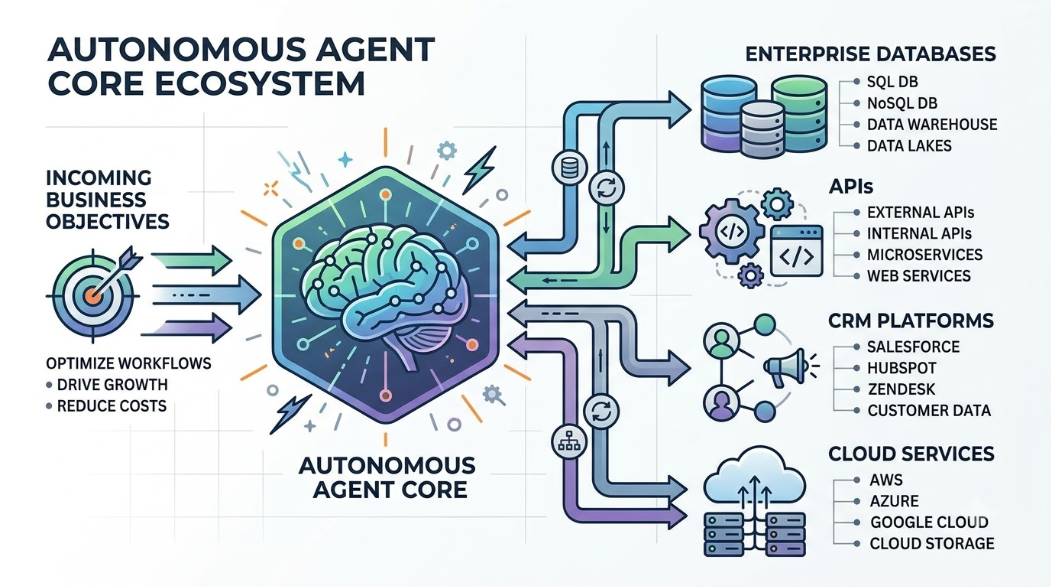
What Are AI Agents? How They Work, Benefits, Architecture, and Enterprise Adoption
A comprehensive guide for technology leaders exploring the shift from conversational chatbots to autonomous AI agents. Learn the core architecture, 8-stage operational lifecycle, high-impact enterprise use cases, integration patterns, security risks, and multi-layered testing frameworks required to deploy agentic automation responsibly.
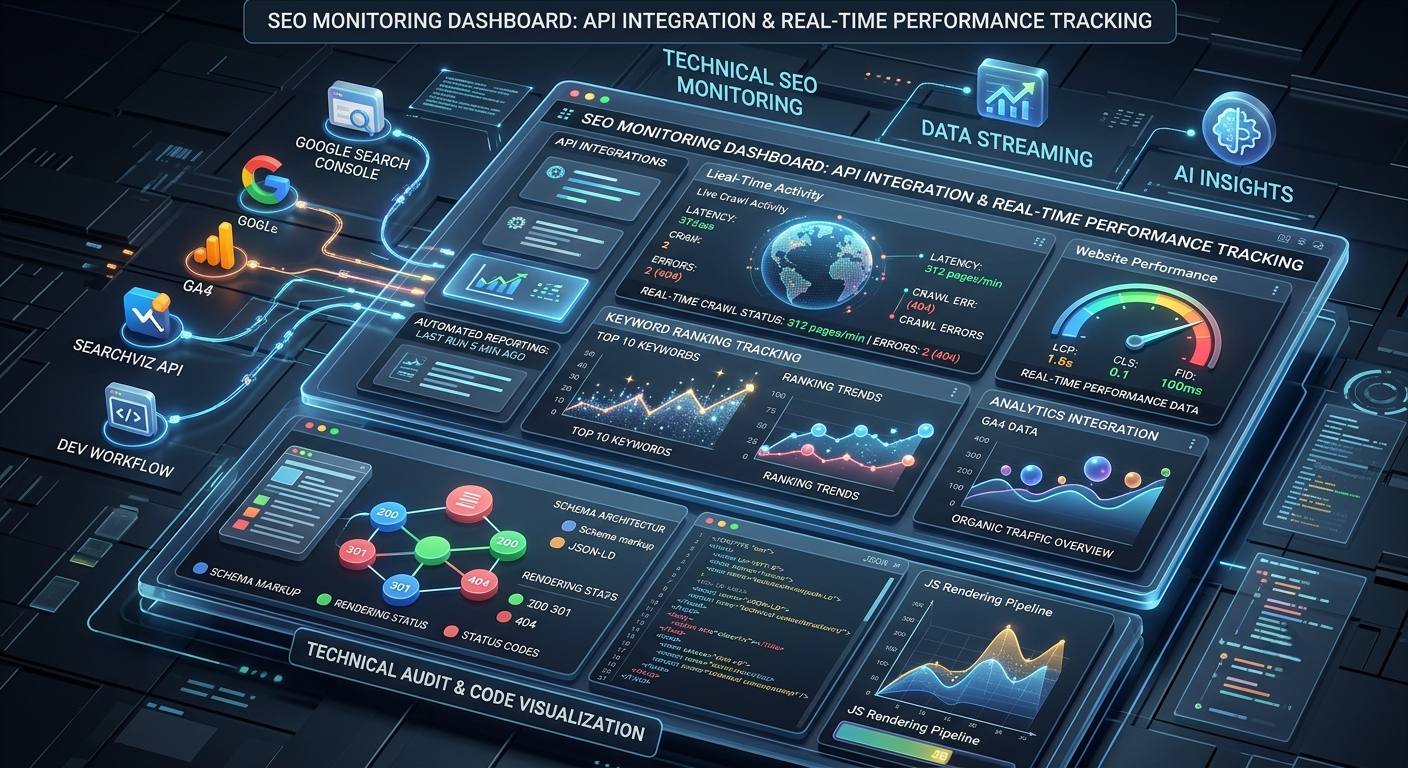
SEO Monitoring Tools: Technical Implementation Guide for Developers
Comprehensive technical guide to SEO monitoring tools designed for software developers and product managers. Learn how to integrate monitoring into development workflows, track technical SEO metrics, and automate performance reporting with modern tools and APIs.
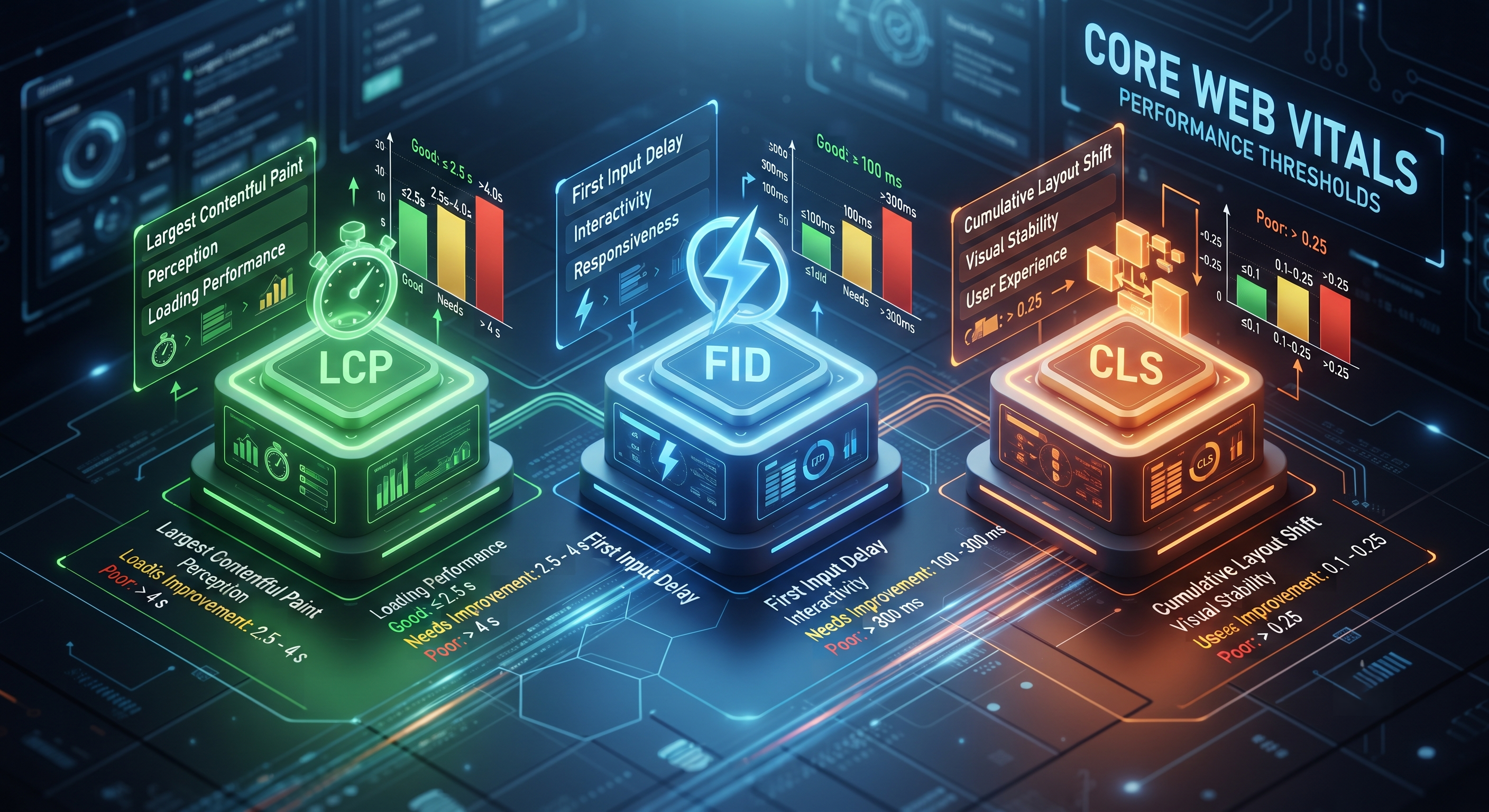
Core Web Vitals Fixes Guide: Complete Technical Implementation for Developers
Master Core Web Vitals optimization with our technical implementation guide. Learn LCP, FID, CLS fixes with code examples and strategies tailored for developers and CTOs.