
Table of Contents
Short answer: yes, YouTube Shorts ads can be worth it, but only when you choose the right campaign type, build native vertical creative, and measure outcomes like CPA and ROAS instead of views. Most marketers used to see YouTube as a place for long videos and brand awareness. That has changed. YouTube Shorts now sits inside the same campaign types that drive leads, sales, and app installs.
Daily Shorts views have reached roughly 200 billion, up from about 70 billion in early 2024, and Shorts' share of YouTube ad revenue rose from about 15% to more than 20%. Treat these figures with some care, though. Shorts view counting changed in 2025, so public view totals are less useful for comparing performance over time. Google's own advertiser documentation cites a more conservative figure of more than 50 billion global daily views on Shorts. Either way, the scale is large. Emerging Trends in YouTube Ads for 2026 - Bigeye +2
This guide explains how YouTube Shorts performs in performance marketing. It covers which campaign types to use, which metrics matter, how to build creative that holds attention, and how to measure results without fooling yourself. It is written for developers, testers, product managers, CTOs, and digital marketers who want data and clear steps rather than hype.
What Is Performance Marketing, and Where Do YouTube Shorts Fit?
Performance marketing means you pay for measurable outcomes such as clicks, leads, sign-ups, installs, or sales. Every campaign is judged on numbers like CPA (cost per acquisition), ROAS (return on ad spend), and conversion rate.
YouTube Shorts are vertical videos of up to three minutes, shown in a swipe-up feed. In performance marketing they matter for three reasons:
- Reach: Shorts puts your ad in front of people in a full-screen, mobile-first feed.
- Cost: Shorts placements often have lower view costs than in-stream ads. This is a pattern reported by practitioners, not a guarantee.
- Full-funnel use: Shorts inventory is available inside Video Reach and Demand Gen campaigns, and Google AI helps pick the best mix of placements. Bigeyeagency
At Cinute InfoMedia (CIM), we see Shorts work best as one part of a wider performance marketing system, not as a standalone channel.
Why YouTube Shorts Deserve a Place in Your Media Plan
1. Scale and audience quality
Demand Gen lets advertisers reach more than 3 billion active monthly users across Google surfaces, including Shorts. That includes tech professionals, students, founders, and buyers who watch short videos to learn about tools and products. Google Support
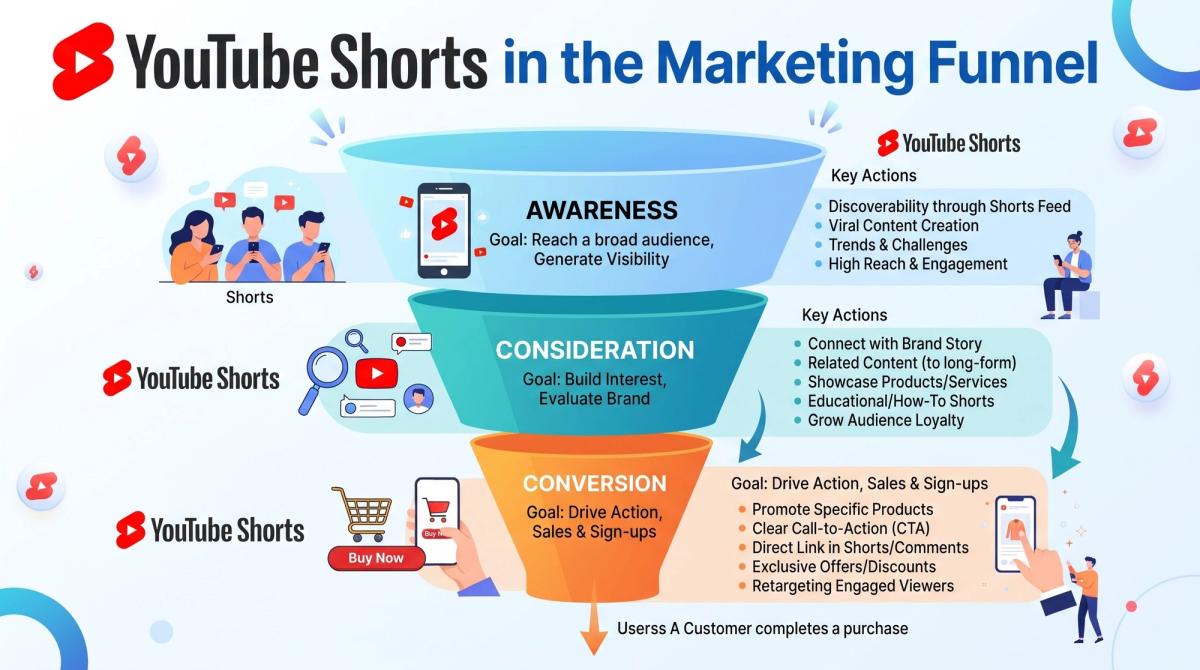
2. It supports the whole funnel
Shorts is no longer only for awareness. It now supports full-funnel goals across Demand Gen, App, and Performance Max campaigns. You can use it to introduce a product, retarget warm audiences, or drive installs. Bigeyeagency
3. Machine-led buying is getting stronger
Across Performance Max, Demand Gen, and AI Max, marketers set goals and limits while machine-led systems shift spend between surfaces based on expected return. Your job moves from manual bidding to feeding the system good creative and clean conversion data. Bigeyeagency
Which Campaign Types Serve YouTube Shorts Ads?
Choosing the wrong campaign type is one of the most common reasons Shorts underperforms. Here is a simple breakdown:
| Campaign type | Best for | Shorts control |
|---|---|---|
| Demand Gen | Leads, sales, consideration | High, with cleaner reporting |
| Video Reach | Awareness at low cost | Medium |
| Video View | Maximum views | Medium |
| Performance Max | Automated, conversion-focused | Low, since the algorithm decides |
| App campaigns | Installs and in-app actions | Low |
Demand Gen replaced Discovery campaigns in October 2024 and serves image and video across Shorts, YouTube in-feed, Discover, and Gmail. One practitioner report also notes that Demand Gen tends to give the cleanest Shorts-specific reporting because it was built around vertical video. DataslayerDataslayer
A separate analysis reported that Nielsen found Demand Gen delivered 58% higher ROAS than the older Video Action Campaigns. Vendor-reported benchmarks like this are useful direction, not promises. Test on your own account before scaling. Dataslayer
There is also a format update worth knowing. On Shorts, one-click experiences now work when you upload 9:16 full-bleed image ads, letting people visit your landing page with a single tap. Adding a few image assets next to your video is a low-effort test. Google
If you are new to paid video, our YouTube Ads service and Google Ads management pages explain how we structure these campaigns.
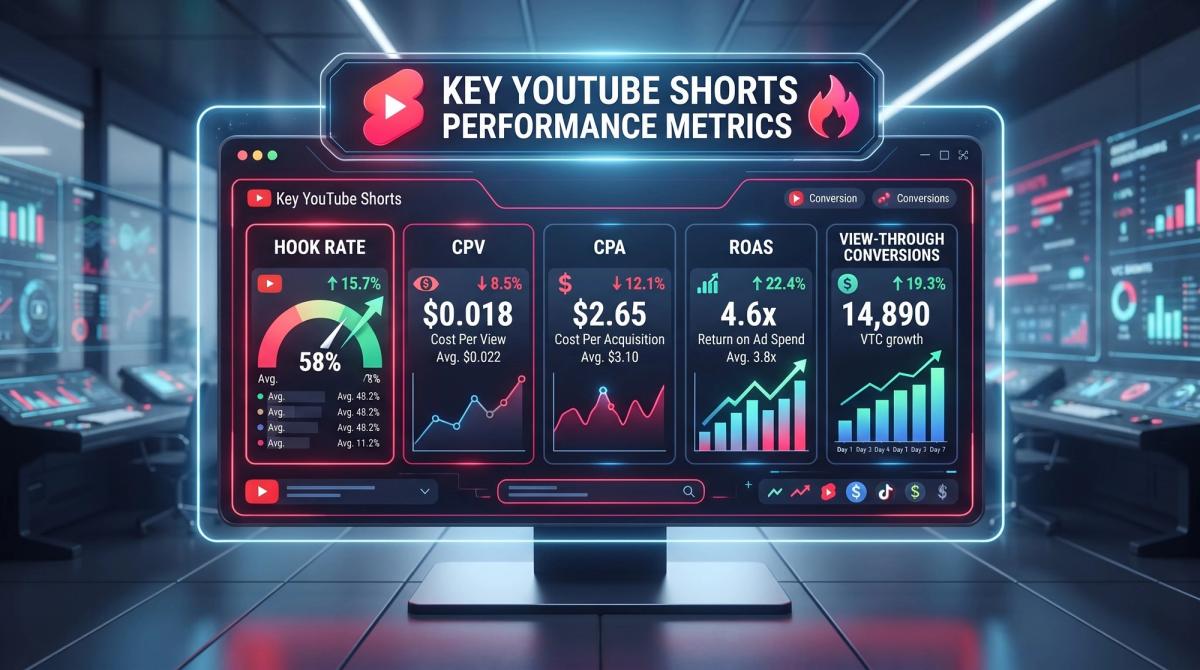
The Metrics That Actually Measure YouTube Shorts Performance
Views are easy to report and easy to misread. Focus on these instead.
Retention and hook rate
Hook rate is the share of viewers who keep watching past the first few seconds. One 2026 reporting guide argues that first-5-second retention predicts cost per view better than most other metrics, yet many advertisers ignore it. Treat that as a strong practitioner opinion, and check it against your own data. Dataslayer
Cost metrics
- CPV (cost per view): useful for awareness.
- CPM: useful for comparing placements. One agency guide puts the average YouTube CPM at $5 to $10, with an average view rate of 31.9%. Your numbers will vary by industry and country. Jetfuel
- CPA and ROAS: the numbers that decide whether a campaign lives or dies.
Conversion metrics
- Conversion rate on the landing page.
- View-through conversions: people who saw your ad and converted later without clicking.
- Assisted conversions: YouTube often assists a sale rather than closing it, so you need view-through tracking and cross-channel attribution. Dataslayer
Brand signals
A newer metric called Attributed Branded Searches shows search volume generated by your YouTube campaigns. For B2B and SaaS teams, this often reveals value that last-click reports miss. Dataslayer
How to Build Shorts Creative That Performs
Good targeting cannot rescue weak creative. Use this simple structure.
The 3-part Shorts ad formula
- Hook (0–3 seconds): Show the problem or the surprising result immediately. Do not start with a logo.
- Value (3–20 seconds): Show the product solving that problem. For technical audiences, a screen recording or a quick demo beats a stock clip.
- Call to action (last 3–5 seconds): Tell viewers exactly what to do next, such as "Book a free audit" or "Try the demo."
Creative tips for a tech-savvy audience
- Use real screens, dashboards, and code, not glossy lifestyle footage.
- Add captions, since many people watch without sound.
- Keep one message per video.
- Shoot vertical (9:16) natively. Do not crop a landscape video.
- Test three to five hooks per concept before changing the offer.
Plan for creative fatigue
Ads wear out. One guide notes that ad fatigue can set in after 7 to 10 days, so monthly performance checks can waste weeks of budget. Refresh creative on a schedule, and review results at least weekly. Dataslayer
Consistency helps organic Shorts too. One 2026 statistics roundup reports that brands combining Shorts with long-form video grow 41% faster. Use that as a directional signal. A mix of paid and organic gives you more creative to learn from. Loopex Digital
Measuring YouTube Shorts Honestly: Attribution Tips
Shorts is an impression-driven channel. Viewers are not searching for you, so last-click reporting will often undervalue it. Here is how to measure it fairly.
Segment by placement. CTV, mobile, and Shorts perform very differently, so track them separately or your data becomes useless. Dataslayer
Use first-party data. Upload customer lists, and make sure conversion tracking (including enhanced conversions and server-side tagging) is set up correctly. Poor tracking makes the algorithm learn from bad signals.
Compare against a holdout. Where budget allows, run geo-based or audience holdout tests to see the true lift from Shorts.
Watch branded search and direct traffic. If Shorts spend rises and branded searches rise with it, the channel is likely working even when last-click is quiet.
Keep your site fast. A fast, well-structured landing page raises conversion rate for every channel. Our technical SEO services cover page speed, Core Web Vitals, and crawlability, which directly affect paid results.
YouTube Shorts vs. Other Short-Video Platforms
Shorts competes with Instagram Reels and TikTok, and the right choice depends on your goal.
- YouTube Shorts: strong for discovery plus search-like intent, because YouTube is also a search engine. It fits Google Ads data and Demand Gen.
- Instagram Reels: strong for social proof and retail brands. See our Meta Ads service.
- TikTok: strong for trend-driven reach. See our TikTok Ads service.
Most B2B, SaaS, and EdTech teams get better results running two platforms with distinct creative than spreading budget across all three.
Common Mistakes to Avoid
- Reporting views instead of business outcomes. Views do not pay salaries.
- Repurposing TV or landscape ads. Vertical, native creative wins.
- Ignoring the first 3 seconds. If the hook fails, nothing else matters.
- Launching without conversion tracking. You cannot optimize what you cannot measure.
- Changing too much at once. Change one variable per test.
- Judging results too early. Give the algorithm a learning period before making big changes.
- Sending traffic to a slow or confusing page. The ad earns the click, and the landing page earns the conversion.
A Simple 30-Day Testing Framework
Week 1: Setup. Define one goal (leads or sales). Install and verify conversion tracking. Prepare 3–5 vertical videos with different hooks, plus a few 9:16 image assets.
Week 2: Launch. Start a Demand Gen campaign with a modest daily budget. Keep audiences simple: your customer list, a lookalike-style segment, and one interest group.
Week 3: Read and refine. Review hook rate, CPA, and view-through conversions. Pause the weakest creative and produce new versions of the best hook.
Week 4: Scale carefully. Increase budget in steps rather than in one jump. Add retargeting for people who watched most of your video. Document what worked.
For teams handling many campaigns, AI workflows and automation can pull reports together, flag creative fatigue, and send weekly summaries automatically. That saves hours of manual spreadsheet work.
Frequently Asked Questions
Are YouTube Shorts ads worth it for B2B or SaaS? Often yes, especially for demos, product explainers, and retargeting. Results depend on offer, audience, and creative quality, so test with a small budget first.
What is the best campaign type for YouTube Shorts ads? Demand Gen is the usual starting point for leads and sales. Use Video Reach for awareness and Performance Max when you want full automation.
How long should a Shorts ad be? Short enough to deliver one message. Many effective ads run 15–30 seconds, but the hook in the first 3 seconds matters more than total length.
How do I know if Shorts is really driving conversions? Track view-through and assisted conversions, watch branded search trends, and use holdout tests, not last-click alone.
Conclusion
YouTube Shorts has moved from a novelty to a serious performance marketing channel. It offers scale, full-funnel reach, and access to Google's machine-led buying tools. The teams that win with it do four things well: choose the right campaign type, build strong vertical creative, measure with honest attribution, and test in a steady rhythm.
If you want help turning Shorts into a measurable growth channel, the team at Cinute InfoMedia combines performance marketing, SEO, web development, and AI automation under one roof. Request a free digital audit to see where your next gain is hiding.
Related Articles
WhatsApp Business Bots: How They Work & Why You Need One
WhatsApp Business bots let companies automate replies, sales, and support on the world's most-used messaging app. Here's how they work, what they can do, and how to build one that actually converts.
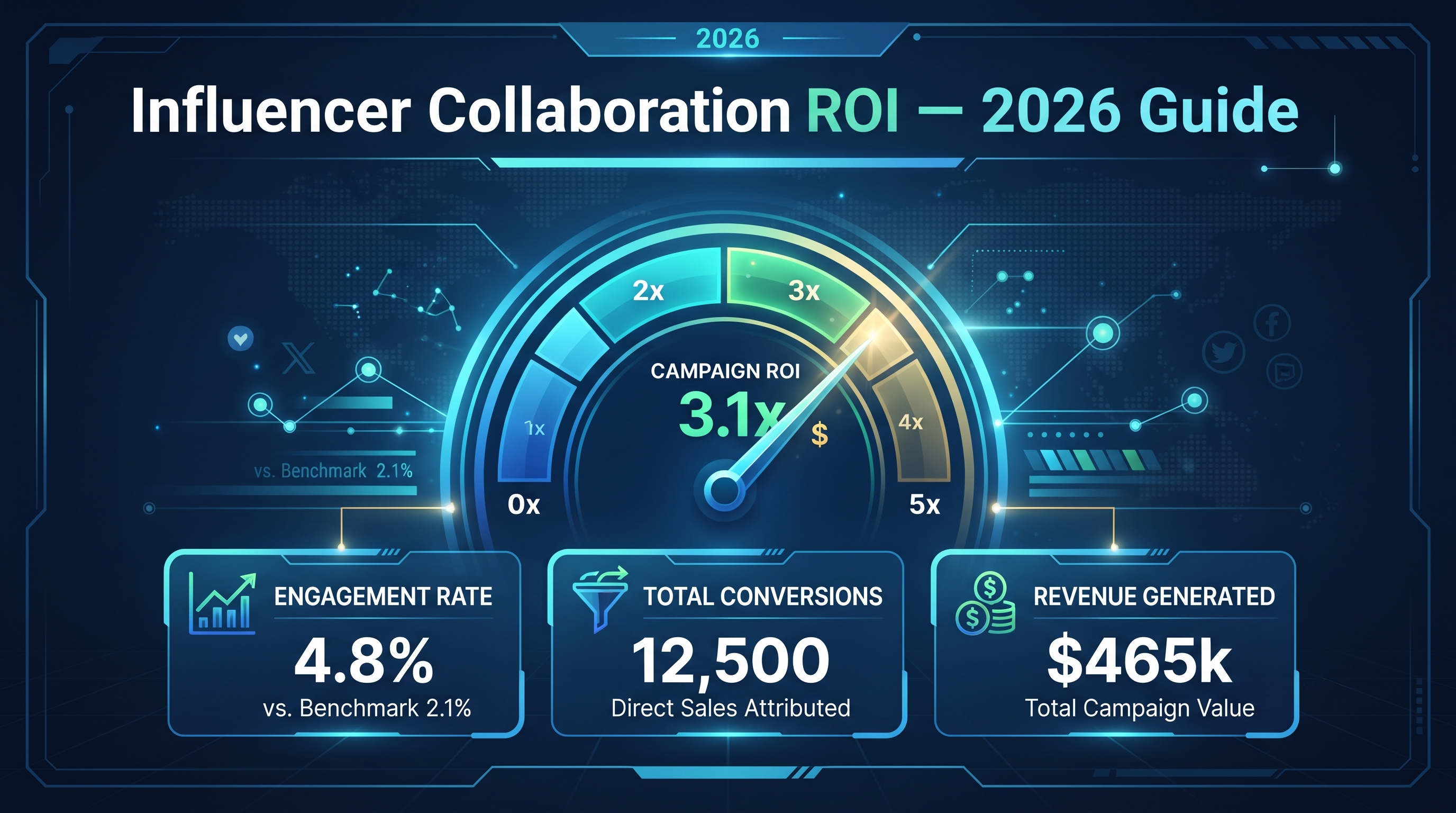
Influencer Collaboration ROI: How to Measure It (2026 Guide)
A practical guide to calculating and improving influencer collaboration ROI covering the ROI formula, key metrics, tracking setup, and common measurement mistakes.
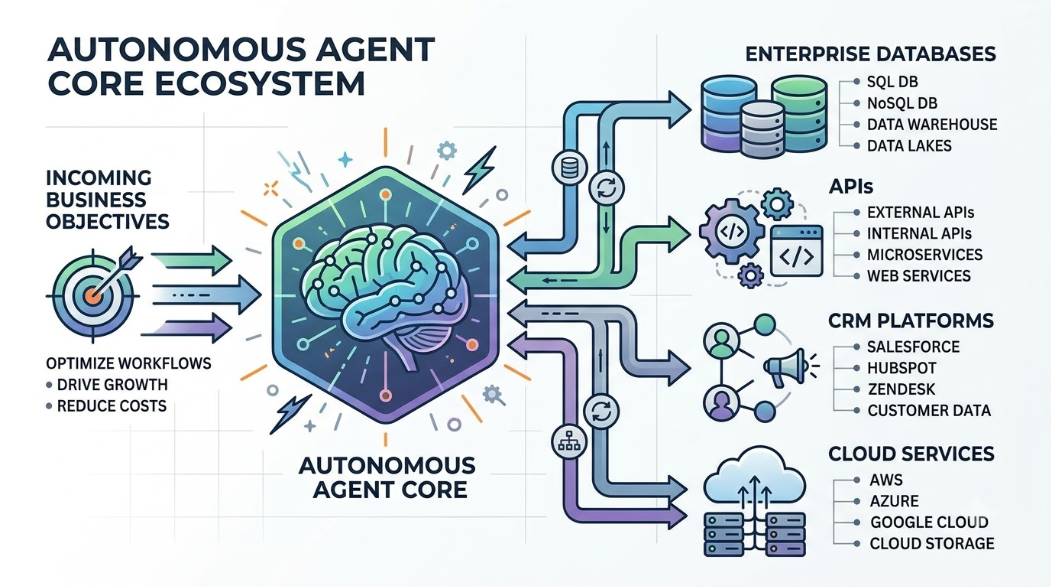
What Are AI Agents? How They Work, Benefits, Architecture, and Enterprise Adoption
A comprehensive guide for technology leaders exploring the shift from conversational chatbots to autonomous AI agents. Learn the core architecture, 8-stage operational lifecycle, high-impact enterprise use cases, integration patterns, security risks, and multi-layered testing frameworks required to deploy agentic automation responsibly.