
Table of Contents
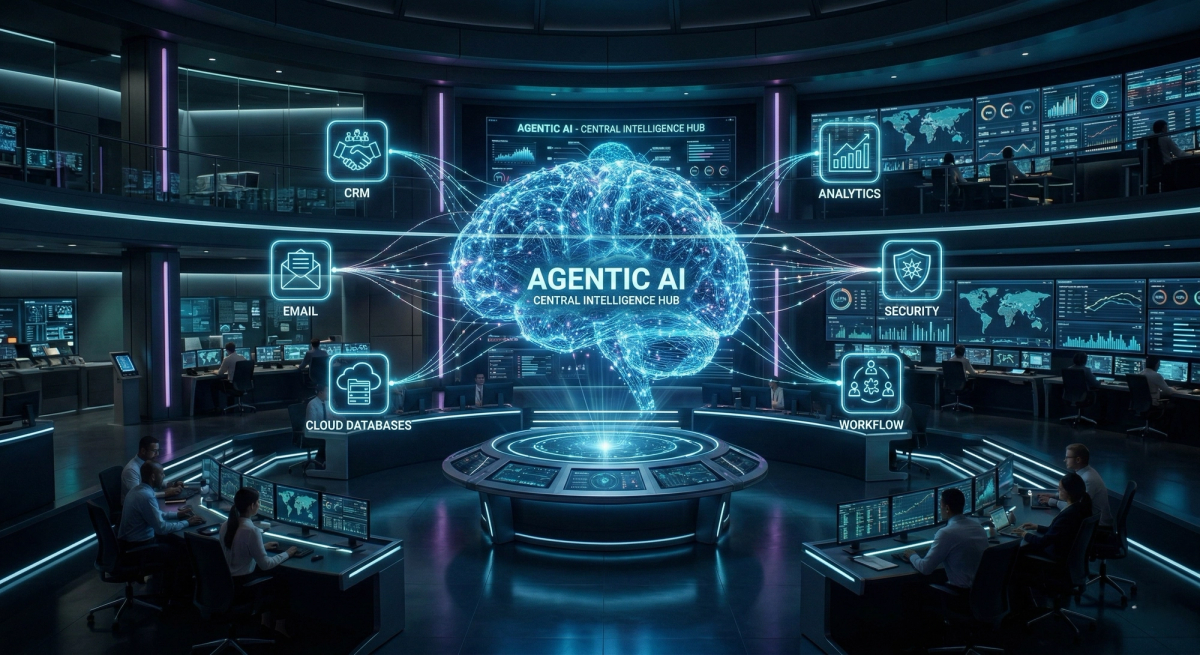
In the fast-paced digital ecosystem of 2026, businesses that still rely on manual data processing are falling severely behind. To remain competitive, organizations must transition from basic automation to intelligent, autonomous systems. The absolute key to unlocking this next level of operational efficiency is to Scale Workflows with Custom ChatGPT Integrations.
Unlike off-the-shelf, generic AI chat interfaces, a tailored ChatGPT solution connects directly to your company's proprietary data, internal software, and specific operational requirements. Whether you are automating complex data entry, managing high-volume enterprise customer support, or generating dynamic . Social Media Marketing at scale, Custom ChatGPT Integrations act as an undeniable force multiplier for your workforce. By strategically embedding these sophisticated Large Language Models (LLMs) into your daily operations, you eliminate bottlenecks, significantly reduce overhead costs, and drastically improve your team's execution speed.
What Exactly Are Custom ChatGPT Integrations?
When most people hear the term "ChatGPT," they think of the public web interface where users type prompts and receive text-based answers. While impressive, this is merely scratching the surface of what the underlying technology can do.
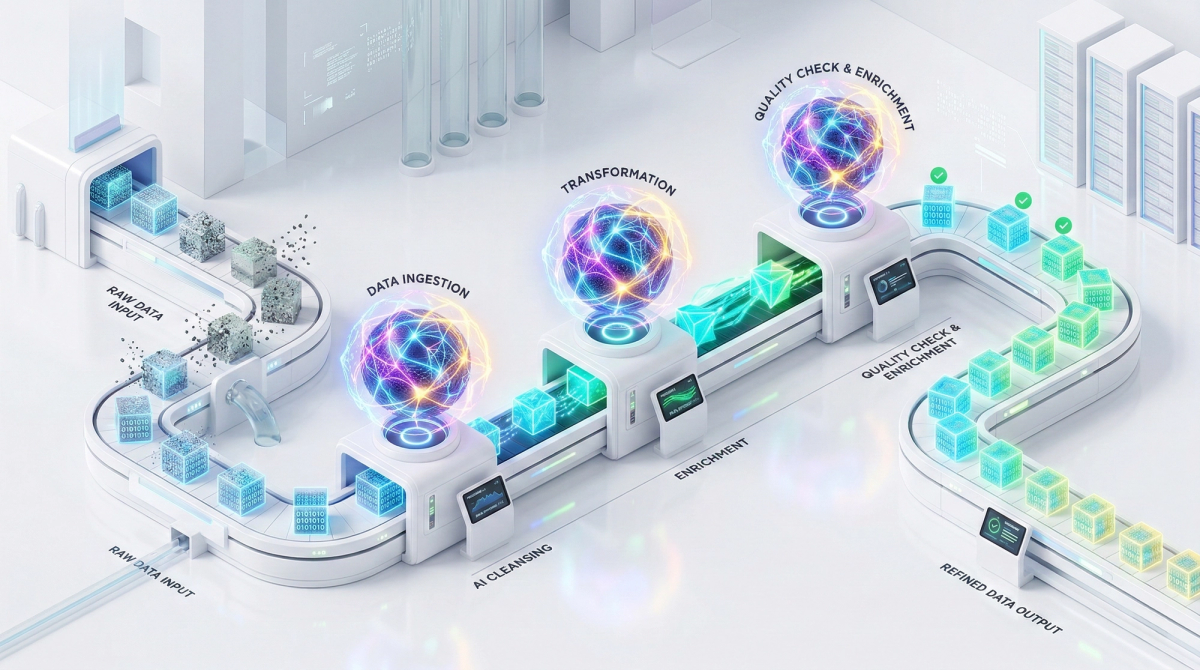
A Custom ChatGPT Integration involves utilizing Open Ai’s powerful Application Programming Interfaces (APIs)-or securely hosted enterprise versions of the model-and weaving them seamlessly into your existing business infrastructure. Instead of an employee manually copying data from an email into a CRM, a custom integration allows the AI to autonomously read the email, extract the necessary data, formulate an appropriate response, and update the CRM-all in a matter of seconds.
The Shift Toward Agentic AI
In recent years, the conversation has shifted from simple generative text to Agentic AI. Agentic AI systems are designed not just to answer questions, but to take action. They are empowered to make localized decisions based on predefined logic, interact with other software tools, and execute multi-step AI autonomous workflows. When you build custom integrations, you are essentially creating intelligent digital agents that work 24/7 without fatigue.

The Unmatched Business Case for AI Automation
If you are a business owner or an operations manager, the ultimate goal is doing more with less. Manual workflows are inherently limited by human speed, working hours, and error rates. Integrating ChatGPT directly into your tech stack fundamentally alters the mathematics of business scaling.
If you are currently looking to overhaul your internal processes, exploring professional AI Workflows & Automations is no longer a luxury, but a mandatory strategy for survival.
Why Off-The-Shelf Tools Aren’t Enough
Using basic, non-integrated AI tools requires constant human intervention. Employees must copy-paste data back and forth, risking data leaks and wasting valuable time. Custom integrations, on the other hand, exist securely within your ecosystem. They are fine-tuned on your brand voice, your compliance regulations, and your specific customer profiles.
Core Benefits of Scaling Workflows with ChatGPT
Scaling your business through tailored AI solutions yields a compounding return on investment (ROI). Here is a breakdown of the primary advantages:
A. Extreme Cost Reduction
Human capital is expensive. While human creativity and strategic thinking are irreplaceable, paying humans to do repetitive, rules-based tasks is a drain on resources. By automating these tasks via custom integrations, businesses can reduce operational costs by up to 60%. The AI handles the heavy lifting, allowing your human workforce to focus on high-ticket sales, strategy, and relationship building.
B. 24/7 Operational Efficiency
An AI does not sleep, take vacations, or experience burnout. Custom integrations ensure that your business is moving forward around the clock. Whether it is processing late-night e-commerce orders, answering global customer queries in multiple languages, or compiling nightly data reports, your autonomous workflows ensure zero downtime.
C. Advanced Data Processing and Accuracy
Humans make typos; AI algorithms, when correctly configured, do not. Custom ChatGPT models can ingest massive amounts of unstructured data-such as PDFs, audio transcripts, or messy spreadsheets—and structure it perfectly within milliseconds. This level of precision is critical for industries like finance, healthcare, and logistics.

Real-World Use Cases for Autonomous Workflows
Understanding the theory is great, but how does this look in practice? Here are several high-impact ways enterprises are using custom API integrations right now.
Revolutionizing Customer Support
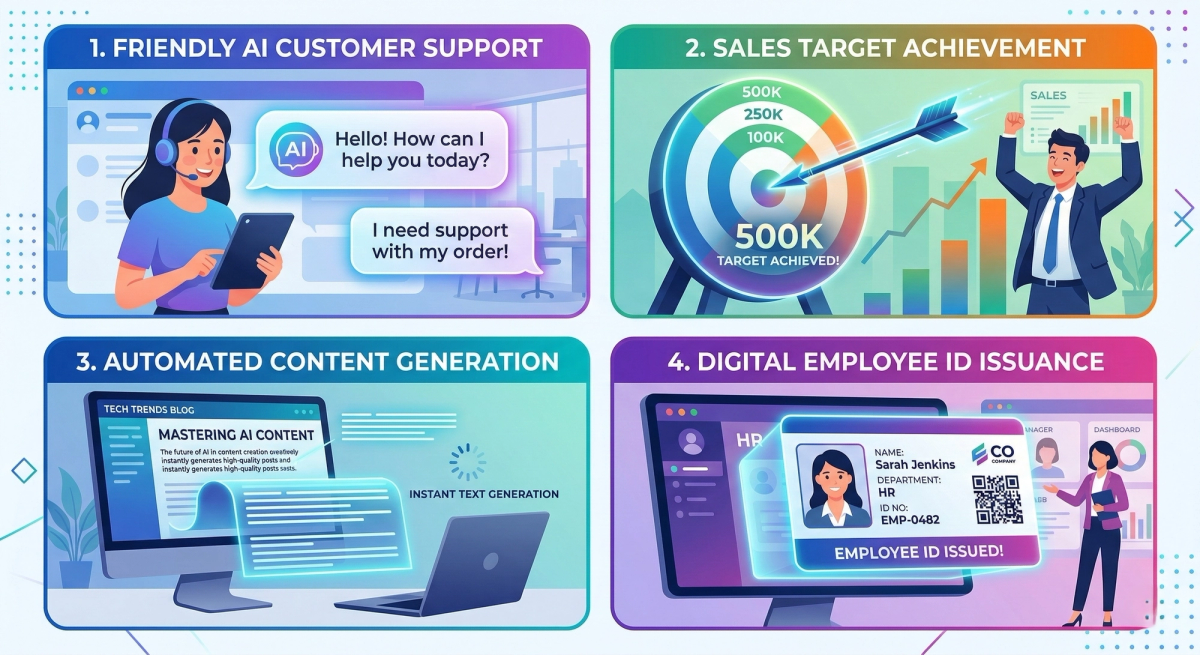
Modern consumers expect instant resolutions. Traditional chatbots rely on frustrating, rigid decision trees. By upgrading to AI-Powered Chatbots, businesses can deploy agents that understand context, nuance, and sentiment. These customized ChatGPT bots can instantly pull user history from your database, resolve complex billing issues, and cross-sell products naturally, resulting in drastically higher customer satisfaction scores.
Sales and Lead Generation on Autopilot
Imagine an AI that monitors incoming leads from your website, analyzes their company data, drafts a highly personalized outreach email, and schedules a follow-up-all autonomously. By integrating ChatGPT with CRMs like Salesforce or HubSpot, your sales team wakes up to a calendar full of qualified meetings rather than spending hours on cold outreach.
Content Creation and Marketing Automation
For digital marketing teams, content is king. A custom ChatGPT workflow can ingest your top-performing blog posts, analyze current search trends, and generate comprehensive first drafts for social media, newsletters, and articles. When combined with expert Organic Growth & SEO strategies, this AI-assisted content pipeline can triple your organic traffic without requiring you to hire an army of freelance writers.
Streamlining Internal HR Operations
Onboarding new employees is traditionally a paperwork-heavy, tedious process. A custom ChatGPT integration can act as an internal HR assistant. It can autonomously guide new hires through compliance training, answer specific questions about the company handbook, and set up their software credentials-creating a frictionless onboarding experience.
How to Implement Custom ChatGPT Integrations
Transitioning to autonomous workflows requires strategic planning. If executed poorly, AI implementations can lead to disjointed systems and frustrated employees. Here is the blueprint for a successful rollout.
Phase 1: Deep Process Audit
Before writing a single line of code, you must audit your current operations. Identify the "bottleneck" tasks-processes that are highly repetitive, time-consuming, and prone to human error. These are your prime candidates for automation.
Phase 2: Architectural Strategy
Determine how the AI will access your data. Will it read from your cloud storage? Will it need access to your live product inventory? This phase often requires collaborating with experts in Web Design & Development to ensure your website's backend infrastructure is robust enough to handle high-frequency API calls securely.
Phase 3: Development and API Integration
This is where the technical heavy lifting happens. Developers will construct middleware that connects the ChatGPT API to your software. During this phase, strict system prompts and guardrails are established to ensure the AI behaves exactly as intended, adhering to your brand guidelines and safety protocols.
Phase 4: Rigorous Testing and Fine-Tuning
Before deploying the integration company-wide, it must be battle-tested in a sandbox environment. The system needs to be intentionally pushed to its limits to ensure it handles edge-case scenarios gracefully. Continuous fine-tuning based on user feedback is essential for maximizing accuracy.

Overcoming AI Integration Challenges
While the benefits are immense, scaling workflows with AI does present unique challenges that businesses must navigate carefully.
Data Privacy and Enterprise Security
Feeding sensitive customer data into public AI models is a major security risk. Custom integrations solve this by utilizing secure, enterprise-grade API endpoints where data is explicitly not used to train public models. Ensuring compliance with data protection laws (like GDPR or HIPAA) is non-negotiable.
Mitigating AI Hallucinations
A "hallucination" occurs when an AI confidently presents false information as fact. In a business context, this is unacceptable. To halve hallucinations, custom integrations rely on a technique called Retrieval-Augmented Generation (RAG). RAG forces the AI to cross-reference its answers exclusively against your vetted, internal company documents before responding to a user.

Future-Proofing: Beyond the 2026 AI Trends
The landscape of artificial intelligence is evolving at a breakneck pace. We are rapidly moving from single-task integrations to Multi-Agent Systems, where different AI models collaborate with one another to solve complex problems. For example, a "research agent" might gather market data and pass it to a "strategy agent," which then dictates instructions to an "execution agent" managing your Performance Marketing campaigns.
By establishing custom ChatGPT integrations today, you are laying the foundational infrastructure required to adopt these advanced multi-agent systems tomorrow. Companies that wait to implement foundational AI workflows will find the technological gap too vast to cross in the coming years.

FAQ: Scaling Workflows with ChatGPT
Q: Are custom ChatGPT integrations secure for my business data?
Q: How much does a custom ChatGPT integration cost?
The cost varies wildly depending on the complexity of the workflow, the amount of data being processed, and the specific software you are integrating with. However, most businesses see a complete return on investment (ROI) within the first 3 to 6 months due to drastically reduced operational costs.
Q: Do I need an in-house development team to build this?
Not necessarily. In fact, most businesses choose to partner with specialized AI development agencies like Cinute Infomedia. An experienced agency already understands the nuances of prompt engineering, API rate limits, and secure architecture, saving you months of trial and error.
Q: Will AI replace my current employees?
The goal of custom integrations is augmentation, not replacement. By automating tedious, repetitive tasks, your employees are freed up to focus on high-level strategic thinking, creative problem-solving, and building meaningful client relationships-areas where humans drastically outperform machines.
Q: How long does it take to implement a custom AI workflow?
A simple integration (like connecting a website chatbot to a knowledge base) can be deployed in a few weeks. Complex, multi-system autonomous workflows (integrating ERPs, CRMs, and custom databases) may take a few months of development and rigorous testing.
Conclusion
The era of doing business through manual, disconnected software systems is officially over. As we navigate the highly competitive landscape of 2026, the ability to Scale Workflows with Custom ChatGPT Integrations is the definitive line in the sand separating market leaders from the rest of the pack.
By leveraging Agentic AI and autonomous workflows, you are not just saving time; you are fundamentally upgrading the speed, accuracy, and intelligence of your entire enterprise. From completely overhauling customer support to putting lead generation on autopilot, a custom-built AI infrastructure allows your business to scale infinitely without proportionately scaling your overhead costs.
Do not wait until your competitors have fully automated their operations. The technology is accessible, the ROI is proven, and the time to integrate is now. Partner with a trusted agency to audit your workflows, build secure APIs, and propel your business into the automated future.
Related Articles
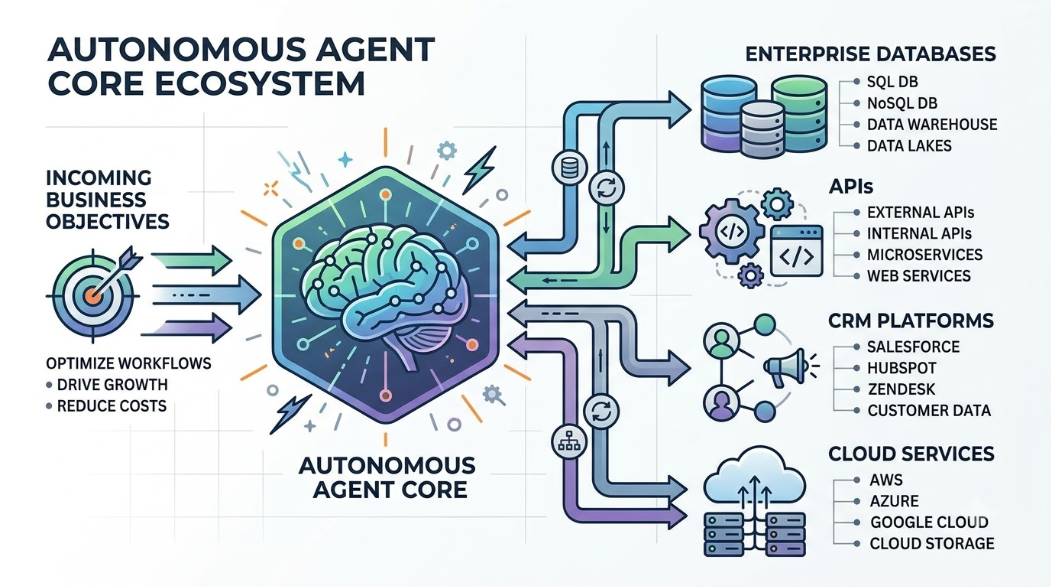
What Are AI Agents? How They Work, Benefits, Architecture, and Enterprise Adoption
A comprehensive guide for technology leaders exploring the shift from conversational chatbots to autonomous AI agents. Learn the core architecture, 8-stage operational lifecycle, high-impact enterprise use cases, integration patterns, security risks, and multi-layered testing frameworks required to deploy agentic automation responsibly.
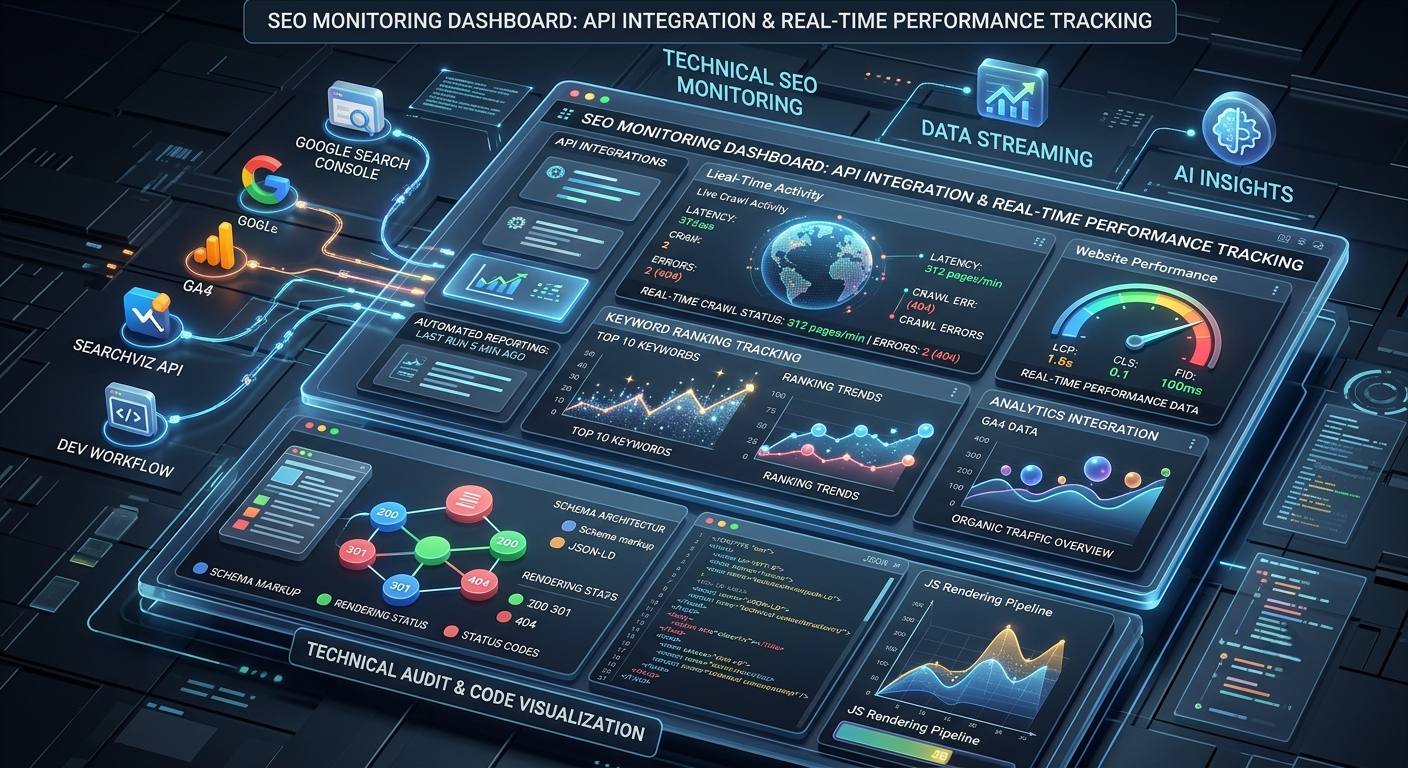
SEO Monitoring Tools: Technical Implementation Guide for Developers
Comprehensive technical guide to SEO monitoring tools designed for software developers and product managers. Learn how to integrate monitoring into development workflows, track technical SEO metrics, and automate performance reporting with modern tools and APIs.
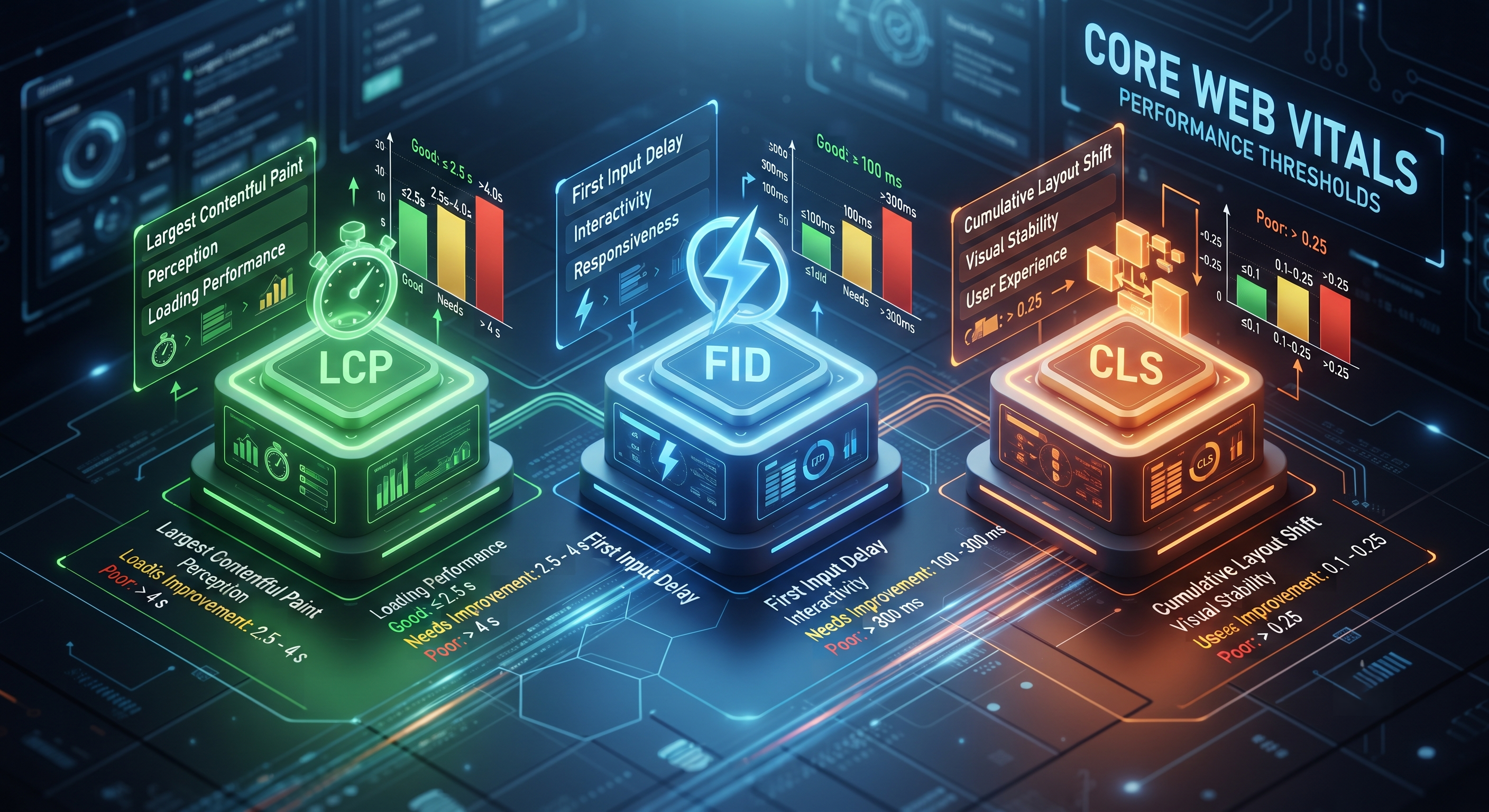
Core Web Vitals Fixes Guide: Complete Technical Implementation for Developers
Master Core Web Vitals optimization with our technical implementation guide. Learn LCP, FID, CLS fixes with code examples and strategies tailored for developers and CTOs.