
Table of Contents
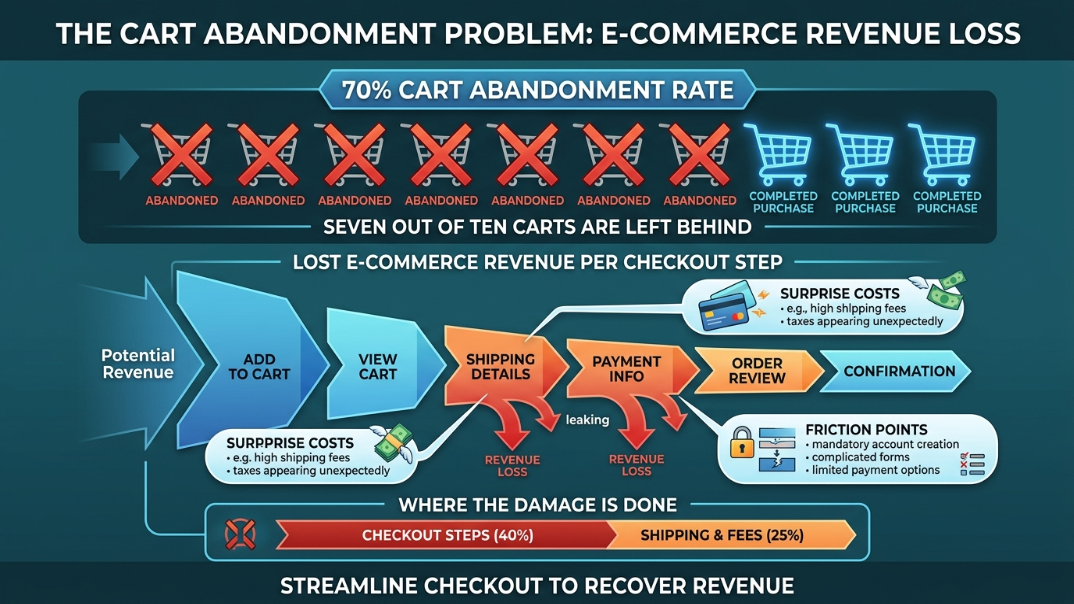
For every ten shoppers who add a product to their cart, roughly seven walk away before paying. The latest meta-analysis from the Baymard Institute puts the global average cart abandonment rate at 70.22% a number that has barely moved in a decade. For a growing store, that isn't a rounding error; it's most of your revenue quietly leaking out at the final step.
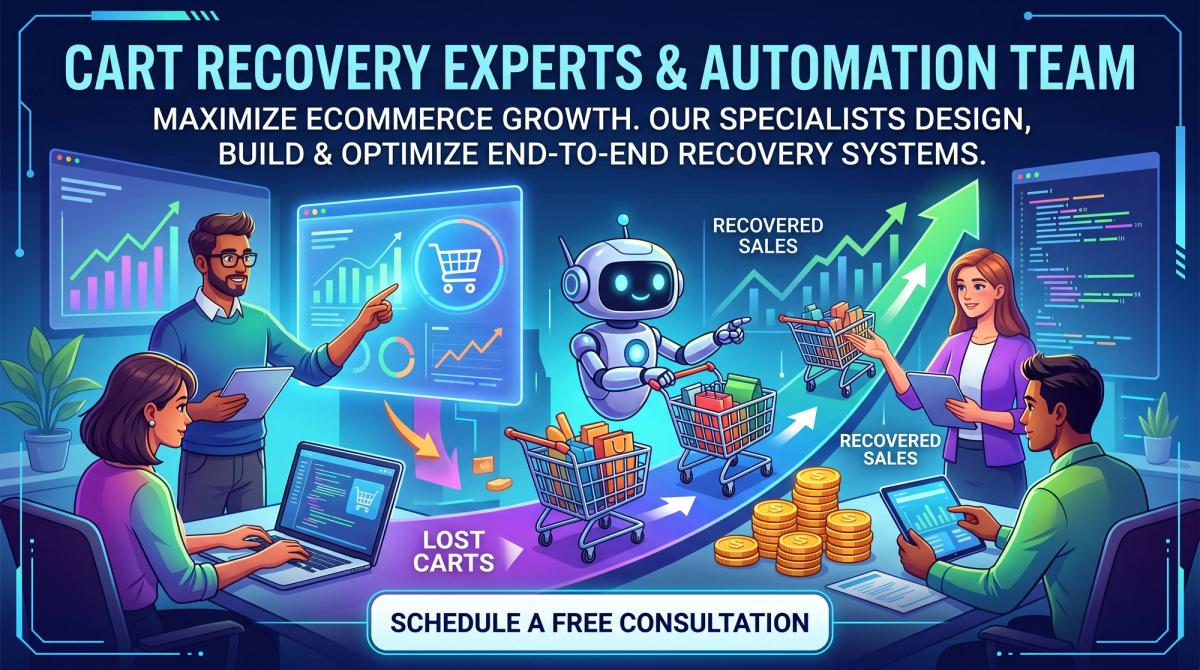
A cart recovery bot is the most reliable way to plug that leak without slashing margins on discounts. At Cinute InfoMedia, we build automated recovery systems that re-engage shoppers across web chat, email and WhatsApp the moment they hesitate.
By the end of this guide, you'll know:
- What a cart recovery bot is and exactly how it wins back lost orders
- How much abandonment is really costing your store and which 30% is recoverable
- How to launch one in days, not months (no developer headaches)
What is a cart recovery bot? A cart recovery bot is an automated assistant that detects when a shopper abandons their cart and re-engages them with timely, personalised messages across chat, email or WhatsApp. It answers last-minute objections, restores the saved cart in one click, and nudges the buyer back to checkout recovering revenue that would otherwise be lost.
Why Cart Abandonment Is Costing Stores Billions Every Year
Cart abandonment isn't a fringe problem it's the single biggest source of preventable revenue loss in e-commerce. Baymard's research, drawn from 50 separate studies, estimates that around $260 billion in lost orders is recoverable in the US alone through better checkout and follow-up. The leak is real money, not vanity metrics.
The causes are stubbornly consistent. Nearly half of shoppers abandon because of unexpected extra costs revealed at checkout, while complicated, over-long checkout flows push others away. Mobile makes it worse: abandonment on phones runs near 80%, versus around 66% on desktop. So the shopper who wanted to buy often leaves simply because the final stretch was confusing, slow, or surprised them with a fee.
Here's the part most founders miss: these buyers haven't rejected your product. They added it to the cart that's intent. They paused over an unresolved hesitation. That distinction is exactly why recovery works so well. You're not selling cold traffic; you're nudging a warm buyer who already wanted what you sell.
This is where automation earns its keep. A well-built recovery system typically an AI-powered chatbot layered onto your store catches the hesitation in real time and resolves it before the shopper forgets you exist. Pair that with a fast, friction-light store from a proper e-commerce development build, and you attack both the cause and the symptom at once.
The takeaway: you don't need more ad spend to grow next quarter. You need to stop losing the buyers you've already paid to acquire.
How a Cart Recovery Bot Wins Back Sales Step by Step
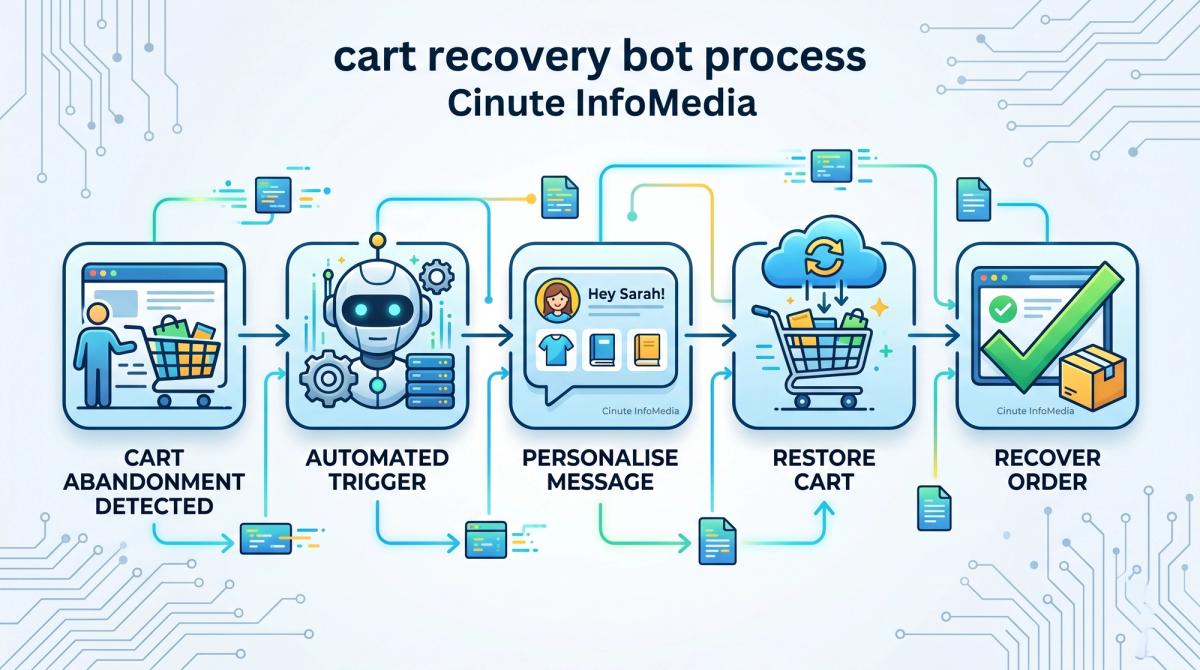
A recovery bot works because it does instantly and consistently what no human team can do at scale. Here's the workflow we deploy:
- Result: it catches abandonment the second it happens. How: the bot tracks cart and checkout events, then flags any shopper who stalls or exits with items still in the cart.
- Result: the shopper hears from you within minutes, not hours. How: an automated trigger fires a timely, on-brand message web chat first, then email or WhatsApp while purchase intent is still warm.
- Result: the actual objection gets answered. How: the bot handles the real blockers shipping cost, delivery time, sizing, payment options instead of just shouting "you forgot something!"
- Result: checkout takes one tap, not a restart. How: the saved cart is restored via a deep link, so the buyer lands back at payment with everything intact.
- Result: recovery keeps improving. How: every message, timing window and incentive is A/B tested, so recovery rates climb month over month.
Channel performance varies sharply, and that's the strategic point:
| Recovery channel | Typical recovery rate | Best for |
|---|---|---|
| Recovery email only | ~3–5% | Low-effort baseline |
| Multi-channel bot (chat + email + WhatsApp) | ~15–25% | Most growing stores |
| AI pre-abandonment intervention | ~30–38% | Stores with steady traffi |
Plain email recovery alone tends to land around 3–5%, per industry benchmarks useful, but a fraction of what a real-time, AI-driven bot achieves. To get those numbers, the bot needs to connect cleanly to your store, CRM and messaging tools, which is precisely what our AI workflows and automation builds are designed to do. Not sure where your biggest leak is? You can get a free audit and we'll map it for you.
Real Results What Automation Delivers for Stores
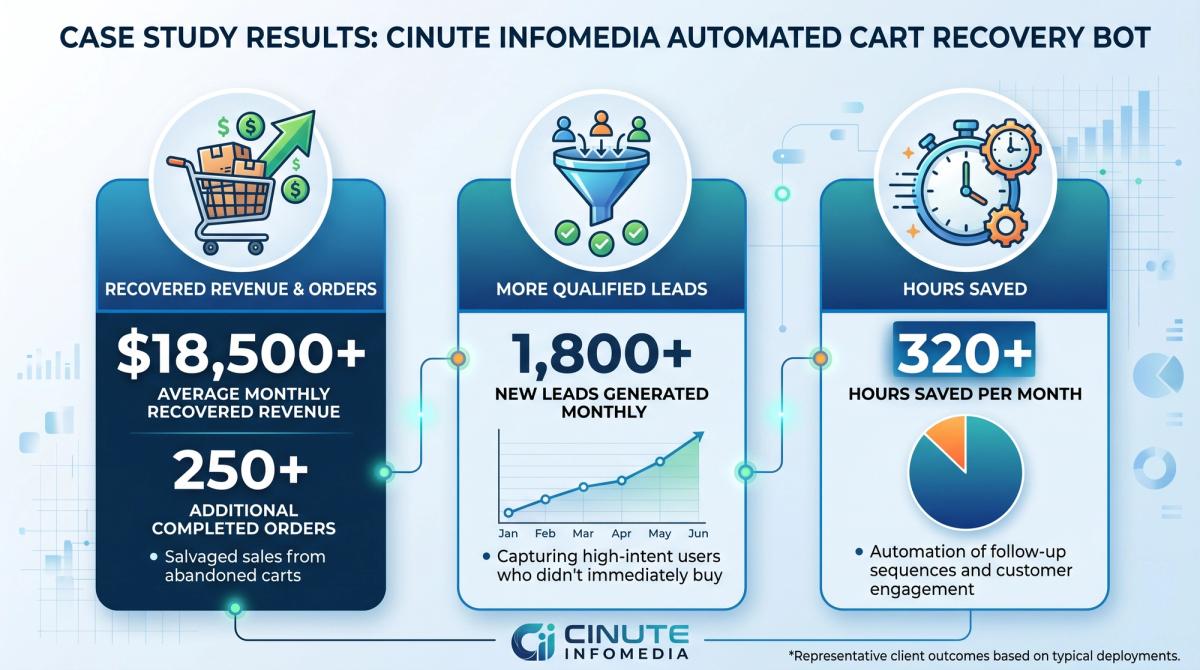
Numbers are what separate a "nice idea" from a growth lever. Across our automation engagements, clients have seen outcomes like up to 320% growth in qualified leads, 3x organic traffic, and 200+ hours saved per month once manual follow-up is handed to a bot. Those hours alone usually pay for the system.
Here's a representative, anonymised example.
Challenge: A mid-sized fashion store was sitting at a ~74% abandonment rate, leaking most of its paid-ad traffic at checkout, with a small team that couldn't follow up manually.
Approach: We deployed a multi-channel cart recovery bot web chat to resolve objections live, plus timed email and WhatsApp nudges with one-click cart restore. We A/B tested message timing and incentives weekly rather than guessing.
Result: Within roughly 90 days the store was recovering close to a third of previously lost carts, lifting monthly revenue meaningfully without adding a single rupee to ad spend.
That outcome isn't magic; it's the product of getting the workflow, copy and timing right, then iterating. Our expert team treats recovery as an ongoing optimisation programme, not a one-time install which is why recovery rates tend to compound over time.
Cart Recovery Bot vs DIY vs a Cheap Agency
Plenty of stores try to solve this on the cheap. Here's an honest comparison of the three routes:
| DIY app / plugin | Cheap freelancer | Cinute approach | |
|---|---|---|---|
| Setup | You configure everything | Basic install, then gone | Built, integrated & tested for you |
| Channels | Usually email only | One channel | Chat + email + WhatsApp |
| Personalisation | Generic templates | Minimal | Objection-aware, on-brand |
| Optimisation | None set & forget | None | Continuous A/B testing |
| Typical recovery | ~3–5% | Low single digits | 15–30%+ |
| Owns the outcome | You | Nobody | We do |
A DIY plugin is cheap upfront but caps out at email's low recovery ceiling, and a one-off freelancer rarely sticks around to optimise so performance flatlines. The difference with a managed build is accountability and iteration: someone is responsible for the number going up. The same logic applies to the wider funnel, which is why recovery works best alongside strong e-commerce SEO to bring qualified traffic in, and tight performance marketing so the traffic you pay for actually converts.
How to Get Started With Cinute InfoMedia
Launching a recovery bot with us is a four-step process designed to show value fast:
- Discovery : a short call to understand your store, platform and current abandonment rate.
- Audit : we map exactly where and why buyers drop off, and size the recoverable revenue.
- Blueprint : you get a clear recovery plan: channels, message flows, timing and integration points.
- Execution : we build, connect, test and launch then optimise weekly.
Most stores see their first recovered orders within days of going live. We're taking on a limited number of free audits this month, so the sooner you book, the sooner you stop leaking sales.
Free Audit CTA Get a free 30-minute digital audit. We'll pinpoint your biggest revenue leaks and show you the recoverable upside. Limited slots this month. → Start your free digital audit
Frequently Asked Questions
1. What is a cart recovery bot and how does it work?
A cart recovery bot is an automated tool that detects when a shopper abandons their cart and re-engages them with timely messages across chat, email or WhatsApp. It answers their objection, restores the saved cart in one click, and guides them back to checkout recovering orders that would otherwise be lost.
2. How much of my lost sales can a cart recovery bot actually recover?
It depends on channels and traffic, but multi-channel bots commonly recover 15–25% of abandoned carts, and AI-driven pre-abandonment systems reach 30–38%. That's far above the roughly 3–5% recovered by recovery emails alone, which is why a layered, real-time approach pays off.
3. How much does a cart recovery bot cost?
Pricing depends on your platform, channels and message volume rather than a flat fee. Because a good bot recovers revenue you're currently losing entirely, most stores find it pays for itself quickly. A free audit gives you a clear cost-versus-recoverable-revenue picture before you commit.
4. Is a cart recovery bot worth it for a small store?
Yes often more so. Smaller stores can't afford to lose 70% of their carts or staff manual follow-up. A bot does the chasing automatically around the clock, so even modest traffic turns into recovered orders without adding headcount or ad spend.
5. How long does it take to set up a cart recovery bot?
A focused build typically goes live within days to a couple of weeks, depending on integrations. Discovery and audit come first, then the bot is built, connected to your store and messaging tools, tested, and launched with optimisation continuing after go-live.
Conclusion
Cart abandonment is the most expensive problem most stores never actively fix. The buyers are warm, the intent is there, and the revenue is recoverable you just need a system that follows up instantly and intelligently. A well-built cart recovery bot does exactly that, turning a 70% leak into a meaningful share of recovered orders, without discounting your way to growth.
Ready to transform your abandoned carts into revenue? Contact Cinute InfoMedia for a free audit today.
Related Articles
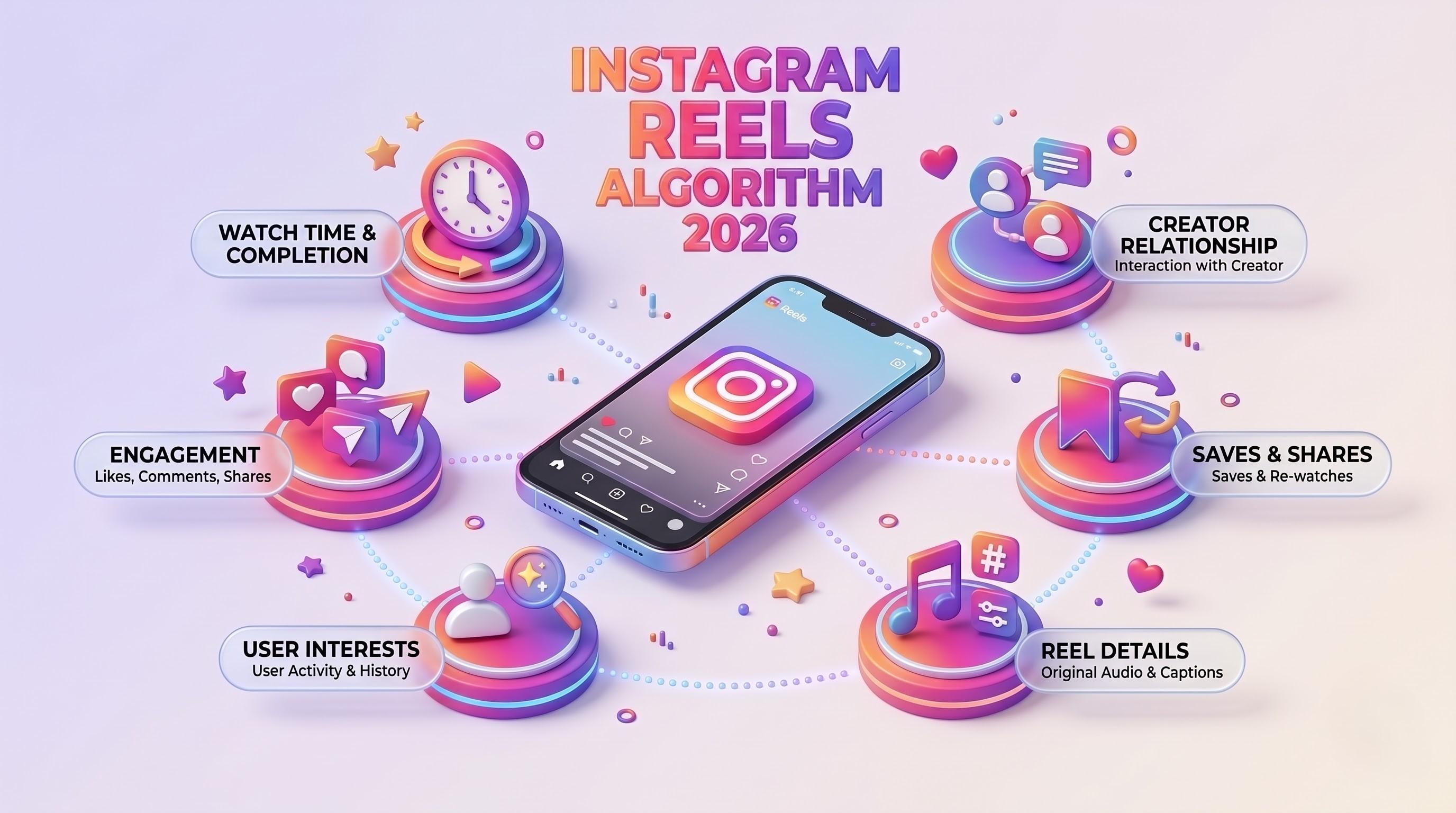
Instagram Reels Algorithm 2026: A Simple Guide for Tech-Savvy Teams
The Instagram Reels algorithm in 2026 ranks videos by watch time, DM sends and likes per reach. This easy guide explains how Reels are tested, what changed recently, and a practical checklist for developers, marketers, CTOs and product teams.

Business Corporate Intranets: A Simple Guide for Tech Teams
Business corporate intranets give every employee one secure place for news, files, people and tools. This easy guide covers features, architecture, security and a step-by-step build plan for CTOs, developers, testers and marketers.
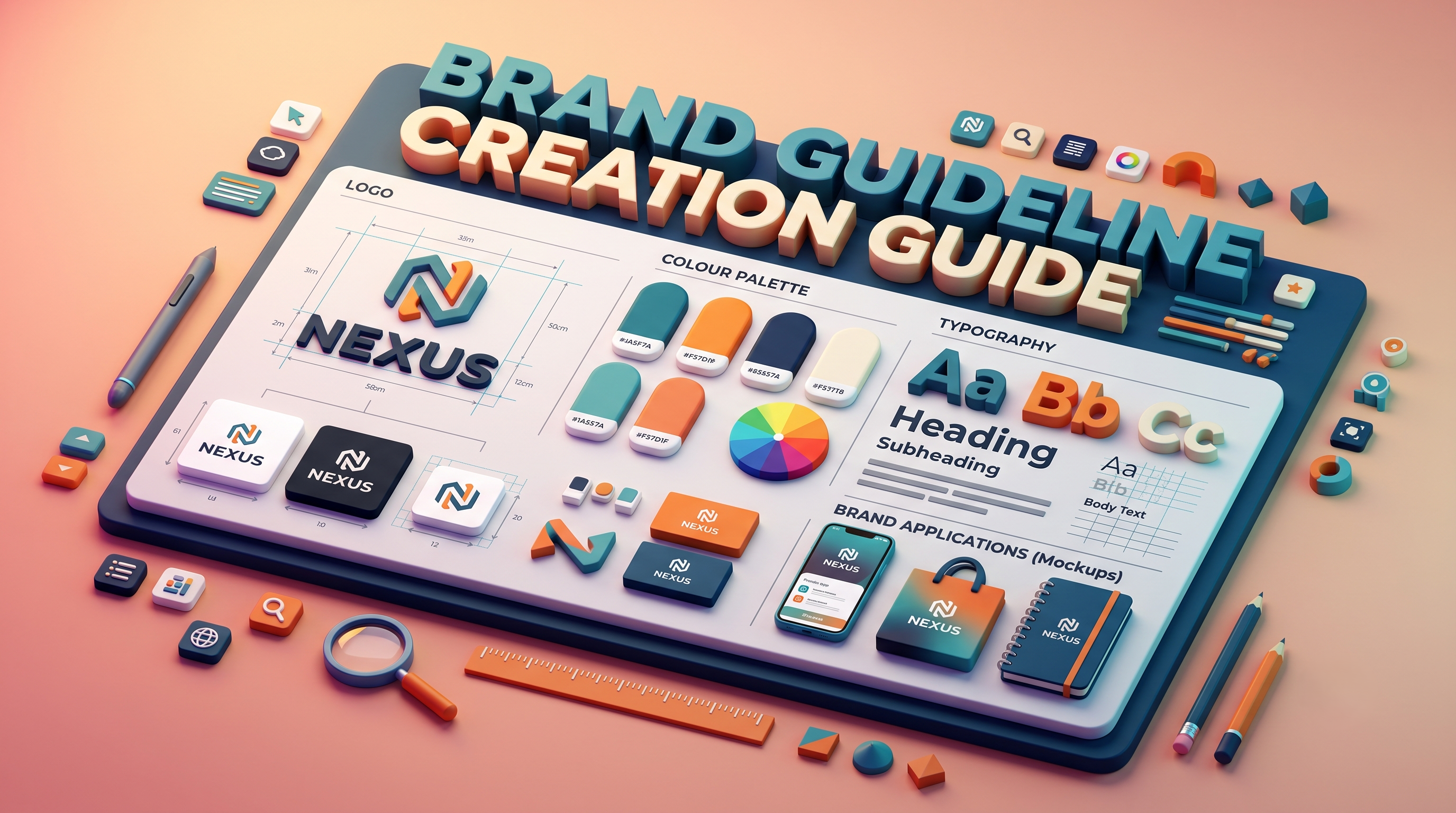
Brand Guideline Creation: A Step-by-Step Guide for Tech Brands
Brand guideline creation turns your logo, colours, fonts and voice into one clear rulebook for designers, developers, testers and marketers. This easy guide covers the core components, an 8-step process, design tokens for code, and how to connect your brand to SEO and AI.