
Table of Contents
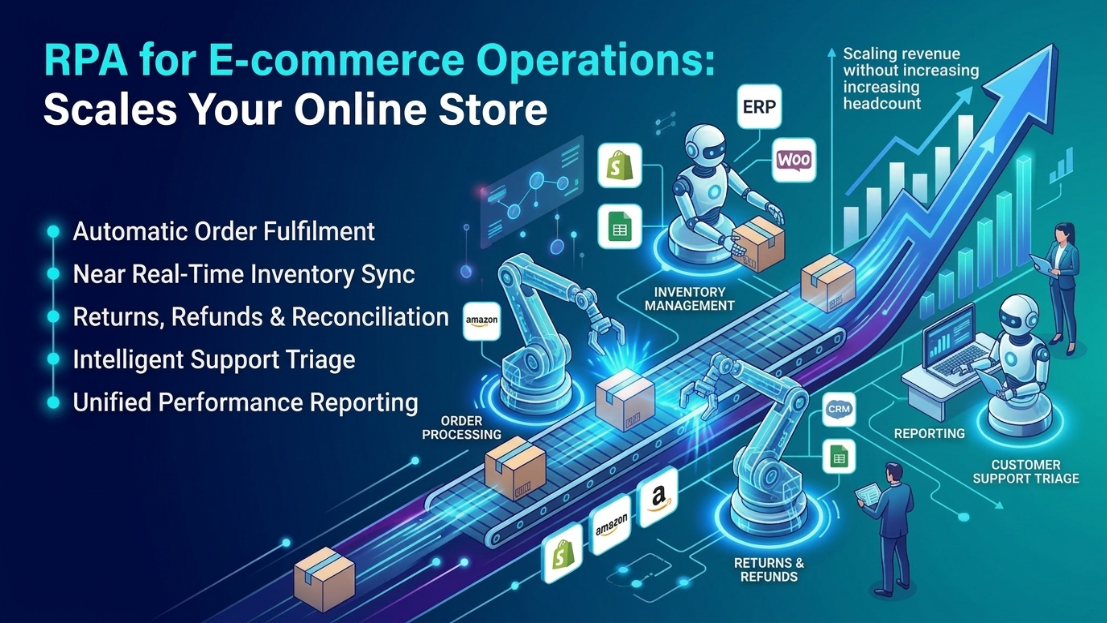
RPA for e-commerce operations is no longer a "nice to have" for high-growth online stores it is the difference between a team that drowns in repetitive back-office work and one that scales revenue without scaling headcount. Robotic Process Automation (RPA) deploys software bots that mimic human clicks, keystrokes, and data entry across the tools you already use, so your e-commerce operations run faster, cleaner, and around the clock. In this guide, we break down the highest-impact RPA use cases for e-commerce ops, the ROI you can expect, and how to roll out automation without disrupting your store.

What Is RPA for E-commerce Operations?
Robotic Process Automation in e-commerce is the use of software "bots" to handle rule-based, repetitive tasks across your storefront, marketplaces, ERP, CRM, and spreadsheets without changing your existing systems. Unlike a one-off script, an RPA bot works across applications the same way a human employee would: logging in, reading data, copying it, and triggering the next step in the workflow.
For online retailers, e-commerce automation with RPA typically covers order processing, inventory management, returns, refunds, reporting, and customer support triage. When you combine RPA with AI sometimes called intelligent automation or hyperautomation bots can also read invoices, classify emails, and make simple decisions. That blend of rule-based bots and AI is exactly what our AI Workflows & Automations team builds for e-commerce brands every day.
The short version: RPA for e-commerce operations removes the manual busywork between your systems so your people can focus on growth, merchandising, and customers.
Why E-commerce Operations Need RPA Now
Online retail runs on dozens of micro-tasks: pulling orders, updating stock, reconciling payments, answering "where is my order?" tickets, and copying numbers between platforms. Done by hand, these tasks are slow, error-prone, and impossible to scale during peak season.
Here is why robotic process automation for e-commerce ops matters in 2026:
- Volume spikes break manual workflows. Flash sales and seasonal peaks multiply order volume overnight; bots absorb that load instantly.
- Errors cost margin. A single mistyped SKU or stock count triggers oversells, refunds, and bad reviews. RPA executes rules exactly, every time.
- Labor is expensive and repetitive work burns out staff. Automating back-office tasks reclaims hundreds of hours a month.
- Customers expect speed. Faster order processing and instant support often paired with AI-powered chatbots directly improve conversion and retention.
Top RPA Use Cases for E-commerce Ops
Here are the highest-ROI e-commerce automation use cases where RPA pays for itself fastest.
1. Order Processing & Fulfillment
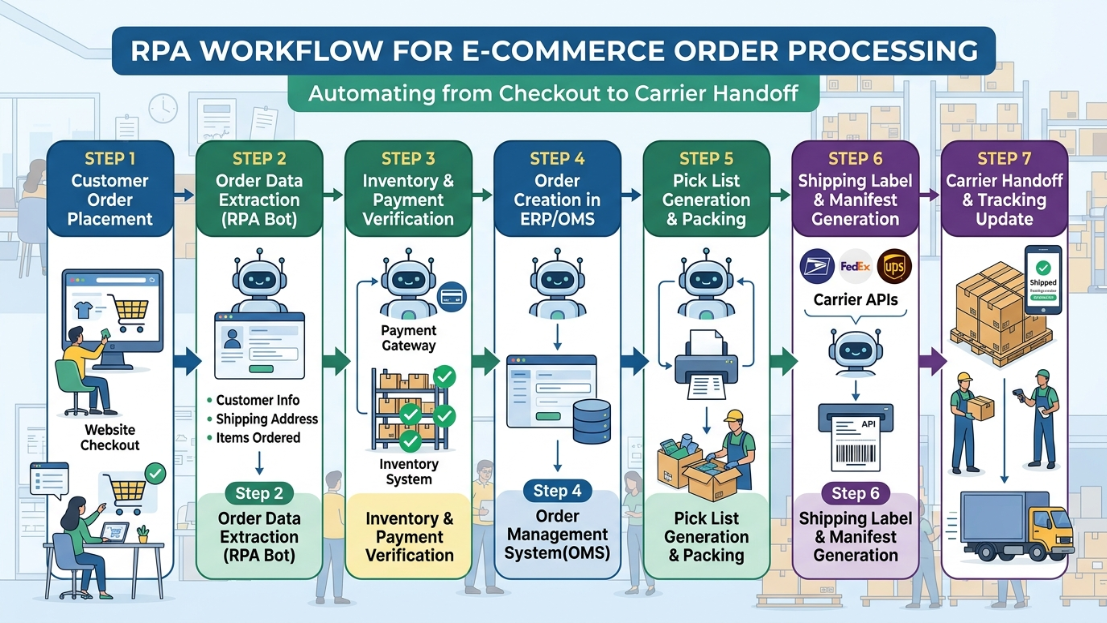
This is the flagship use case for RPA in e-commerce operations. Bots pull new orders from your store and marketplaces, validate addresses and payment status, push orders into your WMS or 3PL, generate shipping labels, and update tracking with zero copy-paste. For stores built on platforms like Shopify or WooCommerce, this connects cleanly to a well-architected backend; see how we approach e-commerce development and Shopify development to make automation reliable.
2. Inventory & Stock Management
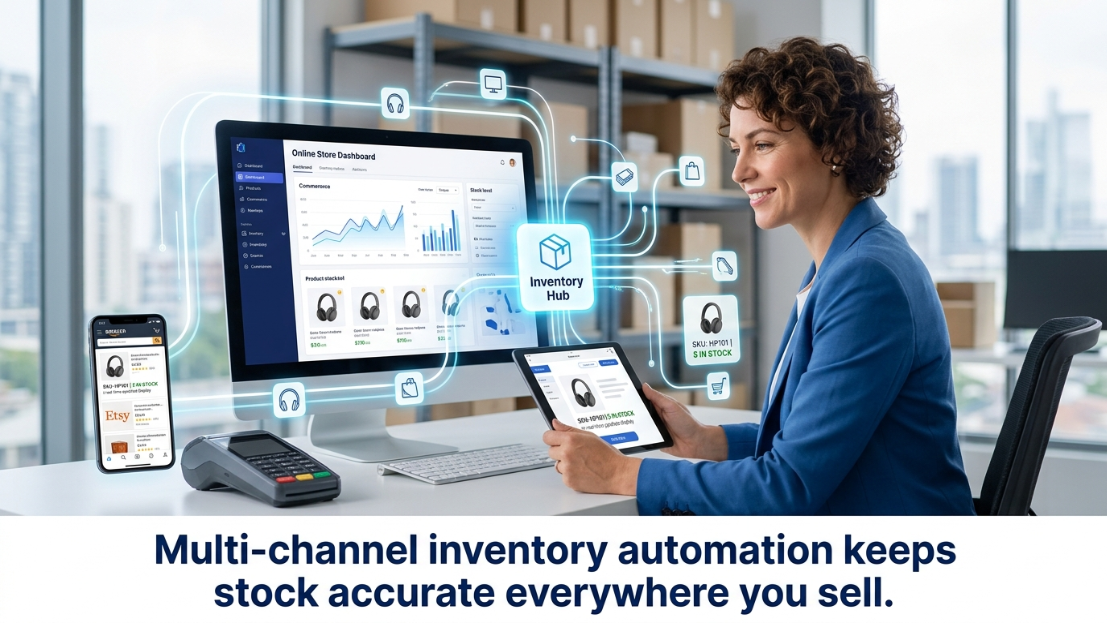
RPA bots sync inventory across your website, Amazon, eBay, and retail channels in near real time, preventing oversells and stockouts. They can also flag low-stock SKUs, auto-generate purchase orders, and update supplier spreadsheets a core piece of automated e-commerce operations.
3. Returns, Refunds & Reconciliation
Returns are a manual nightmare. RPA validates return requests against policy, issues refunds, restocks inventory, and reconciles payment gateway data against your accounting system turning a multi-step chore into a hands-off workflow.
4. Customer Support Triage
Bots read incoming tickets, classify them ("WISMO," refund, exchange), pull the relevant order data, and either auto-respond or route to the right agent. Paired with conversational AI-powered chatbots, this slashes response times and support cost per ticket.

5. Reporting, Pricing & Marketing Ops
RPA compiles daily sales, ad spend, and inventory reports automatically, monitors competitor pricing, and feeds clean data to your marketing team. That clean data makes your performance marketing and e-commerce SEO campaigns sharper and more profitable.
The ROI of RPA in E-commerce Operations
The business case for robotic process automation in e-commerce is concrete and measurable:
- Hours reclaimed: Automating order processing, inventory syncs, and reporting commonly saves 100–200+ hours per month for a mid-sized store.
- Fewer errors: Rule-based bots eliminate manual data-entry mistakes, reducing oversells, refunds, and chargebacks.
- Faster cycle times: Orders ship sooner and tickets resolve faster, lifting CSAT and repeat purchase rates.
- Lower cost to scale: You handle 2x or 3x order volume during peaks without 2x or 3x staff.
- Better data for growth: Clean, automated reporting feeds smarter merchandising and ad decisions.

How to Implement RPA for Your E-commerce Operations
You don't need to automate everything on day one. The smart path to automated e-commerce operations is incremental:
- Map your workflows. List every repetitive, rules-based task across order processing, inventory, returns, and support.
- Prioritize by ROI. Start with high-volume, high-error tasks usually order processing and inventory sync.
- Choose the right approach. Decide where simple RPA bots are enough and where you need AI-driven intelligent automation for unstructured data.
- Build, test, and integrate. Connect bots to your store, ERP, CRM, and shipping tools, then test against real edge cases.
- Monitor and scale. Track hours saved and error rates, then expand automation to the next workflow.
This is exactly the kind of intelligent automation roadmap our team designs and ships through our AI Workflows & Automations services built around your existing stack, not a rip-and-replace.
RPA vs. AI Automation: What's the Difference?
People often conflate the two. RPA handles structured, rule-based tasks "if order is paid, push to fulfillment." AI automation handles judgment and unstructured data reading a handwritten note, understanding a frustrated customer email, or predicting demand. The most powerful e-commerce automation stacks combine both: RPA for the repeatable plumbing, AI for the thinking. Together they form what's increasingly called intelligent automation or hyperautomation and it's where modern online retail operations are heading.
If you're also rethinking the storefront experience that feeds these operations, our breakdown of e-commerce UX and conversion design pairs naturally with an automation strategy.
Frequently Asked Questions About RPA for E-commerce Operations
Is RPA for e-commerce operations only for large stores? No. Small and mid-sized stores often see the fastest ROI because owners and lean teams are spending the most time on manual tasks. RPA scales down as well as up.
Will RPA replace my e-commerce team? RPA replaces repetitive tasks, not people. It frees your team from data entry so they can focus on merchandising, growth, and customer relationships.
Does RPA work with Shopify, WooCommerce, and marketplaces? Yes. RPA bots work across your store platform, marketplaces, ERP, CRM, and spreadsheets without requiring you to replace those systems.
How quickly can I see results from e-commerce automation? Many stores see measurable time savings within the first month of automating order processing or inventory sync, with ROI growing as you automate more workflows.
Start Automating Your E-commerce Operations
RPA for e-commerce operations is one of the highest-leverage investments an online retailer can make: less manual work, fewer errors, faster fulfillment, and a store that scales without burning out your team. The brands winning in 2026 aren't working harder on back-office tasks they're automating them.
Ready to see where RPA and intelligent automation can save your store the most time and money? Book your free digital audit and our team at Cinute Infomedia will map your highest-ROI e-commerce automation opportunities no obligation.
Related Articles

Analytics for Bot Performance: How to Measure, Improve and Prove Your Chatbot's Value
Your chatbot is live, but is it working? This guide explains analytics for bot performance in plain language: the metrics that matter, how to set up tracking, and how to turn conversation data into better answers, lower costs and measurable ROI.
Technical SEO Audit Checklist 2026: The Complete Step-by-Step Guide
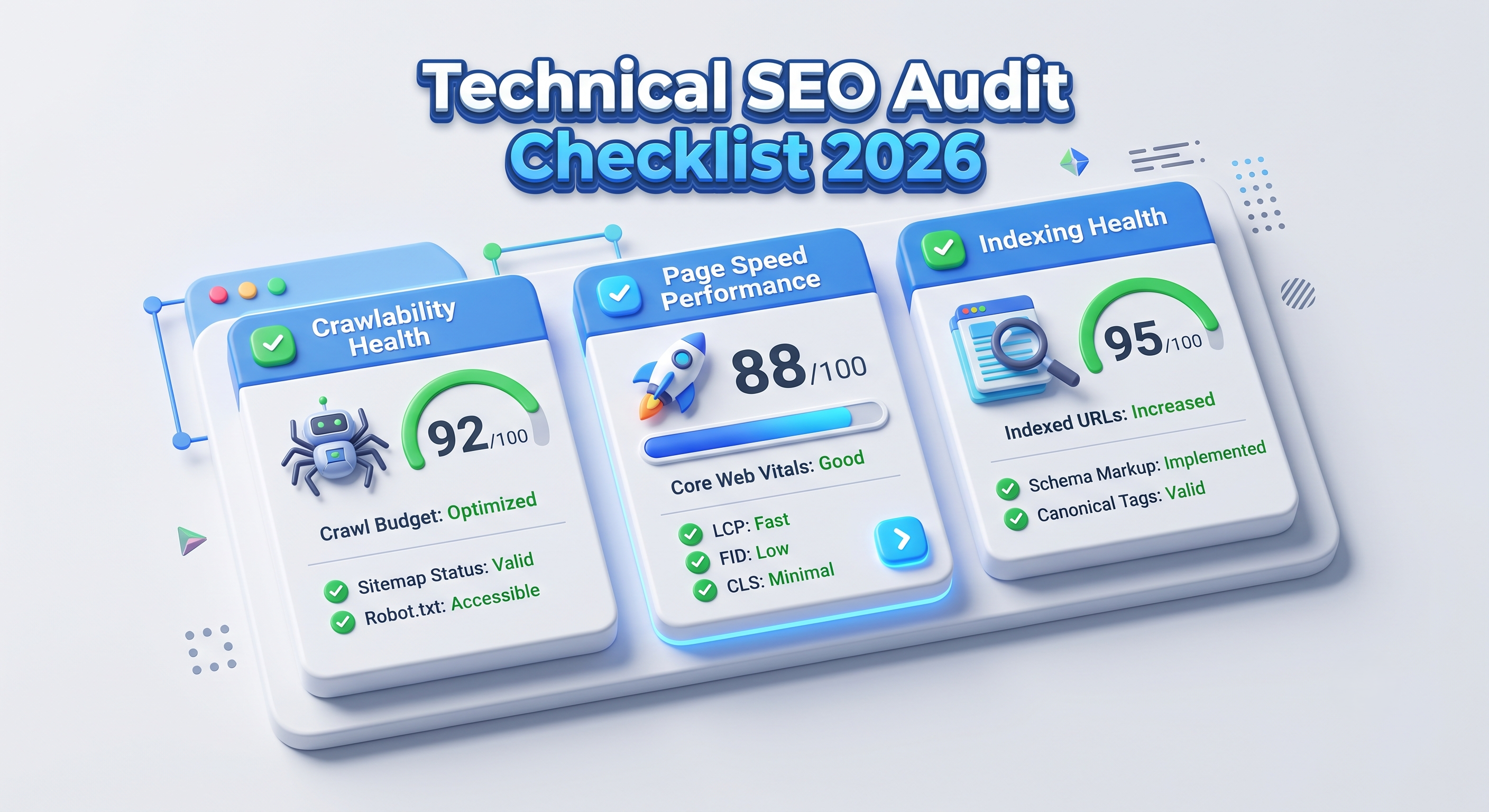
A technical SEO audit finds the hidden problems that stop search engines from crawling, rendering and ranking your pages. This 2026 checklist walks developers, testers, CTOs and marketers through every step, from crawlability and Core Web Vitals to structured data and AI search readiness.

Logo Design Trends 2026: 8 Shifts Every Tech Brand Must Know
Logos now work like small pieces of software. Discover the 8 logo design trends of 2026, from adaptive systems to motion and dark-mode palettes, plus a technical checklist for developers and marketers.