
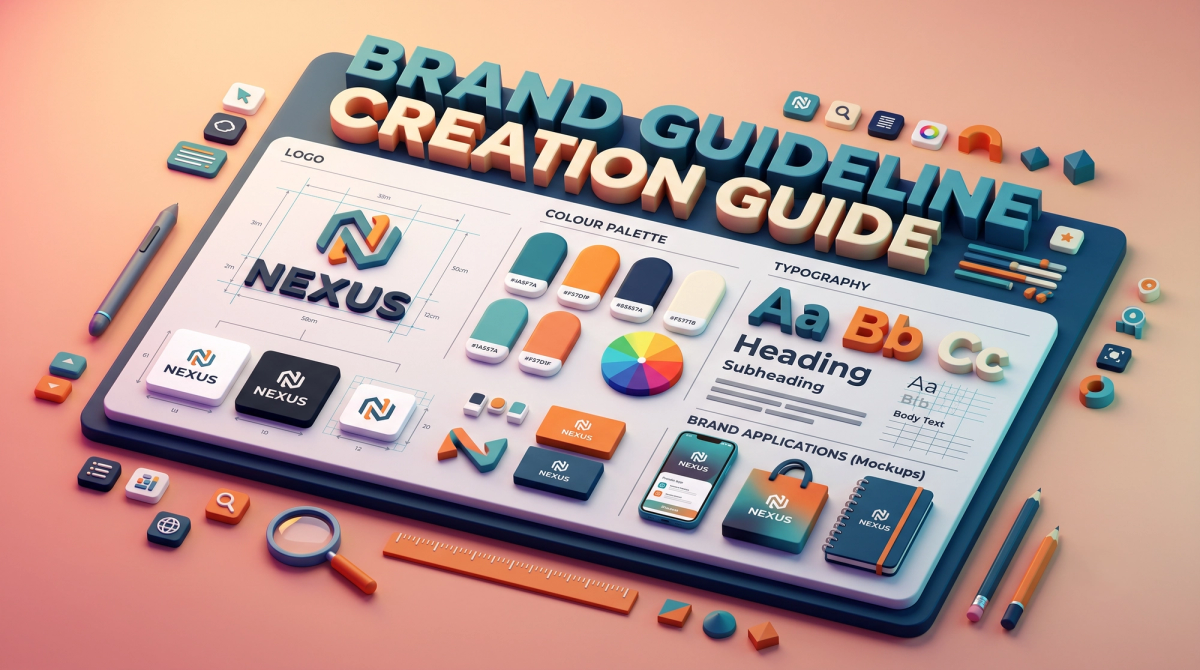
Table of Contents
Brand guideline creation is the process of turning your brand's look, voice and values into one clear rulebook that every team can follow. Without it, a logo gets stretched, three shades of blue appear on one page, and your chatbot sounds nothing like your website. With it, designers, developers, testers and marketers all build from the same source of truth.
If you are a CTO, product manager, developer or digital marketer, you may think brand work belongs to the design team. In reality, brand guidelines touch your codebase, your UI components, your documentation and even your SEO. This guide explains brand guideline creation in plain language, step by step, so you can build a rulebook that people actually use.
What Are Brand Guidelines?
Brand guidelines, also called a brand style guide or brand book, are a document that explains how your brand should look, sound and behave everywhere it appears. Think of them as the "README" for your brand. A good README tells a new developer how to run the project. Good brand guidelines tell a new designer, writer or agency how to represent the company without guessing.
Guidelines usually cover your logo, colours, typography, imagery, voice and tone, and sometimes UI components. The best ones also explain the "why" behind each rule, because people follow rules they understand.
Why Brand Guidelines Matter for Tech Teams
Tech companies often grow fast and ship fast. That speed is exactly when brand drift begins. A new landing page uses an old logo, a product update uses a different button style, and a sales deck uses colours nobody approved. Brand guidelines prevent this drift in five ways:
- Consistency: Every touchpoint looks and sounds like the same company, which builds recognition.
- Speed: Teams stop asking "which blue is correct?" and start shipping. Approved assets and rules remove back-and-forth.
- Trust: Buyers, especially in B2B and SaaS, read consistency as professionalism and reliability.
- Scalability: New hires, freelancers and agencies onboard faster when the rules are written down.
- Search visibility: Consistent brand names, messaging and page structure make your content easier for search engines and AI assistants to understand and attribute to you.
In short, guidelines are not decoration. They are a productivity tool and a quality-control system.
The Core Components of Brand Guidelines
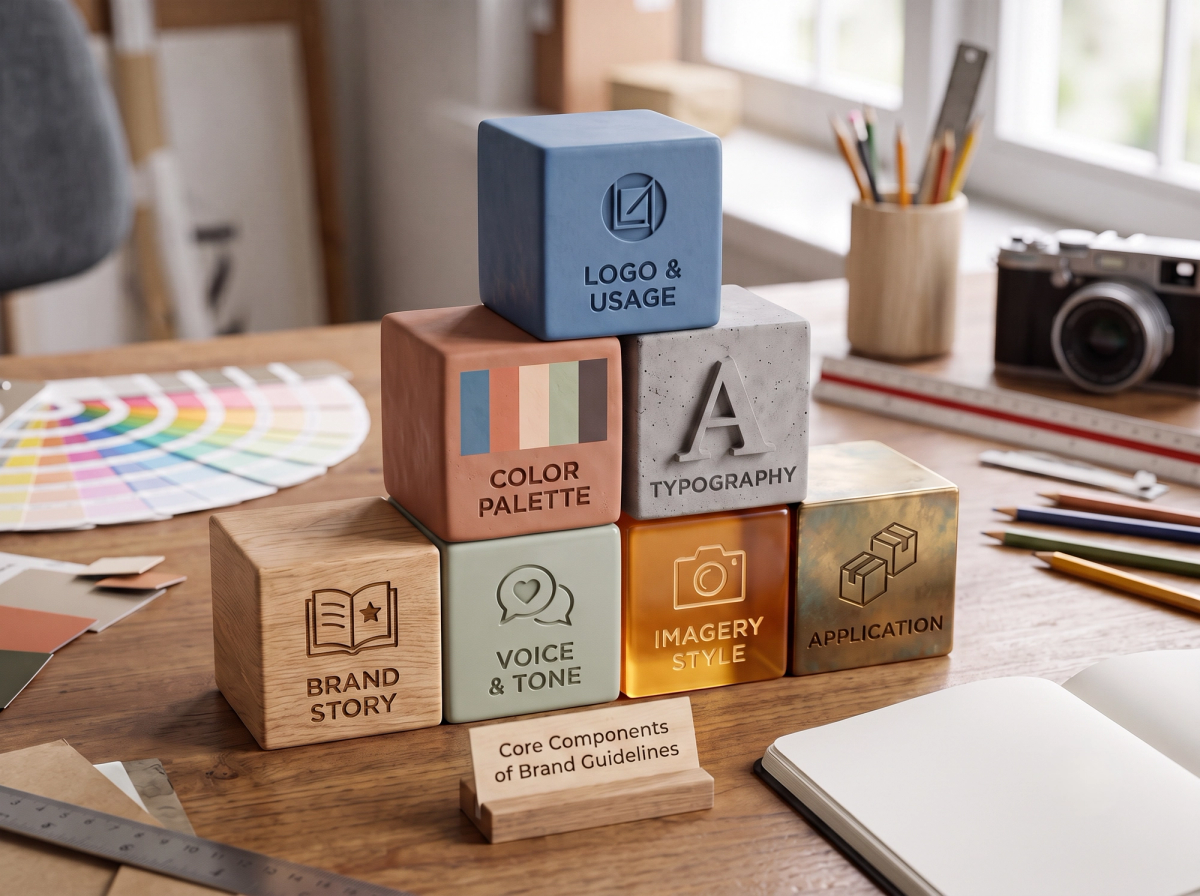
Before you start writing, know what a complete document contains. Here are the building blocks.
1. Brand foundation
This is the "why" layer. It includes your mission, vision, values, positioning statement and target audience. Keep it short. One page is enough. Every later decision, from colour to copy, should trace back to this foundation.
2. Logo usage
Show the primary logo, secondary versions (stacked, horizontal, icon-only) and the minimum size for each. Define clear space around the logo and list the misuse cases: no stretching, no recolouring, no drop shadows, no busy backgrounds. Include file formats too: SVG for web, PNG for documents, and a favicon set. If you want inspiration on where logos are heading, read our post on logo design trends for tech brands in 2026.
3. Colour palette
List your primary, secondary and neutral colours with HEX, RGB and CMYK values. Add rules for usage, such as "primary colour for buttons and links only." Check contrast ratios against accessibility standards (WCAG) so text stays readable. Include dark-mode variants if your product supports them.
4. Typography
Name your heading and body fonts, define the size scale, line height and weight, and give fallback fonts for web. Developers need this detail to build a consistent type system in CSS.
5. Imagery and iconography
Describe the photo style, illustration style and icon set. Is your brand realistic or abstract? Warm or minimal? Show good and bad examples side by side.
6. Voice and tone
Voice is your brand's personality. Tone is how it adjusts to the situation. Your error message should not sound like your launch announcement. Define three or four voice traits (for example: clear, confident, helpful) and give "we say / we don't say" examples. This matters even more now that AI chatbots speak for your brand every day.
7. UI components and design system
For product teams, link the guidelines to your design system: buttons, forms, spacing, grids, states and motion. This is where brand and engineering meet.
How to Do Brand Guideline Creation: 8 Simple Steps
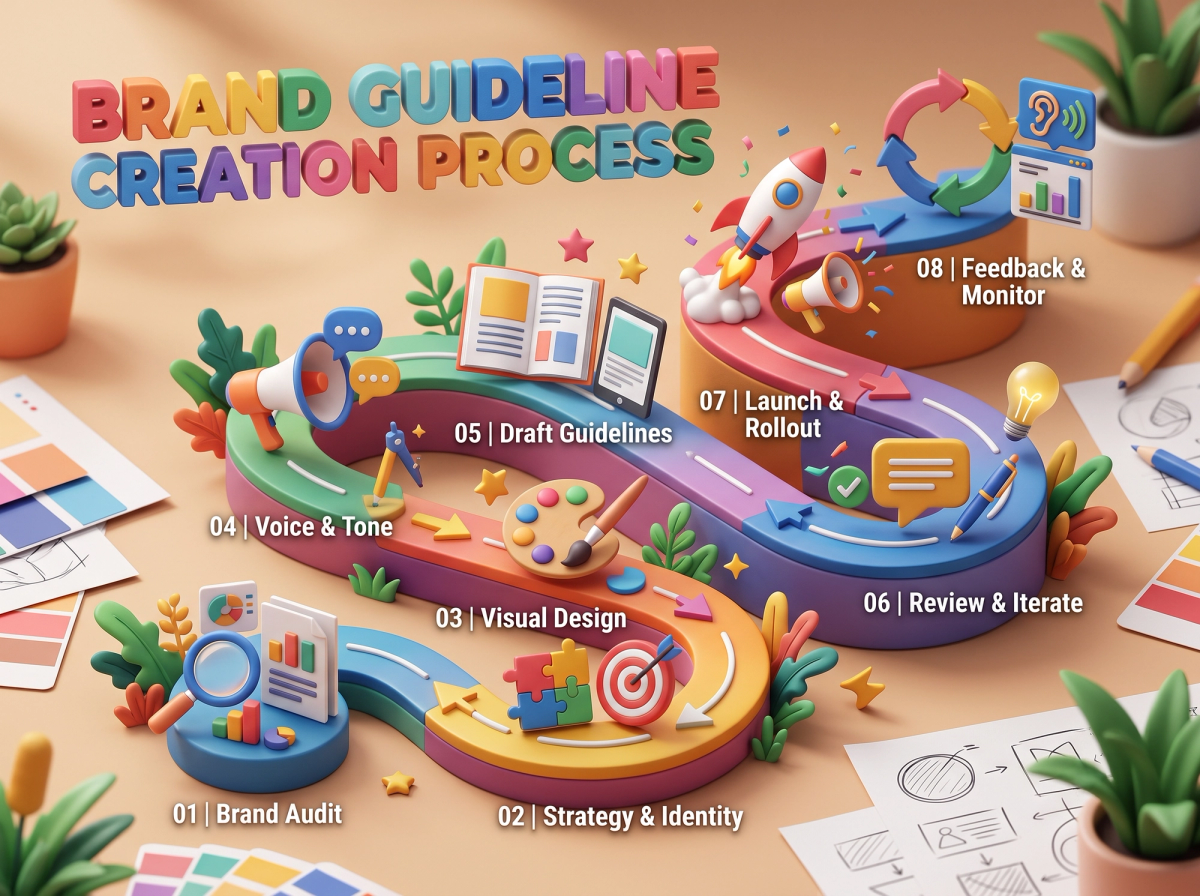
Now the practical part. Follow these steps in order, and you will have a working guideline in a few weeks, not months.
Step 1: Audit what already exists
Collect every logo version, colour, font, slide template, social banner and product screen currently in use. Put them on one board. You will quickly see inconsistencies. This audit shows what to fix first and what to keep.
Step 2: Define your brand foundation
Write your mission, values, audience and positioning in plain words. Ask: who are we for, what do we promise, and why should anyone believe us? If your team cannot agree on these answers, no logo or colour will solve the problem.
Step 3: Research your audience and competitors
Look at how competitors present themselves. Study what your audience, such as developers, researchers or product leaders, values: clarity, evidence, speed or security. Your guidelines should help you stand out, not blend in.
Step 4: Design the visual identity
Create or refine the logo, palette, typography and imagery style. Keep the system small. Five well-chosen colours and two fonts beat twenty options nobody remembers. If you need expert help here, our brand identity and design team builds complete visual identity systems from strategy to final files.
Step 5: Write the voice and messaging rules
Define voice traits, a short tagline, key messages and a glossary of preferred terms (for example, "sign in," not "log in," if that is your choice). Add examples for emails, product copy, support replies and social posts.
Step 6: Translate the brand into product and web standards
This step is often missed. Convert your visual rules into reusable code: CSS variables, components and templates. When the website is built on these standards, brand consistency becomes automatic. A strong web design and development process builds your brand rules directly into the front end, so teams do not have to re-interpret them on each page.
Step 7: Build the document and the asset library
Package everything into one easy-to-navigate format: a web page, a PDF or a Notion or Figma file. Place downloadable assets (logos, templates, icons) beside the rules. Use clear headings, visual examples and short paragraphs. If people cannot find the logo in under a minute, they will use the wrong one.
Step 8: Launch, train and gather feedback
Announce the guidelines internally, run a short walk-through and name an owner. Collect feedback after the first month. A guideline nobody knows about is just a file.
Brand Guidelines for Developers: Design Tokens
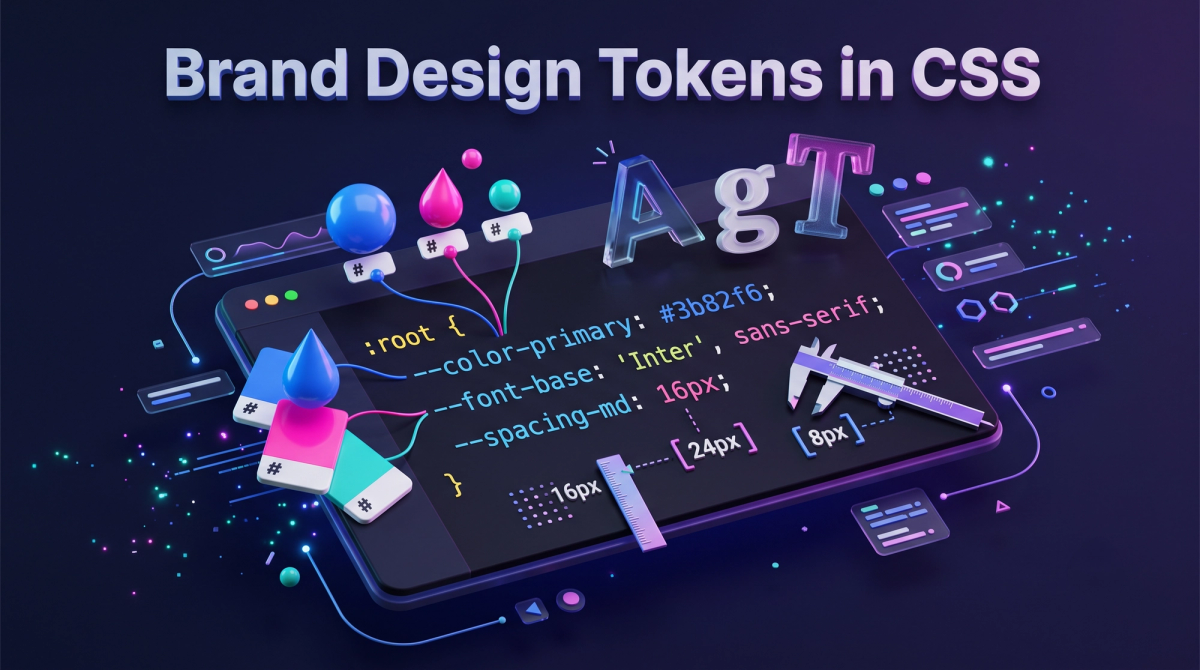
Developers and testers benefit most when brand rules become code. This is where design tokens help. A design token is a named value, such as a colour or spacing unit, that is stored once and reused everywhere. Instead of copying a HEX code into fifty files, you reference one token.
:root {
  --brand-primary: #0b5fff;
  --brand-neutral-900: #111827;
  --font-heading: "Inter", sans-serif;
  --space-md: 16px;
}
When the brand updates, you change the token once and every component updates. This also helps QA teams, because they can test against a clear specification: does the button use --brand-primary, and does the text meet the contrast requirement? Visual regression testing then catches brand errors the same way it catches layout bugs.
Brand Consistency Beyond Design: SEO, Content and AI
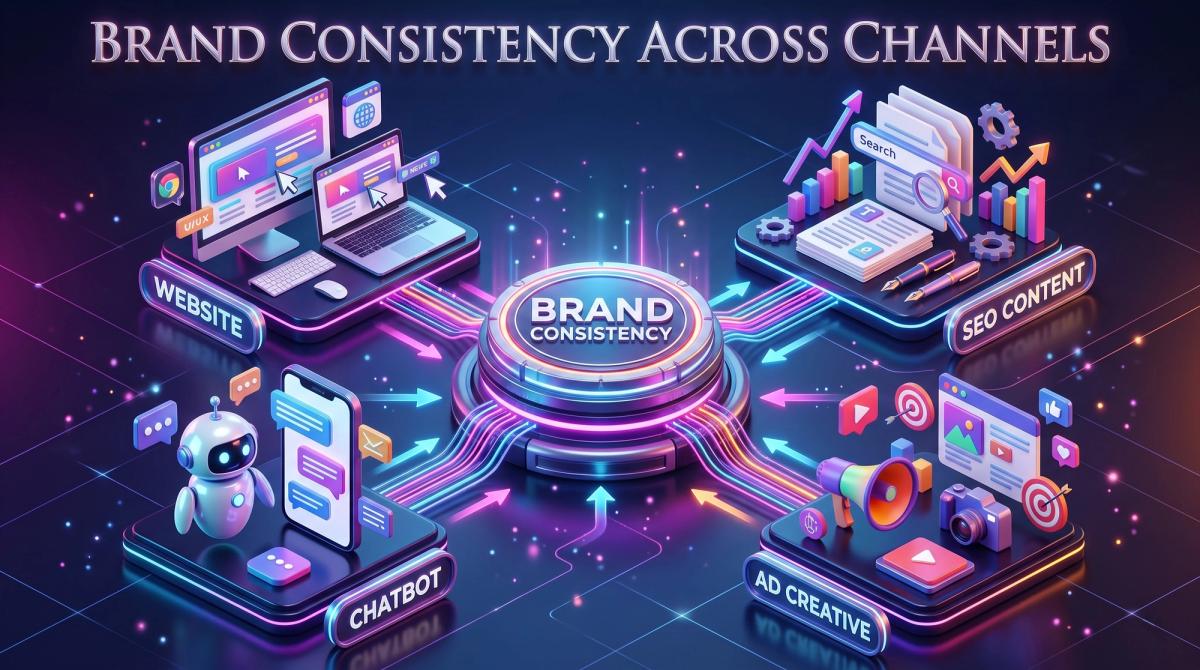
Brand guidelines should not stop at visuals. Your content and search presence need rules too.
- Naming: Use one spelling and format for your company and product names across your site, profiles and press mentions.
- Page structure: Define standard heading structure, meta title patterns and tone for blog posts so every page feels like one brand. A good SEO content writing workflow can build these rules into your editorial checklist.
- Chatbots and automation: If an AI assistant answers customers, give it the same voice rules as your human writers. An AI-powered chatbot that follows your tone guide feels like part of the brand, not a separate robot.
- Ads and campaigns: Paid creative should follow the same colours, fonts and message hierarchy as your site. Consistent branding across ads and landing pages often improves recognition and trust, which supports your performance marketing results.
Common Brand Guideline Mistakes to Avoid
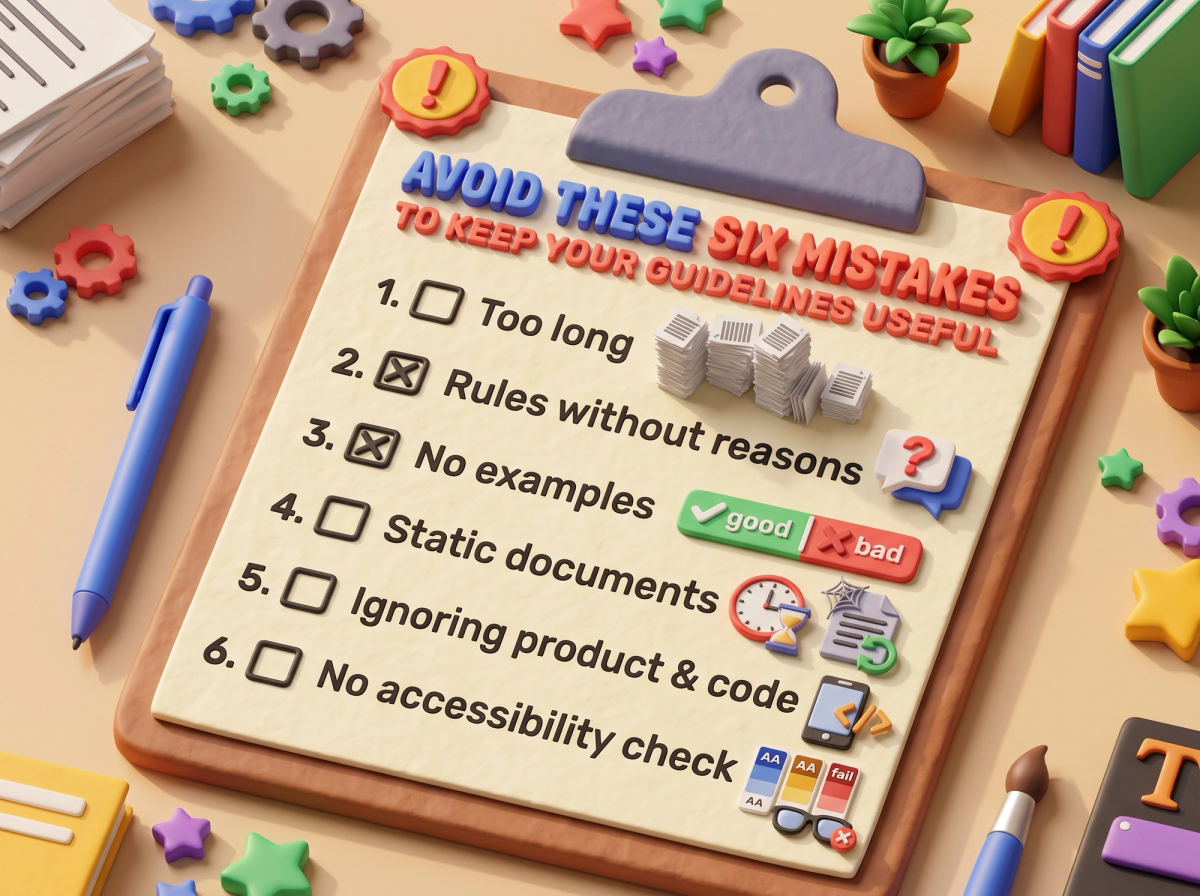
Even well-meant guidelines fail. Watch for these problems:
- Too long: A 100-page PDF no one reads is worse than a clear 15-page guide.
- Rules without reasons: Explain why a rule exists and people will respect it.
- No examples: Always show correct and incorrect use side by side.
- Static documents: A PDF that is never updated goes stale. Treat guidelines as a living product with versions and an owner.
- Ignoring product and code: If the guide stops at the logo, your app and website will drift anyway.
- No accessibility check: Beautiful colours that fail contrast tests hurt users and your brand.
How to Keep Your Brand Guidelines Alive
Creating the guide is only half the job. To keep it useful:
- Assign a clear owner, such as a brand manager or design lead.
- Store the guide online in one place and keep it searchable.
- Version your updates and share a short changelog.
- Review it every six to twelve months, or after any major rebrand or product launch.
- Add a request channel so teams can ask for new templates or exceptions.
A Quick Brand Guideline Checklist
Use this checklist to review your own document before you publish it. If you cannot tick every box, you know where to improve.
- The mission, values and audience fit on one page.
- Every logo version has a minimum size, clear-space rule and download link.
- Each colour has HEX, RGB and CMYK values plus a contrast check.
- Fonts include web fallbacks and a clear size scale.
- Voice rules include real "say this, not that" examples.
- Design tokens or CSS variables exist for developers.
- QA has acceptance criteria for brand checks, such as visual regression tests.
- The document has an owner, a version number and a review date.
Brand Guidelines and Technical SEO Go Together
A brand is also something search engines and AI tools try to understand. When your site is fast, well structured and consistent, both people and crawlers trust it more. Before a rebrand goes live, run a technical review so new fonts, images and templates do not slow the site down or break crawlability. Our technical SEO audit checklist for 2026 walks through the steps, from Core Web Vitals to structured data. Pairing a rebrand with an audit protects the traffic you have already earned.
Also remember to update your brand name, logo, social links and schema markup everywhere after any change. Small gaps, such as an old logo in a search result or an outdated company description in a directory, quietly weaken brand trust.
Frequently Asked Questions
How long does brand guideline creation take? A basic guide can take two to four weeks. A full identity system with a design system and asset library can take two to three months, depending on how many teams are involved.
What is the difference between brand guidelines and a style guide? A style guide often covers writing and formatting rules. Brand guidelines are broader and cover strategy, visuals, voice and usage. Many companies combine both into one document.
Do startups really need brand guidelines? Yes, but keep them light. A short guide with your logo rules, colours, fonts and voice is enough at first. You can expand it as the team and product grow.
Who should own the brand guidelines? Usually the design or marketing lead owns them, with input from product, engineering and content teams. Shared ownership with one clear decision-maker works best.
Conclusion
Brand guideline creation is not about making a pretty document. It is about giving every person and every system in your company the same clear rules, so your brand feels trustworthy at every touchpoint. Start with an audit, define your foundation, design a small and flexible visual system, write your voice rules, turn them into code, and then keep the guide alive.
Ready to build a brand system that works across design, code, SEO and AI? Our team can help you plan, design and implement it. Talk to Cinute InfoMedia for a free digital audit and a clear roadmap for your brand.
Related Articles
Voice Search SEO Preparation Guide
Voice search rewards clear answers, fast pages and smart markup. This guide gives developers, marketers and product teams a practical ten-step plan to prepare their site for voice search SEO in 2026.

Analytics for Bot Performance: How to Measure, Improve and Prove Your Chatbot's Value
Your chatbot is live, but is it working? This guide explains analytics for bot performance in plain language: the metrics that matter, how to set up tracking, and how to turn conversation data into better answers, lower costs and measurable ROI.
Technical SEO Audit Checklist 2026: The Complete Step-by-Step Guide
A technical SEO audit finds the hidden problems that stop search engines from crawling, rendering and ranking your pages. This 2026 checklist walks developers, testers, CTOs and marketers through every step, from crawlability and Core Web Vitals to structured data and AI search readiness.