
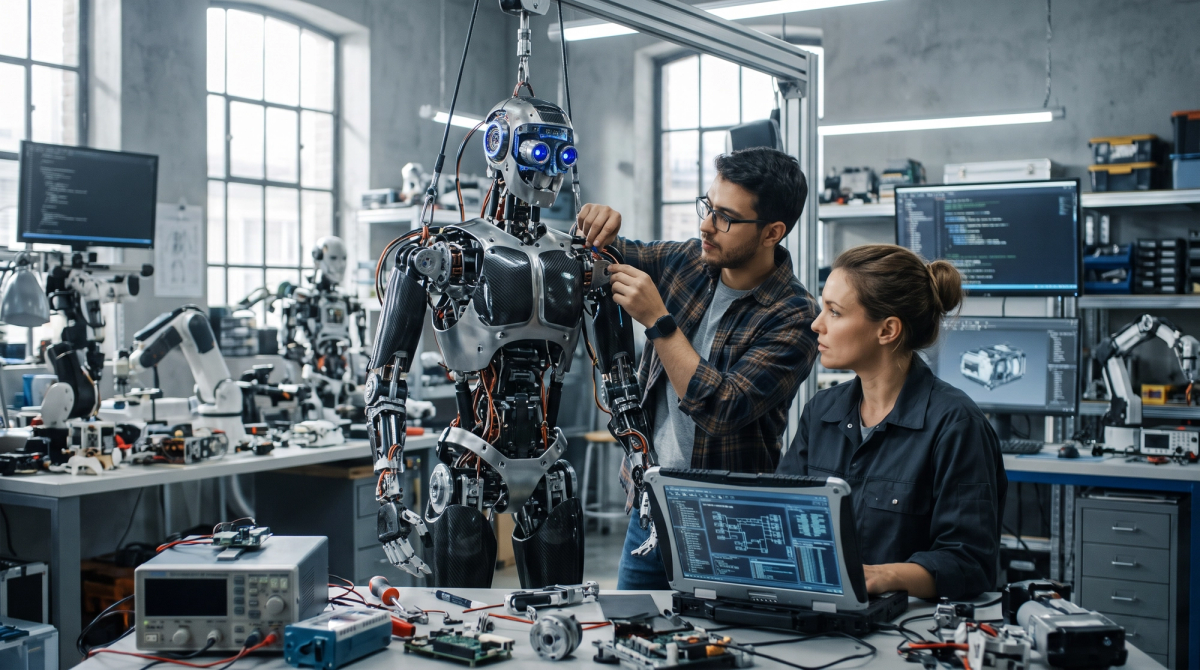
Not long ago, robots belonged to science fiction. Today they sort parcels in warehouses, assist surgeons, inspect pipelines and vacuum living rooms. Robotics has moved out of research labs and into everyday business, and the pace is picking up.
If you are a developer, tester, researcher, CTO or product manager, you probably feel it already. Robots are no longer just hardware projects. They run on software, data, cloud services and AI models, so your skills matter more than ever.
In this guide we explain robotics in plain language: what it is, how robots actually work, the main types, where they are used and what to watch in 2026 and beyond.
What Is Robotics?
Robotics is the field of engineering and computer science that designs, builds and programs robots. A robot is a machine that can sense its surroundings, make decisions and take physical action with little or no human help.
The word “robot” first appeared in Karel Čapek’s 1920 play R.U.R., and writer Isaac Asimov popularized “robotics” in the 1940s. The first industrial robot, Unimate, joined a General Motors assembly line in 1961. Since then the field has blended several disciplines:
- Mechanical engineering for bodies, joints and grippers
- Electronics for sensors, motors and power
- Computer science for control software, perception and planning
- Artificial intelligence for vision, learning and decision-making
That blend is what makes robotics exciting. It is where code meets the physical world, and bugs have real consequences.
How Robots Work: Sense, Think, Act
Almost every robot, from a factory arm to a warehouse rover, follows one loop: sense, think, act.
1. Sense: sensors and perception
Sensors give a robot awareness. Cameras provide vision, LiDAR measures distance with laser pulses, ultrasonic sensors detect nearby objects and IMUs (inertial measurement units) track motion. Force and torque sensors tell a gripper how hard it is squeezing. Computer vision and sensor fusion turn this raw data into a usable picture of the world.
2. Think: control and decision-making
The controller is the robot’s brain. It may be a microcontroller, an industrial PLC or an embedded computer running Linux. Software here handles localization (where am I?), mapping, path planning (how do I get there?) and motion control. Techniques such as SLAM, short for simultaneous localization and mapping, let a robot build a map while moving through it.
3. Act: actuators and end effectors
Actuators such as electric motors, hydraulic cylinders and pneumatic systems create movement. At the tip of an arm sits the end effector, which could be a gripper, a welding torch or a suction cup. Kinematics, the math of motion, tells the robot how to move each joint to reach a point in space.
Then the loop repeats many times per second. The speed and reliability of that loop is what separates a demo from a product.

Main Types of Robots
Not every robot looks like a movie humanoid. These are the types you will meet most often:
- Industrial robots: Robotic arms for welding, painting, assembly and packing. Fast and precise, usually working behind safety barriers.
- Collaborative robots (cobots): Smaller arms built to work safely beside people on tasks like machine tending.
- Autonomous mobile robots (AMRs): Wheeled robots that navigate warehouses, hospitals and factories on their own.
- Drones: Aerial robots for inspection, mapping, agriculture and delivery.
- Humanoid robots: Two-legged machines designed for spaces built for humans. Still early, but attracting heavy investment.
- Medical robots: Systems that give surgeons extra precision and steadier movement.
- Service and consumer robots: Robot vacuums, lawn mowers and hospitality helpers.
The right type depends on the task, the environment and the budget. A cobot arm and an AMR solve very different problems, even inside the same warehouse.

The Software Stack Behind Modern Robotics
Hardware gets the attention, but software decides what a robot can really do. Most teams work with these layers:
- ROS 2 (Robot Operating System): An open-source framework offering messaging, drivers, navigation tools and a large community, so you do not rebuild basics.
- Languages: Python for prototyping and AI, C++ for performance-critical control loops.
- Simulation: Gazebo, NVIDIA Isaac Sim and Webots let you test behavior virtually before touching real hardware.
- Machine learning: Neural networks power object detection and grasp prediction, while reinforcement learning and imitation learning are pushing into full robot control.
- Cloud and edge computing: Fleets send data to the cloud for analytics and updates, while time-critical decisions stay on the device.
If you are building fleet dashboards, APIs or data pipelines around robots, a backend such as Python and Django is a natural fit for admin portals and monitoring tools.
Real-World Applications of Robotics
Robots earn their place where work is repetitive, dangerous, precise or simply too large for people to do alone.
- Manufacturing: Arms handle welding, assembly and quality inspection around the clock with consistent accuracy.
- Logistics and warehousing: AMRs move shelves and totes, while robotic arms pick and sort parcels.
- Healthcare: Surgical systems, rehabilitation devices and hospital delivery robots support clinicians.
- Agriculture: Robots weed, monitor crop health and assist with harvesting.
- Energy and infrastructure: Drones and crawlers inspect wind turbines, pipelines and bridges without putting people at risk.
- Space exploration: Rovers and robotic arms work where humans cannot easily go.
- Retail and hospitality: Shelf-scanning robots and serving robots handle routine tasks.

How to Test Robotics Software
Testers and QA engineers have a special job in robotics, because a failed test can mean a crashed arm instead of a crashed app. A few practical habits help:
- Simulate first. Run thousands of scenarios in simulation, including odd edge cases such as sensor dropouts or blocked paths.
- Use hardware-in-the-loop testing. Connect real controllers to simulated environments before going fully physical.
- Record everything. Tools like ROS bag files let you replay real runs and reproduce bugs.
- Automate regression tests. Every code change should re-check navigation, perception and safety behavior.
- Follow safety standards. Industrial robots fall under ISO 10218, and collaborative robots reference ISO/TS 15066.
AI-assisted tooling is making this faster. Our article on AI-driven software development shows how automation is reshaping testing and delivery cycles.
Robotics Meets AI Automation in Business
Robotics is one part of a bigger automation story. Many companies start not with physical machines but with intelligent software that removes repetitive work from daily operations. The thinking is the same: sense a trigger, decide, act.
That is where AI workflows and automations come in, connecting your CRM, documents and internal tools so routine tasks run on their own. If you want to see the idea in action, read our guide to automating business processes with AI workflows. Customer-facing teams can go a step further with AI-powered chatbots that answer questions around the clock, much like a software robot on your website.
Marketing a Robotics Product or Brand
Building a great robot is only half the job. Buyers such as CTOs, engineers and procurement teams research heavily before they talk to sales, so discoverability matters.
Start with a crawlable, fast website. Technical SEO covers site speed, structured data and clean architecture, which are essential for complex product catalogs. Then support it with clear, expert content. Professional SEO content writing helps explain technical products in language that both humans and search engines understand.

Key Challenges in Robotics
Despite rapid progress, robotics still faces real hurdles:
- Cost and integration: Hardware, safety systems and integration with older equipment can be expensive.
- Unpredictable environments: Homes and streets are messier than factory floors.
- Safety and trust: Robots working near people need dependable fail-safes.
- Data and skills: Training AI models needs large datasets, and engineers who blend software with hardware are in demand.
- Security: Connected robots must be protected like any other networked system.

Robotics Trends to Watch in 2026 and Beyond
- Embodied AI: Foundation models are being adapted so robots can follow plain-language instructions and generalize across tasks.
- Humanoids in pilots: Early deployments in logistics and manufacturing are testing whether general-purpose robots can pay off.
- Robots-as-a-Service: Subscription pricing lowers the upfront cost for smaller companies.
- Better simulation: Realistic virtual training shortens development time and cuts risk.
- Edge AI: More processing on the robot means faster reactions and less dependence on connectivity.
Frequently Asked Questions
How do robots work for beginners?
Robots sense their environment with sensors, process the data in a controller and act through motors and other actuators. This repeats in a continuous loop.
What programming languages are used in robotics?
Python and C++ are the most common, usually together with ROS 2.
Will robots replace human jobs?
Robots tend to take over repetitive or dangerous tasks, while creating new roles in programming, maintenance, testing and supervision.
Where should a beginner start?
Try ROS 2 with a simulator such as Gazebo. You can learn the core ideas without buying hardware.
Conclusion
Robotics combines mechanics, electronics, software and AI into machines that sense, think and act. Whether you are testing control code, planning a product roadmap or marketing a new robotic system, understanding the basics helps you make better decisions.
Ready to bring smarter automation or stronger search visibility to your business? Talk to the Cinute InfoMedia team and let us help you plan the next step.
Related Services
Related Articles
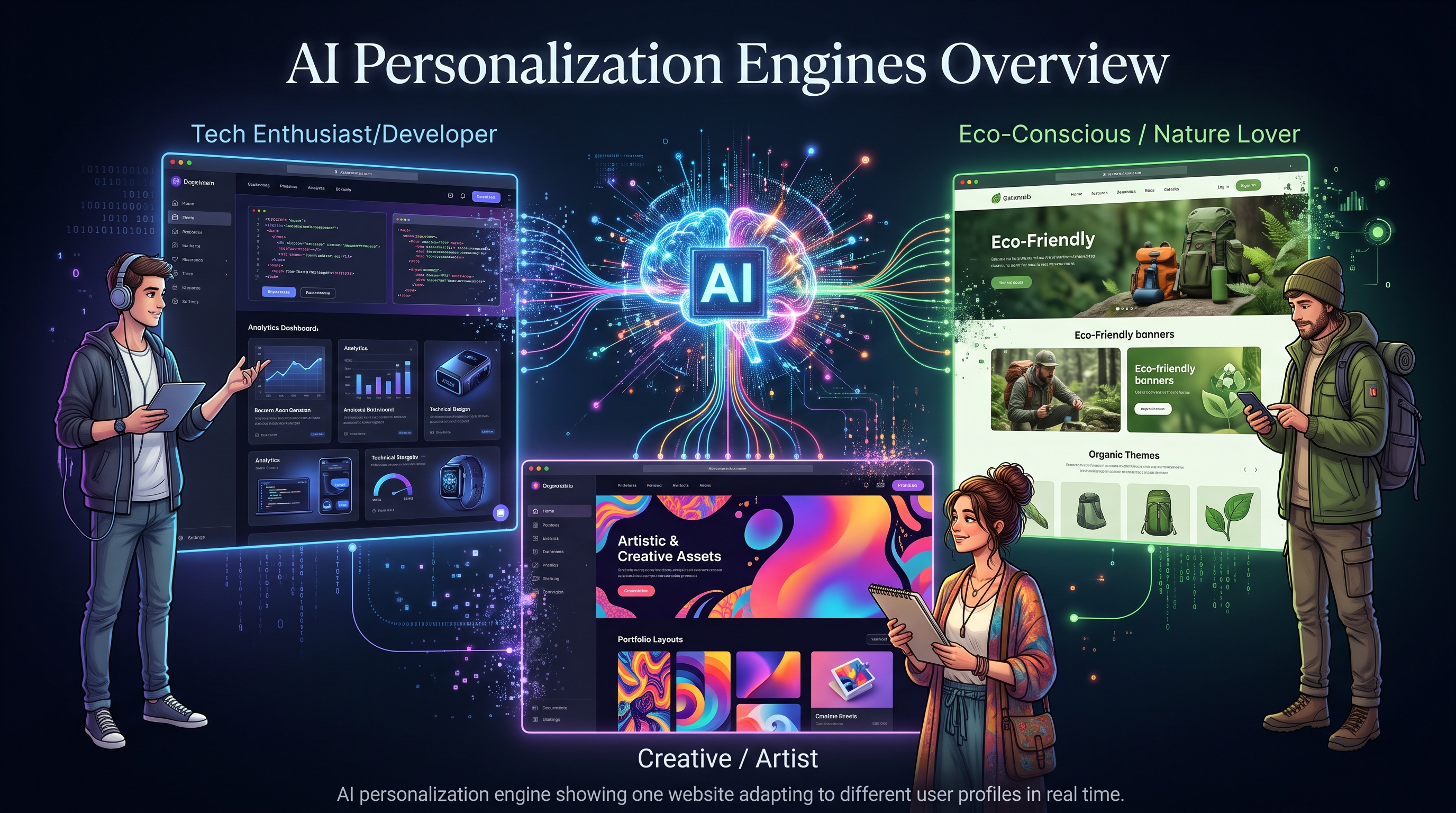
AI Personalization Engines: A Practical Guide to Smarter, Real-Time User Experiences
AI personalization engines use machine learning to show each user the right content, product or offer in real time. This easy guide covers how they work, core models, a 7-step build plan, testing, privacy and SEO for developers, testers, marketers and CTOs.
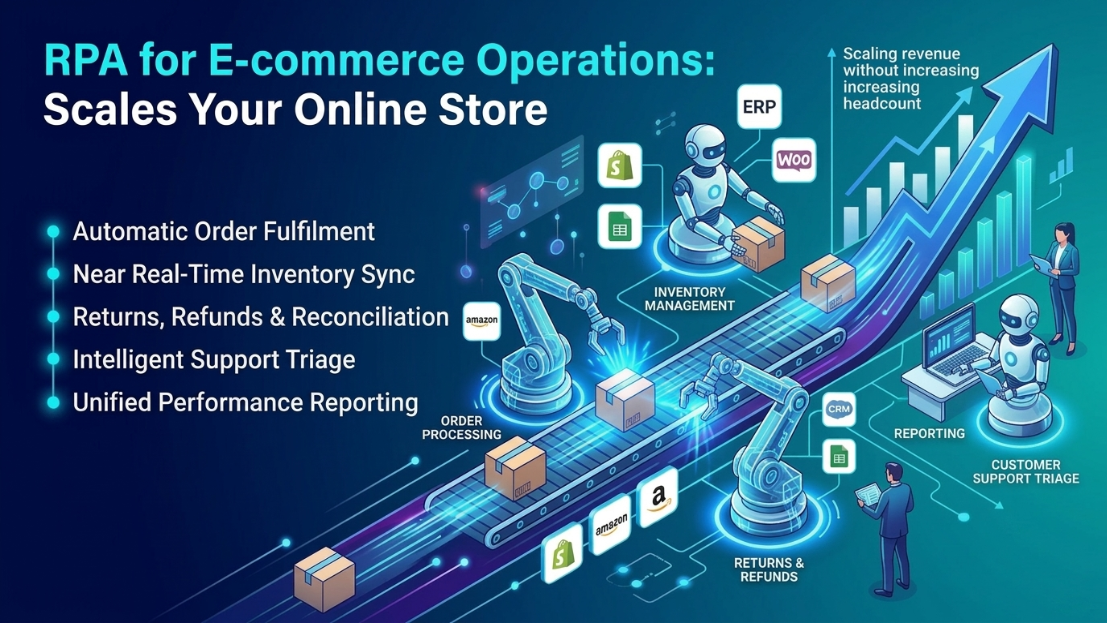
RPA for E-commerce Operations: How Robotic Process Automation Scales Your Online Store
RPA for e-commerce operations removes the manual busywork between your systems order processing, inventory, returns, and support. Here are the highest-ROI automation use cases, the time savings to expect, and how to start automating your online store.

Recover 30% of Lost Sales With a Smart Cart Bot
Most stores lose two-thirds of their carts before checkout. Learn how a smart cart recovery bot quietly wins those orders back often 30% or more.