

Table of Contents
In the rapidly evolving digital landscape, the phrase "work smarter, not harder" has transitioned from a cliché to a technological mandate. As businesses grapple with unprecedented volumes of data and the need for lightning-fast execution, AI Workflows: Automating Your Business Processes has emerged as the cornerstone of modern operational strategy. This shift goes beyond simple "if-this-then-that" triggers; it is about the rise of Agentic AI—autonomous systems capable of reasoning, planning, and executing complex multi-step tasks with minimal human intervention. By integrating these advanced frameworks, companies are no longer just saving time; they are reimagining the very fabric of productivity. In this comprehensive guide, we will explore how your organization can harness autonomous workflows to eliminate bottlenecks, reduce human error, and unlock a level of scalability that was previously unimaginable in traditional business models.
The Evolution: From Simple Automation to Agentic AI
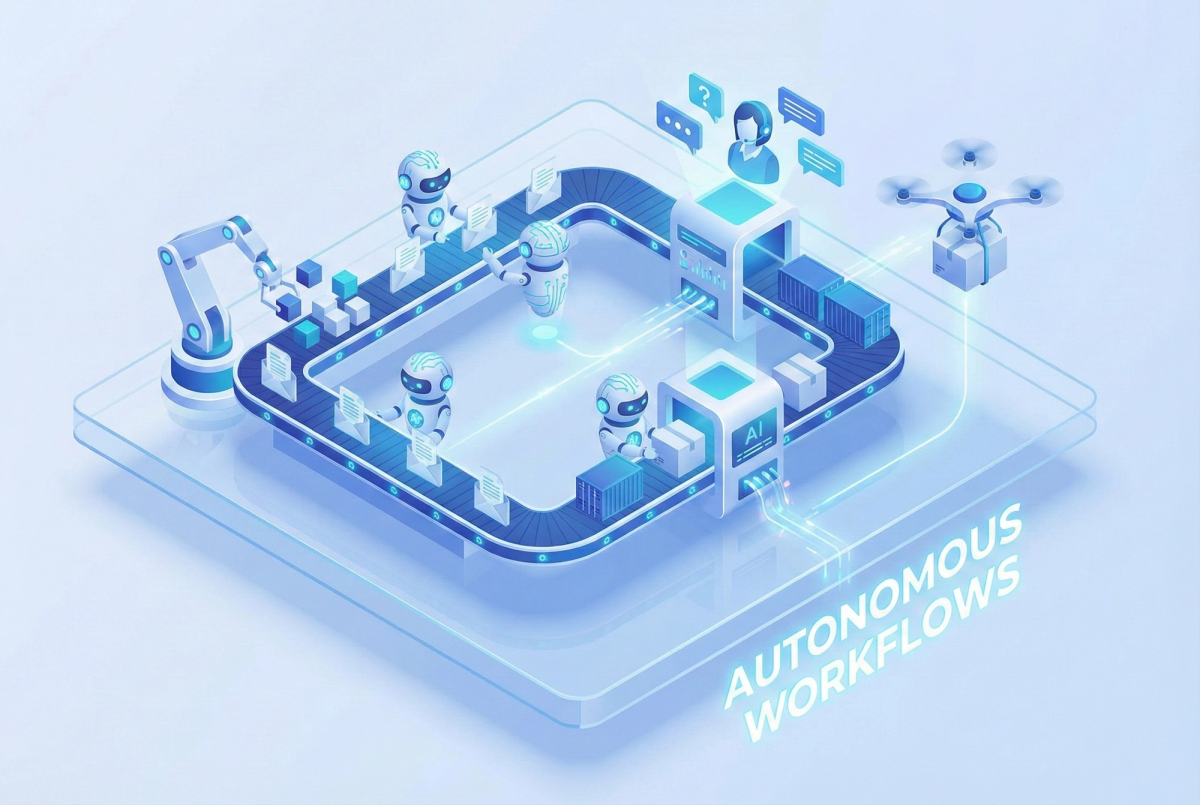
For years, business process automation (BPA) relied on rigid rules. If a customer filled out a form, an email was sent. While useful, these systems lacked "intelligence." They couldn't handle nuances or unexpected variables.
Today, we have entered the era of Agentic AI. Unlike its predecessors, an AI Agent can interpret a goal, break it down into smaller tasks, and execute them using various tools. This is the heart of autonomous workflows. For example, instead of just filing an invoice, an AI workflow can verify the invoice against a contract, check the delivery status of goods, communicate with the vendor regarding discrepancies, and schedule the payment—all without a human clicking a single button.
For businesses looking to stay competitive, migrating to these intelligent systems is no longer optional; it is a vital part of a successful digital transformation strategy.
The Core Components of High-Impact AI Workflows
To build a workflow that actually ranks for performance and reliability, you need to understand the three pillars:
- Triggers and Perception: This is where the AI senses a need. It could be an incoming customer support ticket, a drop in website traffic, or a scheduled data audit.
- The Reasoning Engine: Powered by Large Language Models (LLMs), the AI analyzes the input. It asks, "What is the intent here, and what resources do I need to solve it?"
- Execution (The Action Layer): This is where the AI interacts with your existing software stack—your CRM, your ERP, or your project management tools.
Why Your Business Needs Autonomous Workflows Now

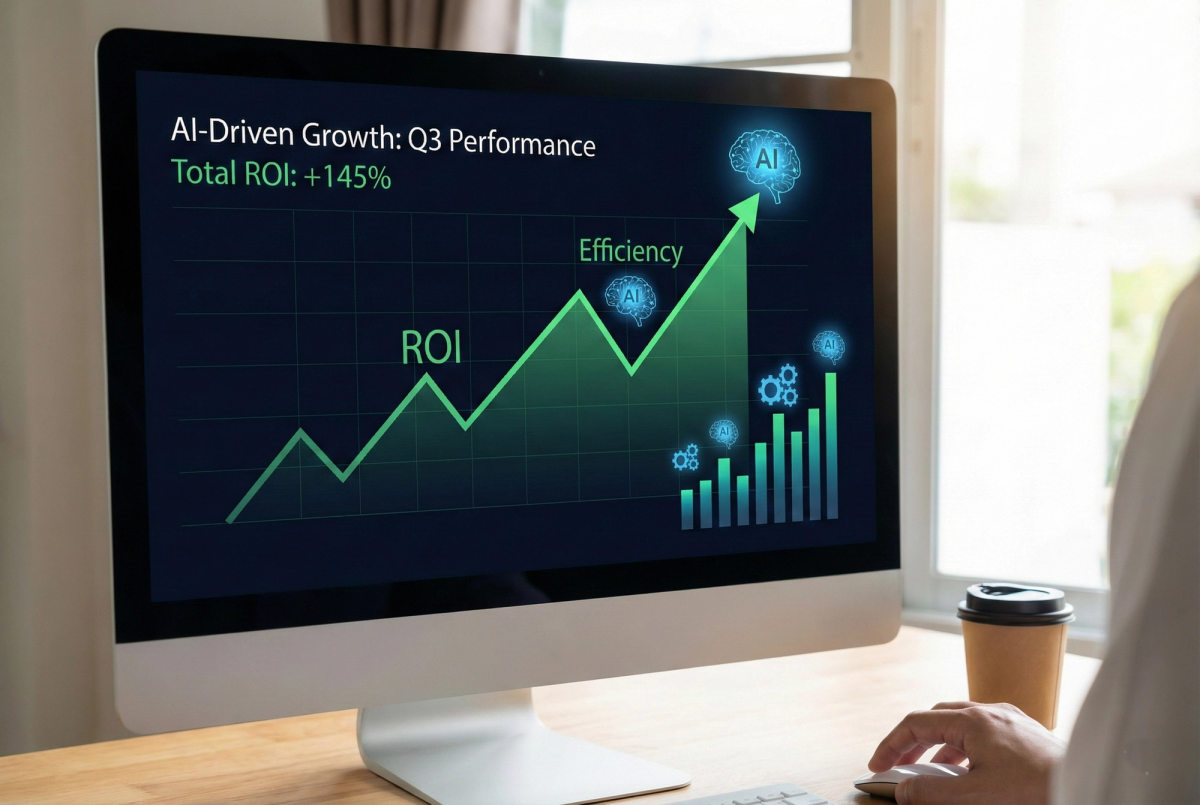
The ROI of implementing AI workflows is multi-faceted. First, there is the operational efficiency. By automating repetitive tasks, you free up your most expensive asset—human talent—to focus on creative and strategic initiatives.
Secondly, there is the advantage of 24/7 Precision. AI agents do not suffer from fatigue. Whether it is 2:00 AM or 2:00 PM, the accuracy of data entry and process execution remains constant. This is particularly crucial for businesses that require robust web development and backend infrastructure to handle high-traffic volumes.
Strategic Implementation: A Step-by-Step Guide

Implementing AI shouldn't be a "rip and replace" operation. It should be iterative.
Step 1: Process Auditing
Identify the "low-hanging fruit." Look for tasks that are repetitive, high-volume, and data-heavy. These are the perfect candidates for AI automation.
Step 2: Designing the Agentic Logic
Define what the AI agent is allowed to do. Will it have "Full Autonomy" or "Human-in-the-loop"? For sensitive tasks like financial approvals, a human-in-the-loop model is often preferred.
Step 3: Integrating Custom Solutions
Off-the-shelf AI tools are great, but they often lack the specificity needed for unique business challenges. This is where custom software development plays a critical role. A tailored AI workflow ensures that the technology aligns perfectly with your existing internal protocols.
Use Cases: AI Workflows in Action
1. Hyper-Personalized Marketing
Imagine an AI agent that monitors your website traffic. When a high-intent user visits, the AI identifies their industry, looks up their recent challenges via public data, and automatically generates a custom case study PDF sent to their inbox within minutes.
2. Intelligent Customer Support
Gone are the days of frustrating chatbots. Autonomous workflows allow support agents to not only answer questions but to resolve issues. If a customer asks for a refund, the AI can check the refund policy, verify the order status, and process the transaction immediately.
3. Real-time Financial Reporting
AI agents can scan through thousands of transactions across multiple platforms, categorize them, flag anomalies for fraud, and generate a real-time "Health of the Business" report for the CFO every morning.
Overcoming the Challenges of AI Adoption
While the benefits are clear, the path to automation has its hurdles. Data Privacy and Security are paramount. When you automate workflows, you are often giving AI access to sensitive company data. Ensuring that your AI infrastructure is secure requires professional IT consultation to prevent leaks and ensure compliance with global standards like GDPR.
Furthermore, there is the "Black Box" problem—understanding why an AI made a specific decision. This is why transparency in AI logic and proper documentation are essential for long-term success.
The Future of Work: Multi-Agent Systems
The next frontier is not just one AI agent, but a "team" of agents. Imagine a Mobile Application where one agent handles the UI/UX feedback, another handles the bug reporting, and a third automatically pushes code fixes to a staging environment. This synergy is the pinnacle of mobile application development in the AI era.
Technical SEO: Keywords and Semantic Optimization
To ensure this content ranks, we have focused on Latent Semantic Indexing (LSI). Keywords like Machine Learning pipelines, LLM orchestration, cognitive automation, and business process re-engineering are woven into the context to signal to search engine crawlers that this is a high-authority, comprehensive resource.
Measuring Success: KPIs for AI Workflows
If you cannot measure it, you cannot improve it. When you deploy AI workflows, track these metrics:
- Task Completion Rate: How many tasks were finished without human intervention?
- Error Rate: Is the AI more accurate than the previous manual process?
- Cycle Time: How much faster is the process now?
- Cost Per Transaction: What is the direct saving in labor costs?
FAQ Section
Q1: What is the difference between RPA and AI Workflows? A: Robotic Process Automation (RPA) follows static rules to perform repetitive tasks. AI Workflows use "Agentic AI" to reason and make decisions, allowing them to handle complex, unstructured data and changing environments.
Q2: Is AI automation expensive for small businesses? A: While there is an initial investment, the long-term ROI is massive. Many AI tools operate on a pay-as-you-go model, and custom solutions can be scaled according to the business size.
Q3: Will AI workflows replace my employees? A: AI is designed to augment human capability, not replace it. By automating "grunt work," employees can focus on high-value tasks that require emotional intelligence and complex problem-solving.
Q4: How secure is my data in an AI workflow? A: Security depends on the implementation. By using private LLM instances and robust encryption, your data remains secure. Professional IT consulting is recommended to set up these safeguards.
Q5: How long does it take to implement an autonomous workflow? A: Simple workflows can be deployed in days, while complex, enterprise-wide digital transformations can take several months of planning and testing.
Conclusion: Embracing the Autonomous Era
The transition to AI Workflows: Automating Your Business Processes is more than a trend; it is a fundamental shift in how value is created in the digital age. By leveraging Agentic AI and autonomous workflows, businesses can transcend the limitations of manual labor, achieving a level of speed and precision that was once the stuff of science fiction. As we have explored, the journey involves careful auditing, strategic implementation of custom software, and a commitment to continuous optimization.
The future belongs to the "Automated Enterprise"—an organization that is lean, agile, and powered by intelligent systems. Whether you are looking to revamp your web development stack or undergo a complete digital transformation, the time to start is now. By integrating these technologies today, you aren't just keeping up with the competition; you are setting the pace for the industry.
Related Articles
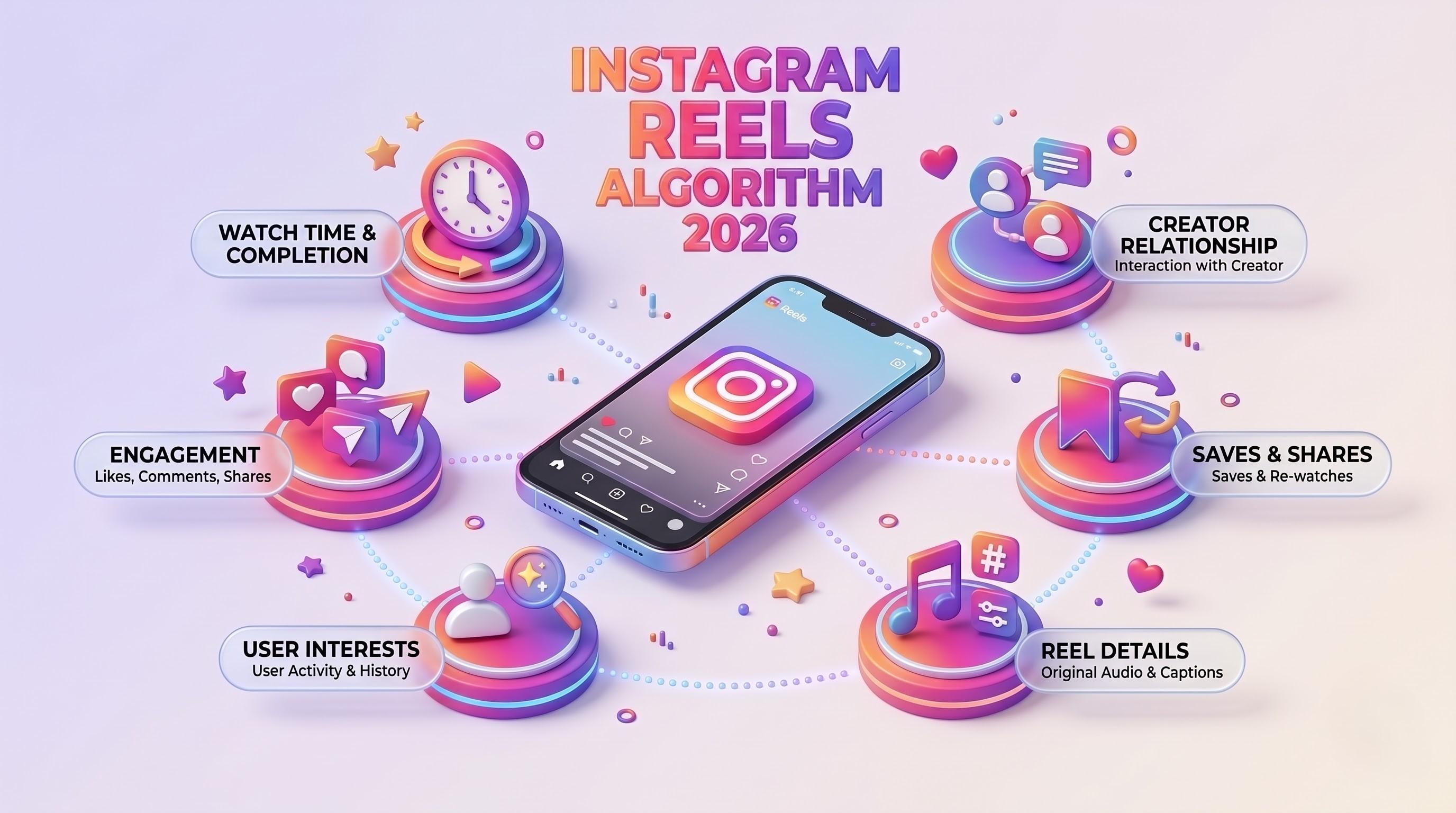
Instagram Reels Algorithm 2026: A Simple Guide for Tech-Savvy Teams
The Instagram Reels algorithm in 2026 ranks videos by watch time, DM sends and likes per reach. This easy guide explains how Reels are tested, what changed recently, and a practical checklist for developers, marketers, CTOs and product teams.

Business Corporate Intranets: A Simple Guide for Tech Teams
Business corporate intranets give every employee one secure place for news, files, people and tools. This easy guide covers features, architecture, security and a step-by-step build plan for CTOs, developers, testers and marketers.

Brand Guideline Creation: A Step-by-Step Guide for Tech Brands
Brand guideline creation turns your logo, colours, fonts and voice into one clear rulebook for designers, developers, testers and marketers. This easy guide covers the core components, an 8-step process, design tokens for code, and how to connect your brand to SEO and AI.