
Table of Contents
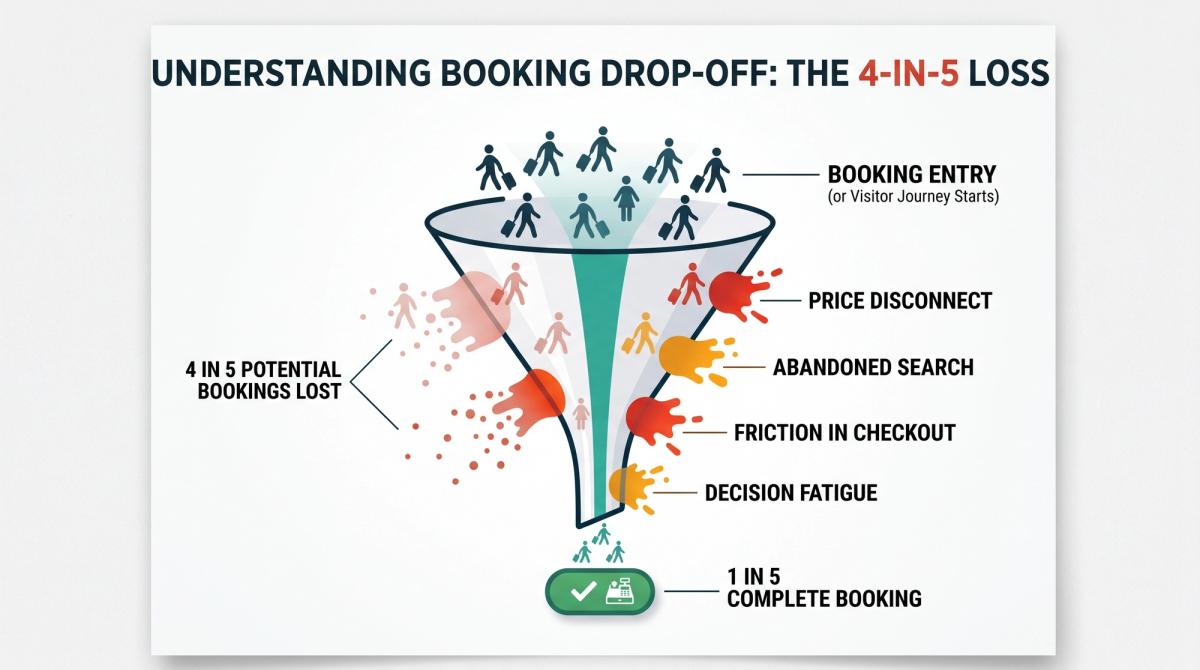
Here is a number that should worry every travel operator: roughly 81% of online travel bookings are abandoned before payment, usually because of clumsy checkouts and missing payment options. That means for every five travellers who reach your site ready to buy, four leave before you earn a cent. The right travel booking engine is what closes that gap turning browsers into confirmed, paid reservations.
At Cinute InfoMedia, we build booking platforms that treat every click as revenue at risk. With the online travel market growing from $523B in 2024 toward $1.3 trillion by 2030, the engine behind your bookings is now your single biggest growth lever.
By the end of this guide, you'll know:
- The 7 booking engine features that actually move conversion in 2026
- Exactly which friction point each feature removes and the revenue upside
- How to decide between a DIY tool, a cheap build, and a custom engine
What is a travel booking engine? A travel booking engine is the software layer that powers search, availability, pricing, and payment on a travel or hospitality website. It connects real-time inventory (rooms, flights, tours) to a secure checkout, so customers can book and pay directly without phone calls, manual emails, or third-party commission.
Why a Weak Booking Engine Is Costing You 4 in 5 Sales
Most travel brands obsess over driving traffic and ad spend, then quietly lose the majority of that traffic at the booking stage. The cause is rarely price it is friction. SiteMinder's Changing Traveller Report 2025 found that 52% of travellers abandon a booking because of a poor digital experience, not because the deal was bad.
That friction compounds on mobile, where travel converts far worse than desktop despite carrying most of the traffic. A slow, multi-step, or confusing flow on a phone is a direct revenue leak and it is happening on the device your customers use most.
There is a distribution cost too. When your own travel and hospitality web development can't convert, you push guests to OTAs that hold roughly 55% of the booking market and take 15–25% commission on every reservation they send back. Each abandoned direct booking is paid for twice: once in ad spend to attract the guest, and again in commission when they finish the purchase elsewhere.
A modern travel booking engine flips that equation. It removes friction, recovers drop-offs, and shifts volume back to your highest-margin channel: direct. The rest of this guide breaks down the seven features that make that happen.
7 Travel Booking Engine Features That Boost Bookings in 2026
Each feature below is mapped outcome-first: the result you get, then the mechanism that delivers it.
1. Real-time inventory and rate sync (channel manager).
Result: zero overbookings and always-accurate availability. How: a channel manager syncs rooms, seats, or tour slots across your site, OTAs, and GDS instantly so a sale on one channel updates everywhere in seconds.
2. Frictionless one-page checkout.
Result: fewer abandoned bookings. How: collapsing search-to-pay into a single, progress-saving screen removes the multi-step drop-off where most revenue leaks. Guest checkout (no forced account) is non-negotiable in 2026.
3. Mobile-first, sub-2-second UX.
Result: you stop losing the device that carries most travel traffic. How: a responsive, fast-loading interface with thumb-friendly date pickers and minimal form fields built mobile-first, not adapted from desktop.
4. Dynamic pricing and smart upsells.
Result: higher average order value and better-filled inventory. How: the engine adjusts rates by demand, season, and lead time, then surfaces relevant add-ons (transfers, late checkout, experiences) at exactly the right moment.
5. AI chatbot and cart-recovery automation.
Result: you win back a large share of would-be drop-offs. How: an AI-powered booking chatbot answers questions in real time, while abandonment triggers a recovery sequence that nudges hesitant guests back to checkout.
6. Secure, flexible payments with PCI compliance.
Result: trust at the moment of payment, plus more completed bookings. How: multiple gateways, local payment methods, instalments or pay-later, free-cancellation options, and full PCI-DSS-grade security backed by reliable workflow automation for confirmations and refunds.
7. Analytics dashboard with GDS/OTA integrations.
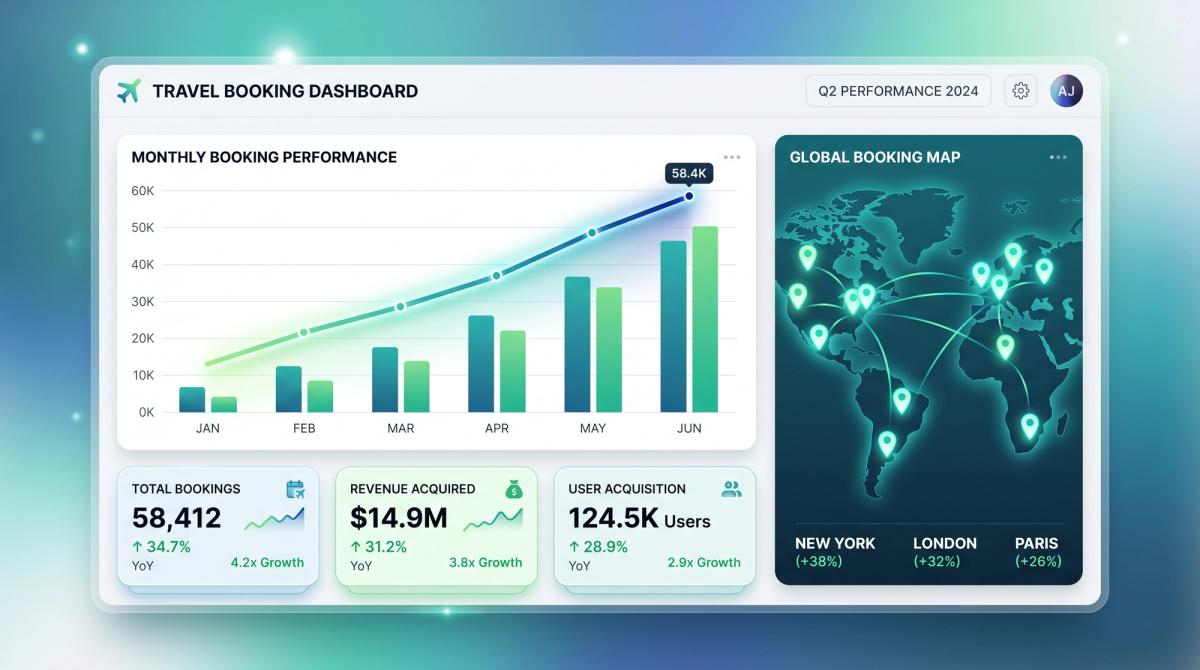
Result: you can see and fix exactly where bookings fall off. How: a live dashboard tracks funnel drop-offs, channel performance, and revenue, while deep integrations keep your engine connected to the wider distribution ecosystem.
The thread connecting all seven is the secure ecommerce checkout layer — get that right, and every other feature compounds.
Snippet-bait quick list the 7 features:
- Real-time inventory sync .
- One-page checkout.
- Mobile-first UX.
- Dynamic pricing & upsells.
- AI chatbot & cart recovery.
- Secure flexible payments.
- Analytics & GDS/OTA integrations.
Real Results : What Cinute's Clients Achieve
Features only matter when they translate into measured outcomes, and that is where execution decides everything. Across web, mobile, and AI projects, our work has delivered repeatable results: a 320% increase in qualified leads on a lead-gen overhaul, 3x organic traffic in six months through technical SEO and content, and 200+ hours saved per month via AI automation and chatbots.
Mini case study a regional tour operator (anonymised). Challenge: a dated site with a four-step checkout was pushing 70%+ of mobile shoppers to abandon, forcing reliance on commission-heavy OTAs. Approach: our expert team rebuilt the flow as a mobile-first, one-page booking engine, added an AI cart-recovery sequence, and integrated secure multi-gateway payments with pay-later options. Result: checkout abandonment dropped sharply, direct bookings rose, and OTA commission spend fell recovering margin that had been leaking for years.
These outcomes are not luck. With 10+ years in business, 25+ countries served, and a 95% client retention rate, the playbook is proven. It also rides a clear industry tailwind: around 70% of travel companies now use AI for price optimisation, improving forecast accuracy by up to 40% exactly the kind of intelligence a modern engine bakes in by default.
Travel Booking Engine: DIY vs Cheap Build vs Cinute
Not every booking engine is built the same. Here is how the common paths compare on the things that decide revenue.
| Capability | DIY plugin / template | Cheap agency build | Cinute approach |
|---|---|---|---|
| Checkout & mobile UX | Generic, multi-step | Functional but unoptimised | One-page, mobile-first, sub-2s |
| Real-time inventory sync | Limited / manual | Basic channel manager | Full multi-channel + GDS/OTA |
| AI chatbot & cart recovery | None | Bolt-on, if any | Native, automated, trained |
| Payments & PCI compliance | Single gateway | Standard | Multi-gateway, flexible, secure |
| Analytics & optimisation | Vanity metrics | One-time setup | Live dashboards + ongoing tuning |
| Outcome ownership | You're on your own | Hand-off after launch | Long-term growth partner |
A template is cheapest on day one and most expensive over a year of lost bookings. A custom web development build costs more upfront but is engineered around your inventory, your guests, and your margins and it keeps improving after launch.
How to Get Started with Cinute InfoMedia
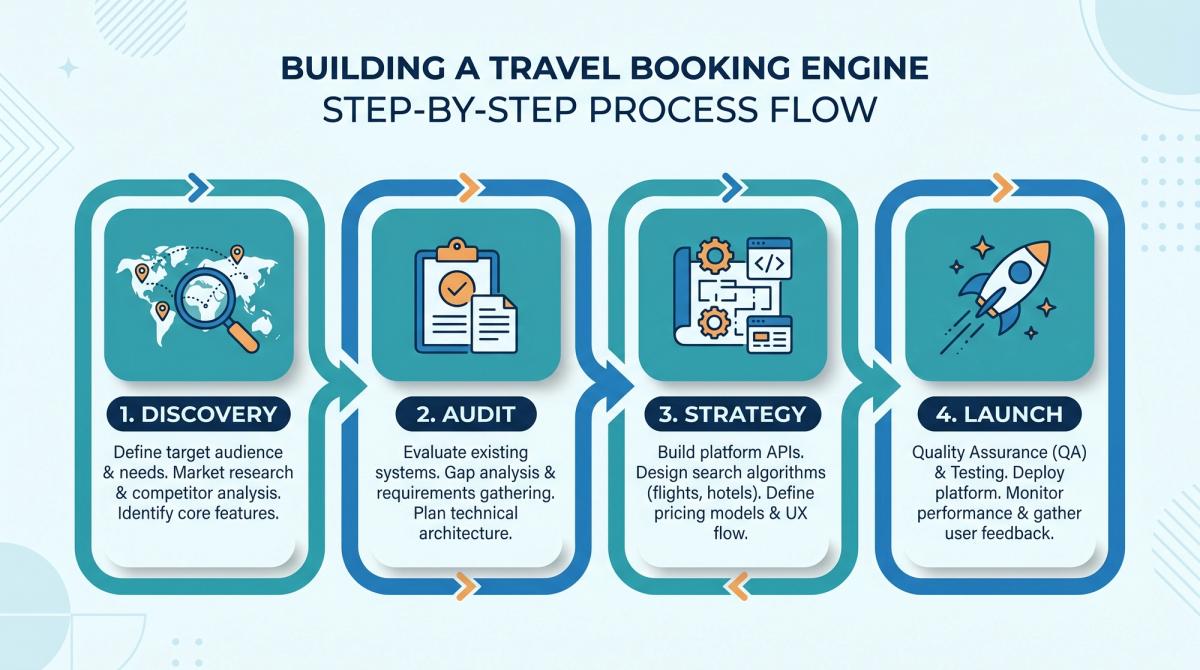
Building a high-converting travel booking engine does not start with code it starts with understanding where you are losing money. Our proven 4-step framework keeps the project focused on revenue from day one:
- Discovery & goal setting : define your inventory, audience, and the KPIs that matter (conversion, direct-booking share, abandonment).
- Technical audit : a deep analysis of your current flow, speed, and leak points.
- Strategy blueprint : a costed plan of quick wins and long-term build priorities.
- Execution & optimisation we build, launch, and keep tuning against live data.
We only take on a limited number of free audits each month so each one gets real attention. If direct bookings matter to your 2026 numbers, start your free digital audit before this month's slots fill.
Free Audit CTA Get a free 30-minute digital audit of your booking flow. Limited slots this month. → Book now

Frequently Asked Questions
Q1. What is a travel booking engine and how does it work?
A travel booking engine is software that handles search, availability, pricing, and payment on your site. It links real-time inventory to a secure checkout, letting guests book and pay directly. The engine syncs across channels so availability stays accurate everywhere, instantly.
Q2. How much does a custom travel booking engine cost in 2026?
Cost depends on inventory complexity, integrations (GDS, OTA, payment gateways), and whether you need AI features. Templates are cheap but leak revenue; custom builds cost more upfront and pay back through higher direct bookings and lower OTA commission. A free audit gives you an accurate scope.
Q3. How long does it take to build a travel booking engine?
A focused custom build typically moves from discovery to launch in a few weeks to a few months, depending on integrations and inventory size. A clear blueprint and phased rollout shorten time-to-revenue, letting you launch core booking first and layer advanced features after.
Q4. Is a custom booking engine worth it versus using an OTA?
Yes, for most operators. OTAs hold roughly 55% of the market but charge 15–25% commission per booking. A direct booking engine recovers that margin and gives you the guest relationship, data, and remarketing rights you never get through a third-party platform.
Q5. How do I reduce booking abandonment on my travel website?
Cut steps, go mobile-first, offer guest checkout and multiple payment options, and add AI cart-recovery. Since over half of travellers abandon due to poor digital experience, fixing checkout friction and load speed usually delivers the fastest, largest conversion gains.
Conclusion
A modern travel booking engine is no longer a back-office tool it is the difference between earning a booking directly and paying commission to win it back. The seven features above all point at the same goal: less friction, more recovered drop-offs, and a bigger share of high-margin direct revenue in 2026.
You do not have to guess where your flow is leaking. Ready to transform your direct bookings? Contact Cinute InfoMedia for a free audit today.
Related Articles

Instagram Reels Algorithm 2026: A Simple Guide for Tech-Savvy Teams
The Instagram Reels algorithm in 2026 ranks videos by watch time, DM sends and likes per reach. This easy guide explains how Reels are tested, what changed recently, and a practical checklist for developers, marketers, CTOs and product teams.

Business Corporate Intranets: A Simple Guide for Tech Teams
Business corporate intranets give every employee one secure place for news, files, people and tools. This easy guide covers features, architecture, security and a step-by-step build plan for CTOs, developers, testers and marketers.

Brand Guideline Creation: A Step-by-Step Guide for Tech Brands
Brand guideline creation turns your logo, colours, fonts and voice into one clear rulebook for designers, developers, testers and marketers. This easy guide covers the core components, an 8-step process, design tokens for code, and how to connect your brand to SEO and AI.