
Table of Contents
Instagram Reels now sit at the centre of how people discover brands, products and creators. Yet many teams still treat the Reels algorithm like a black box. They post, hope, and check the numbers a week later.
It does not have to work that way. Instagram has shared a lot about how ranking works, and Instagram head Adam Mosseri has confirmed which signals matter most. If you think like an engineer, the Instagram Reels algorithm 2026 is easier to understand than it looks. It is a prediction system that guesses which video a person will enjoy next.
This guide explains it in plain language, with the core signals, the testing process, recent changes and a practical checklist. It is written for developers, testers, researchers, marketers, CTOs and product managers who want clear answers instead of hype.
What Is the Instagram Reels Algorithm?
The Instagram Reels algorithm is a set of machine-learning models that decide which short videos appear in the Reels tab, on the Explore page and in parts of the main feed. Its job is simple: predict what each viewer will find valuable, then rank videos in that order.
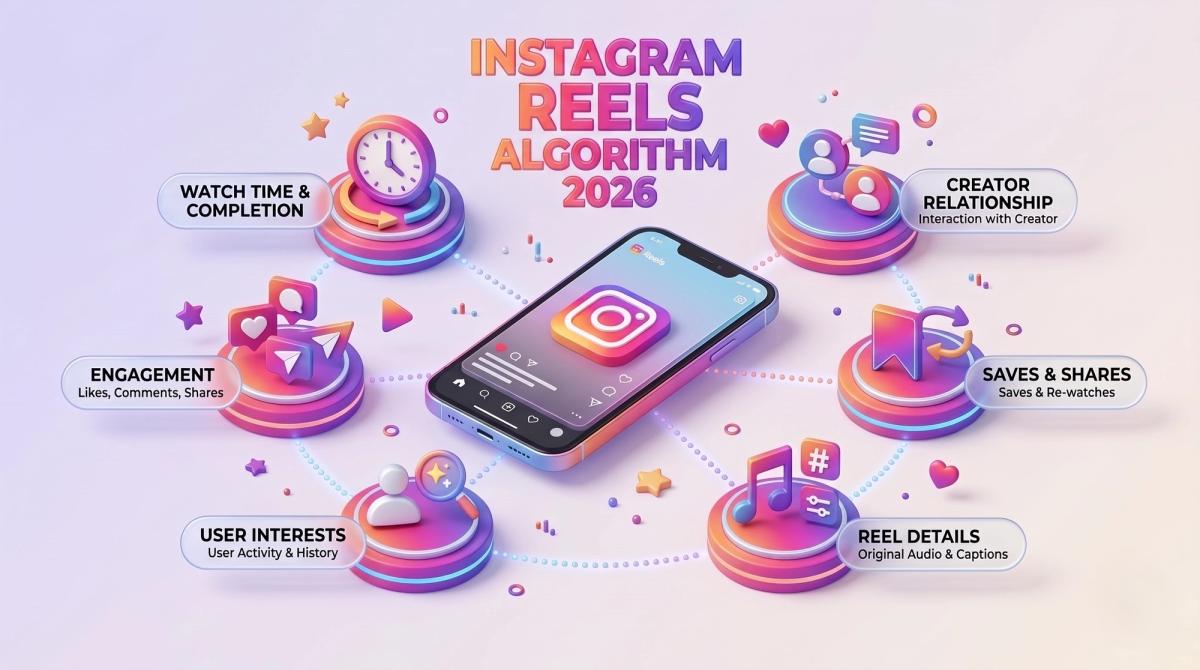
There is no fixed formula and no secret trick. Instead, the system reads many signals and updates its guesses all the time. Instagram groups these signals into a few families:
- User activity: what a person liked, saved, shared, commented on or watched before.
- Reel information: the audio, visuals, captions, topic and length of the video.
- Creator signals: how people usually respond to your account over time.
- Content quality: whether a video looks original, clear and worth watching.
Four Systems, Not One
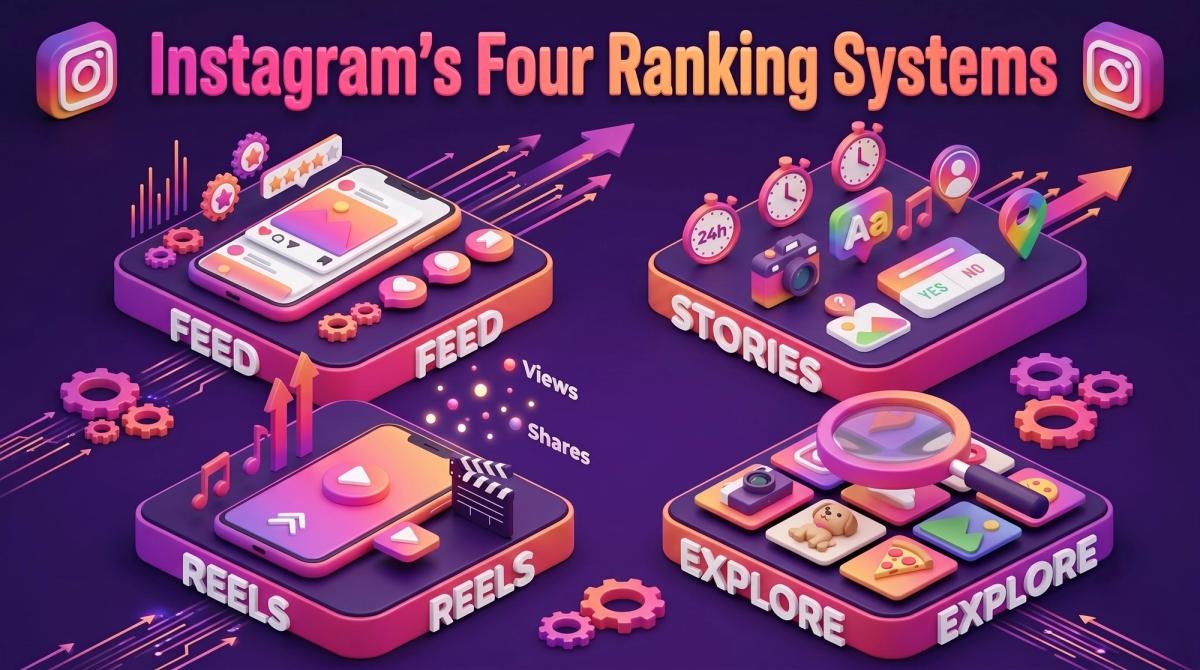
A common mistake is to talk about "the" Instagram algorithm. In reality, Instagram runs separate ranking systems for Feed, Stories, Reels and Explore. Each one serves a different goal and weighs signals differently.
- Feed favours people you already follow, so relationship signals matter a lot.
- Stories also lean on closeness, because people mostly watch friends and favourite accounts.
- Reels is built for discovery and often shows videos from accounts you do not follow.
- Explore looks for content that is gaining broad appeal fast.
This is why a post can do well in Feed and flop as a Reel. Reels are judged mainly on how strangers react to them, not on how loyal your followers are.
The Three Signals That Matter Most
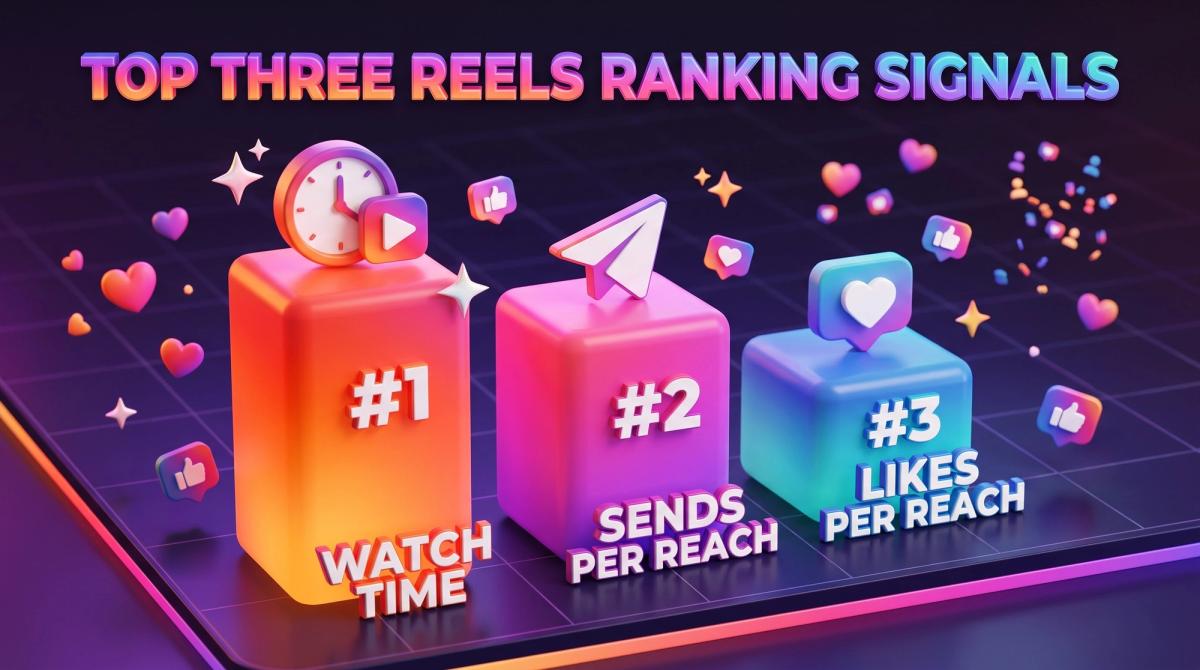
In January 2025, Mosseri confirmed the three ranking factors that carry the most weight, and they still define Reels in 2026. They are watch time, likes per reach and sends per reach.
1. Watch Time
Watch time is widely described as the single strongest signal. It measures how long people watch relative to the length of your video. The system looks at retention, re-watches and early drop-off.
A short Reel that people watch twice can beat a long Reel that people abandon. In practice, a tight 10-second video with strong retention often beats a 60-second video that loses viewers early. The lesson for your team: respect the viewer's time. Cut every second that does not earn its place.
2. Sends Per Reach
A "send" happens when someone shares your Reel with a friend through direct messages. Many experts call this the most powerful signal for reaching new people, because it shows real intent.
Third-party analyses suggest sends can carry several times the weight of likes when Instagram decides whether to show a Reel to non-followers. Mosseri has also described sends as one of the biggest signals used in ranking. So ask yourself one question before posting: would someone forward this to a colleague or friend?
3. Likes Per Reach
This is the share of viewers who tap like. It still counts, but it carries less weight than the other two. Likes mostly help with your existing audience. A like is cheap, so the algorithm trusts it less than a send or a long watch.
Saves and Comments Also Help
Saves tell Instagram that a video has lasting value, such as a tutorial or a checklist. Reels with strong saves tend to keep resurfacing over time. Genuine comments add quality too.
How a Reel Is Tested: The Cold Start
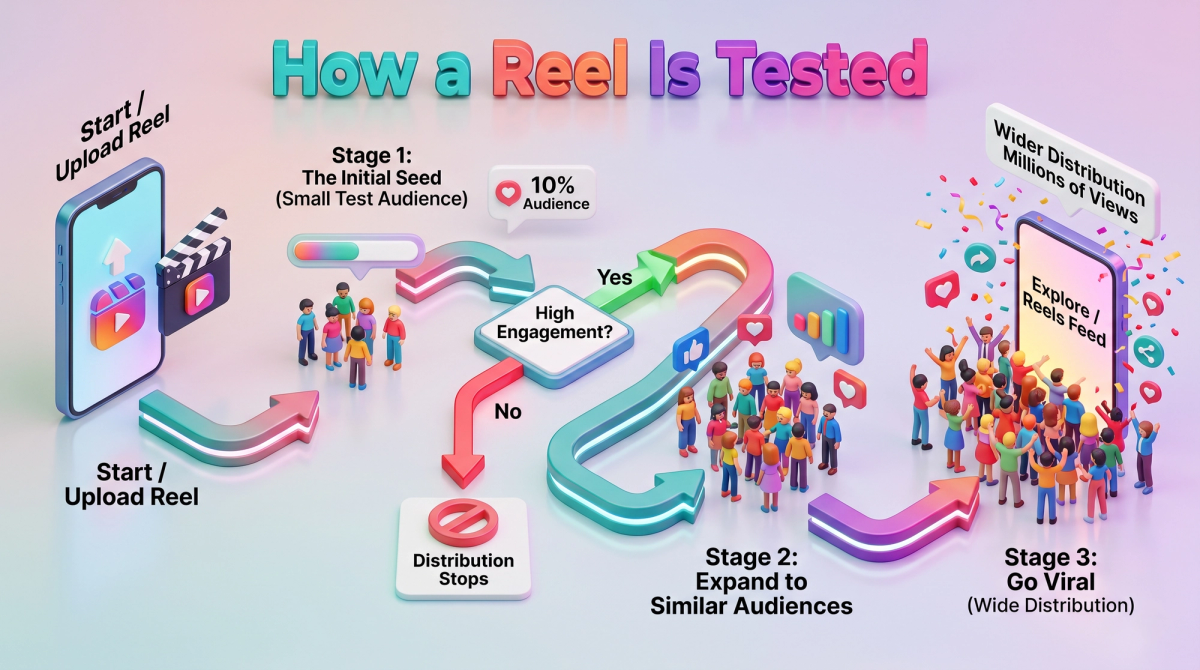
When you publish, your Reel does not go to everyone at once. It enters a testing phase, often called a cold start. Here is the simple version:
- Instagram shows the Reel to a small sample of people who are likely to be interested.
- It measures how they react: watch time, completion, sends, saves, likes and quick swipes.
- If the numbers beat your usual average, distribution widens to a bigger audience.
- If people swipe away fast, the Reel stalls.
Instagram also separates connected reach (your followers) from unconnected reach (everyone else). Likes matter more for the first group. Sends, saves and watch time matter more for the second, because Instagram has no relationship history with those viewers and must rely on how the content itself performs.
What Changed in the Reels Algorithm in 2026
Several updates shape how Reels perform this year. Here are the ones most worth knowing.
"Your Algorithm" controls. In December 2025, Instagram launched a feature called Your Algorithm for Reels, and in January 2026 it expanded to Explore. It lives in Settings under Content Preferences and lets viewers see and adjust the topics Instagram thinks they like. If a viewer removes a topic, your Reel in that space will not reach them, however well it performs. Clear topic signals in your captions, visuals and audio now matter more than ever.
A stronger push for originality. Instagram has been favouring original creators over accounts that repost other people's videos. Reports from the industry describe large reach drops for aggregator accounts after the rules tightened in late 2025, and gains for original creators. If your brand reposts clips with a watermark from another app, expect weaker distribution.
Longer Reels are allowed, but short still wins. Reels can run up to three minutes and still be recommended to non-followers. Length is not the problem. Weak retention is. A three-minute Reel is fine if people stay, and a 15-second Reel is a failure if they leave in two seconds.
Think Like an Engineer: Reels as a Funnel
If you work in software, treat each Reel like a small product release. The cold start sample works like a canary release, and retention, sends and saves are your metrics.
Testers will recognise the pattern. You are running an experiment each time, and the analytics are your test report. Developers can go further by tagging links with UTM parameters so traffic from Reels shows up clearly in analytics, and by making sure the landing page loads fast. A great Reel that sends people to a slow page wastes the attention it earned. Teams that need help with this layer can look at Instagram marketing services built around measurable outcomes.
A Practical Checklist to Work With the Algorithm
You do not need a hundred tricks. These nine habits cover most of what the algorithm rewards.
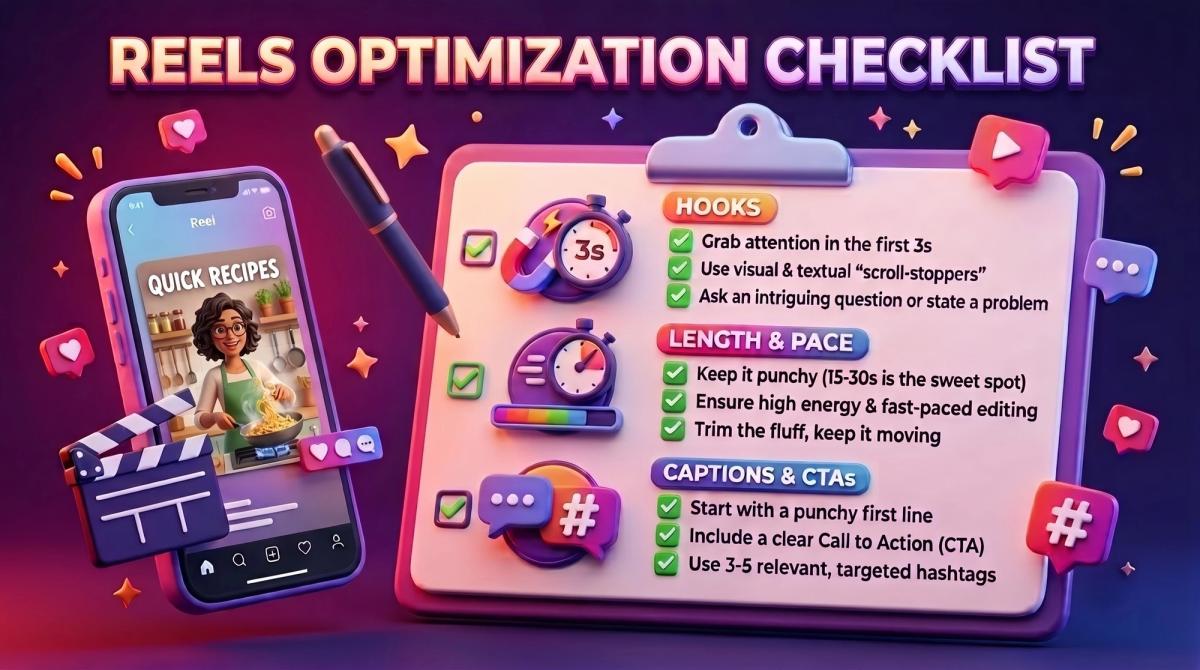
- Win the first three seconds. Open with the result, a question or a surprising claim. Skip long logo intros.
- Aim for retention, not length. Most business Reels work well in the 15 to 30 second range. Trim until each second earns its spot.
- Make it sendable. Create tips, checklists, funny truths or "tag your teammate" moments that people want to forward.
- Create for saves. Tutorials, frameworks and step-by-step clips give people a reason to come back.
- Stay in your niche. A clear topic helps Instagram know who should see you. Random topic jumps confuse the model.
- Post original content. Shoot and edit natively. Avoid reposting with visible watermarks from other platforms.
- Write searchable captions. Instagram reads captions, on-screen text and spoken words. Use plain keywords the same way you would in an SEO title. Our team explains this thinking in more depth on the SEO content writing page.
- Use a few hashtags. Three to five specific tags help with categorisation. They are no longer a reach hack.
- Post consistently. Three to four Reels a week is a realistic rhythm for many businesses. Quality beats volume, and low-quality uploads can limit reach.
Common Mistakes That Quietly Kill Reach
Even strong teams repeat these errors:
- Starting with a slow intro or a logo animation.
- Reposting content with another app's watermark.
- Judging a Reel by likes alone.
- Ignoring brand consistency, which makes your content harder to recognise. A clear visual system, such as the one in our guide to brand guideline creation, keeps every Reel recognisable at a glance.
Measure It: The Metrics That Matter
Views alone tell you little. Build a small measurement stack instead:
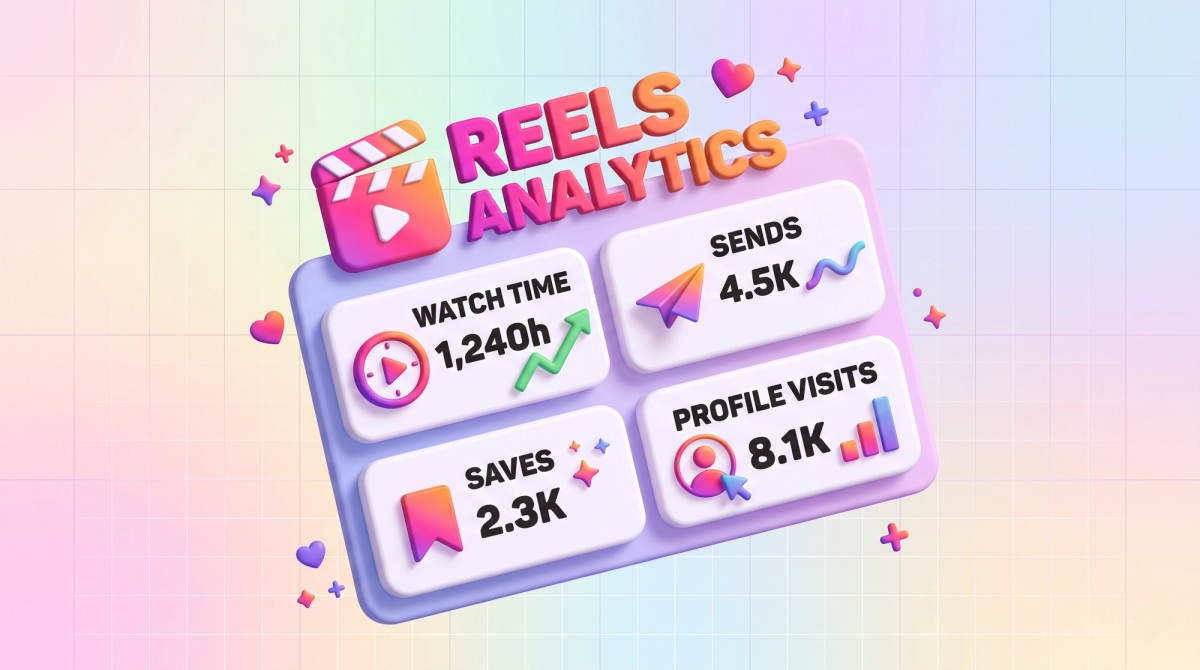
- Watch time and completion rate: are people staying?
- Retention curve: where exactly do viewers drop off?
- Sends per reach: is the content worth sharing?
- Profile visits and follows: is attention turning into interest?
- Link clicks and conversions: is the Reel supporting a business goal?
Review these weekly. Look for patterns, such as which hooks hold viewers and which topics earn sends. Then plan your next batch around those winners. If you also run paid promotion, pair this learning with Meta Ads: boost the Reels that already show strong organic retention rather than guessing.
Where Automation and AI Fit In
Reels create attention, but slow replies to comments and DMs lose leads. AI workflows and automations can route new leads into your CRM, tag them by interest and trigger follow-ups. An AI-powered chatbot can answer common questions instantly, which also keeps the conversation active. Fast answers turn curious viewers into customers.
How Cinute InfoMedia Can Help
Cinute InfoMedia (CIM) is a web development and digital marketing company serving clients across more than 25 countries. We combine web development, brand identity, SEO, performance marketing, AI automations and chatbot systems, so your Reels strategy connects to a website and funnel that actually convert.
If you want a clear plan for Instagram, explore our wider social media marketing services or talk to us about a free digital audit.
Frequently Asked Questions
How does the Instagram Reels algorithm work in 2026?
It predicts which videos each viewer will enjoy and ranks them accordingly. Watch time, sends per reach and likes per reach are the three confirmed top signals. New Reels get a small test audience first, then wider distribution if reactions are strong.
What is the most important Reels ranking signal?
Watch time is generally treated as the strongest overall signal. For reaching people who do not follow you, sends per reach is the most powerful.
How long should a Reel be?
Short is usually safer, and 15 to 30 seconds suits many business topics. Reels can run up to three minutes, so use the length your story needs and keep retention high.
Why are my Reels not getting views?
Common causes are weak hooks, low retention, reposted content, an unclear niche or ad-style tone. Check your retention curve to see where viewers leave, then fix that moment first.
Conclusion
The Instagram Reels algorithm in 2026 is not magic. It is a ranking system that rewards videos people actually watch, send and save. Focus on strong hooks, high retention, original content and a clear niche. Measure what matters, learn from each release, and connect your attention to a fast website and smart automation.
Do that consistently, and you work with the algorithm instead of against it. If you want expert help building that system, the team at Cinute InfoMedia is ready to talk.
Related Articles

Business Corporate Intranets: A Simple Guide for Tech Teams
Business corporate intranets give every employee one secure place for news, files, people and tools. This easy guide covers features, architecture, security and a step-by-step build plan for CTOs, developers, testers and marketers.
Brand Guideline Creation: A Step-by-Step Guide for Tech Brands
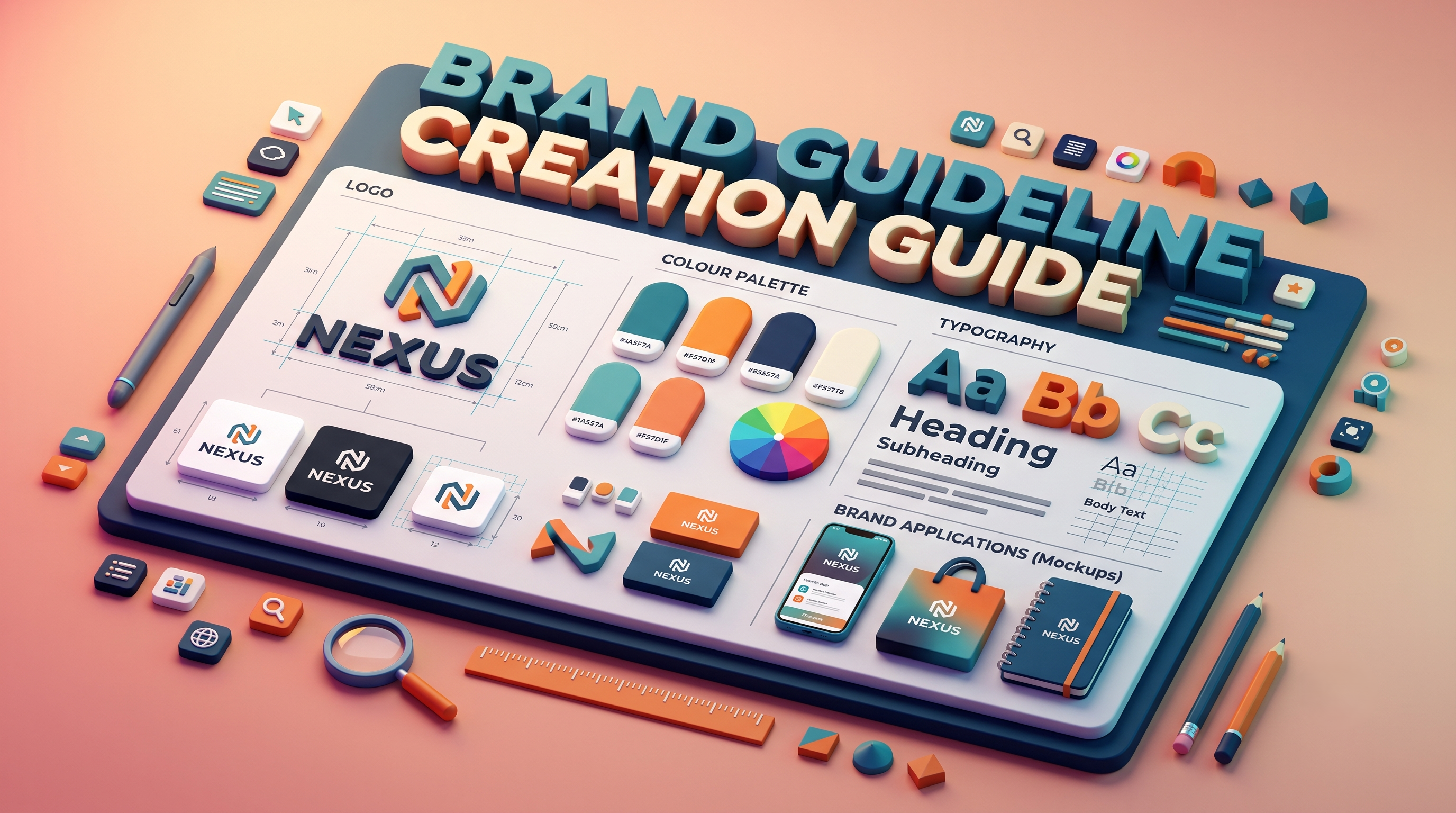
Brand guideline creation turns your logo, colours, fonts and voice into one clear rulebook for designers, developers, testers and marketers. This easy guide covers the core components, an 8-step process, design tokens for code, and how to connect your brand to SEO and AI.
Voice Search SEO Preparation Guide
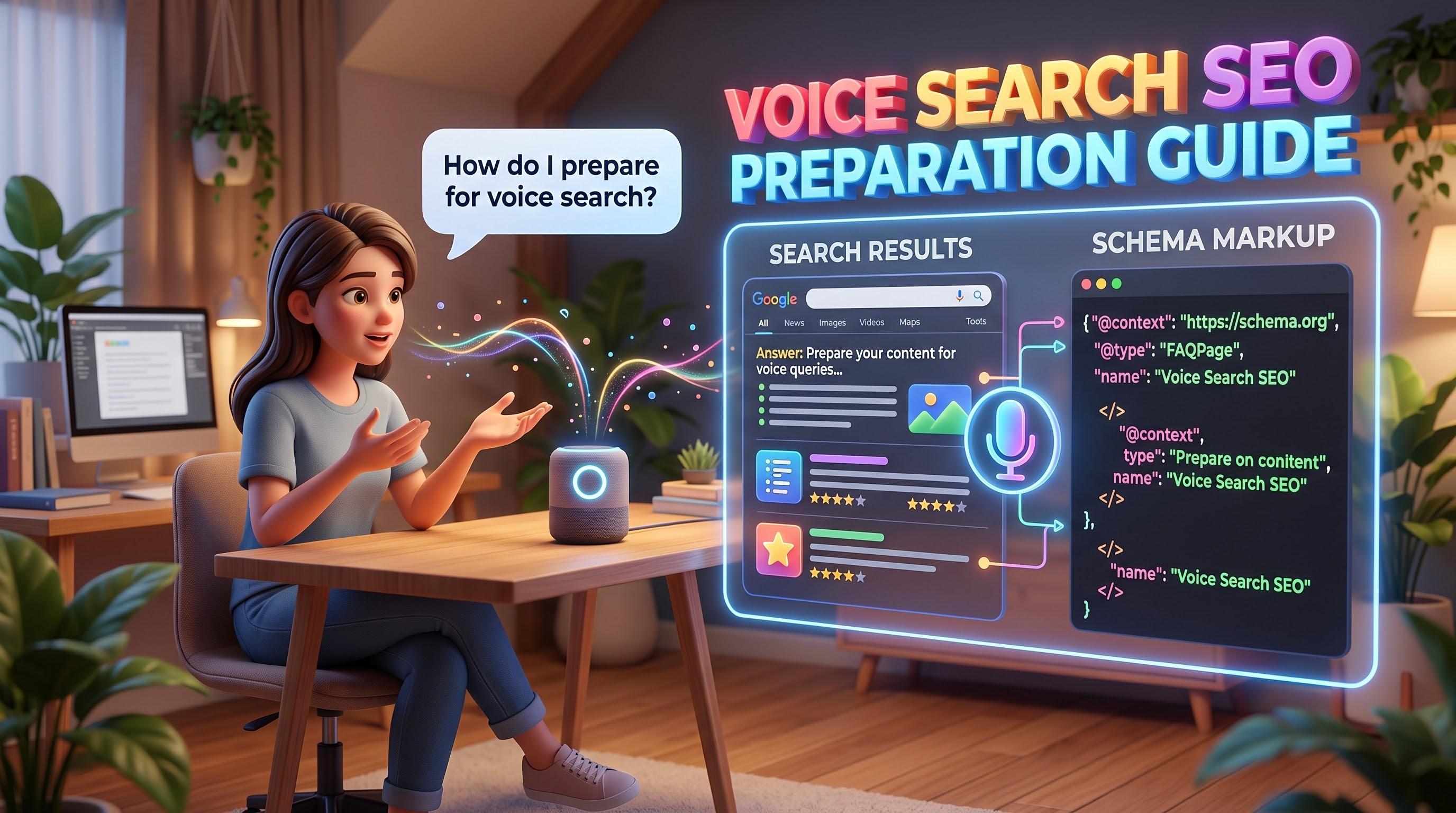
Voice search rewards clear answers, fast pages and smart markup. This guide gives developers, marketers and product teams a practical ten-step plan to prepare their site for voice search SEO in 2026.