
Table of Contents
Imagine your best salesperson working 24 hours a day, 7 days a week, never missing a single website visitor, always asking the right questions in the right order, and instantly routing hot prospects directly to your inbox while filtering out the tyre-kickers. That is precisely what a well-designed lead qualifier chat flow does for your business.
In an era where digital touchpoints multiply daily, the ability to qualify prospects at scale without adding headcount has become one of the most powerful competitive advantages available to growing companies. Whether you are a B2B SaaS company, a real estate agency, an educational institution, or a professional services firm, deploying an AI chatbot with structured lead qualification logic can dramatically shorten your sales cycle and improve close rates.
This guide covers everything you need to know: what lead qualifier chat flows are, how they work, the frameworks that power them, how to design them for maximum conversion, and how to integrate them into your broader digital ecosystem.
What Are Lead Qualifier Chat Flows?
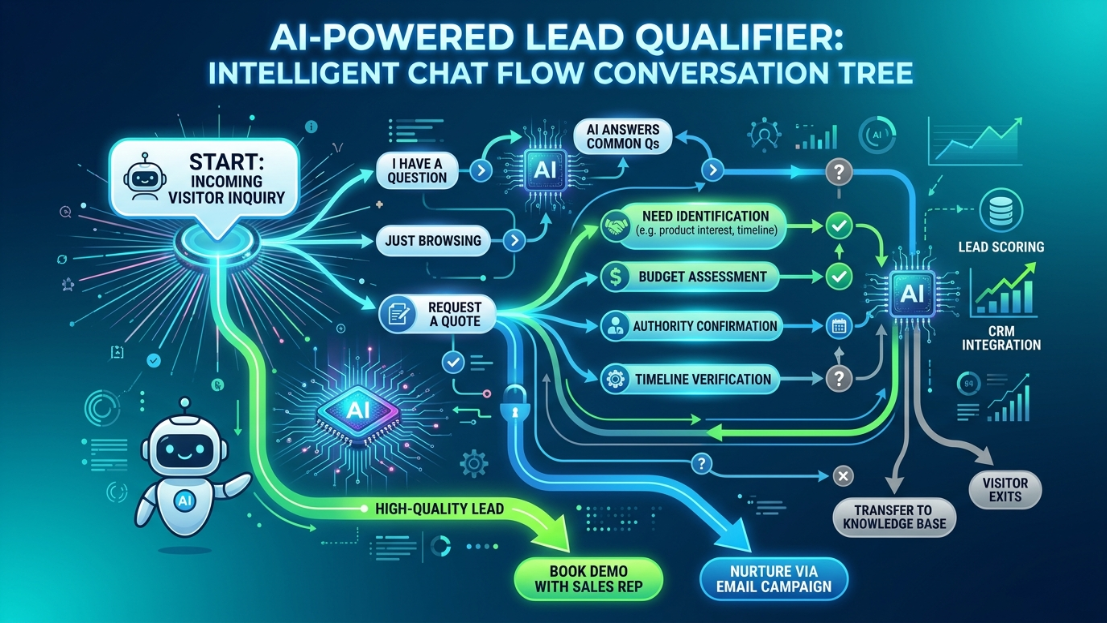
A lead qualifier chat flow is a structured, branching conversation sequence delivered by an AI chatbot that is designed to gather key information from a website visitor and determine whether they match your ideal customer profile (ICP).
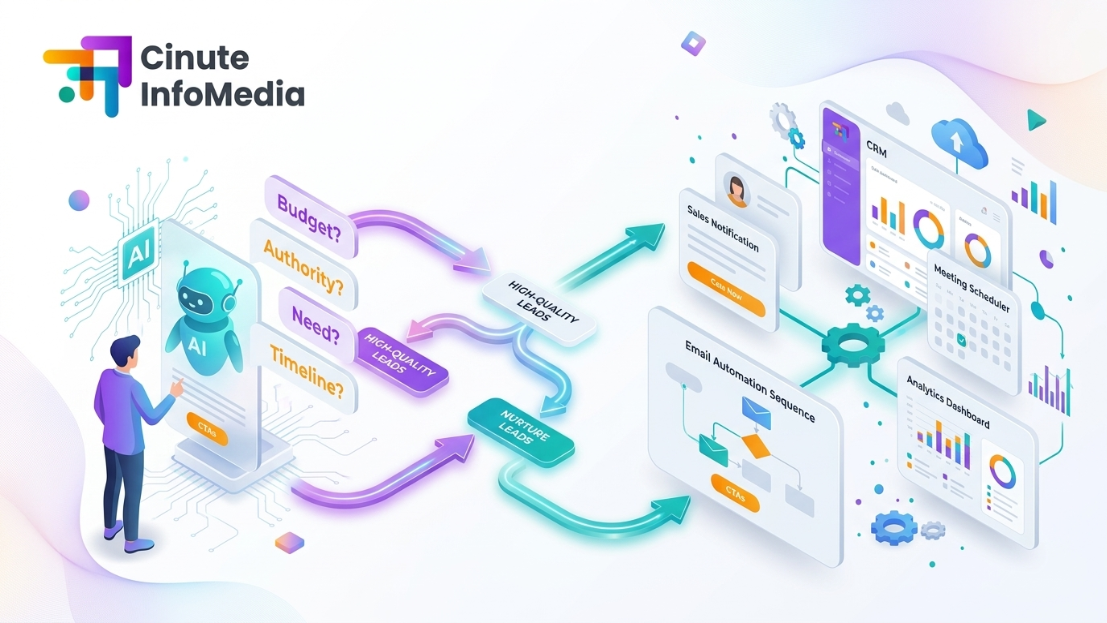
Unlike generic contact forms that sit passively on a page, lead qualifier chat flows are active, conversational, and adaptive. They guide prospects through a series of questions that reveal intent, budget, timeline, authority, and need. Based on the answers, the system automatically scores the lead, tags them in your CRM, and either routes them to a human sales agent or nurtures them further through an automated sequence.
In short, a lead qualifier chat flow is your AI-powered front-line sales assistant. And when built correctly, it converts significantly better than static forms because conversations feel natural, personal, and frictionless.
Why Lead Qualifier Chat Flows Matter in 2026
The digital marketing landscape has shifted considerably. Paid traffic is expensive, organic competition is fierce, and your sales team's time is finite. Here is why automated lead qualification chatbots have gone from "nice to have" to "must have":
Response speed wins deals. Research consistently shows that the probability of converting a web lead drops by over 90% if you wait more than five minutes to respond. An AI chatbot responds in milliseconds every single time.
Unqualified leads waste sales resources. Sales teams that manually follow up on every inquiry spend a disproportionate amount of time on prospects who will never buy. Chat flows filter the pipeline so every conversation counts.
Buyer expectations have changed. Today's prospects prefer to gather information at their own pace before speaking to a human. A conversational chatbot respects that preference while still collecting the data your team needs.
Volume is no longer a constraint. Whether you have 10 or 10,000 visitors simultaneously, an AI-powered lead qualifier chat flow handles every conversation without degradation in quality.
At Cinute InfoMedia, our AI-Powered Chatbots Services are purpose-built to address exactly these challenges giving growing businesses the ability to qualify, segment, and route leads at scale without ballooning operational costs.
The Anatomy of an Effective Lead Qualifier Chat Flow
Before you design your first chat flow, it helps to understand the structural components that make one work.
1. Trigger Event
Every chat flow begins with a trigger the moment that initiates the conversation. Common triggers include:
- A visitor landing on a pricing or service page
- Time-on-page exceeding a set threshold (e.g., 30 seconds)
- Scroll depth reaching 50–70% of the page
- A visitor clicking a CTA button
- Return visitor behaviour (second or third session)
Matching your trigger to visitor intent is critical. A visitor who just arrived on your homepage needs a different opening than someone who has been reading your pricing page for two minutes.
2. Opening Hook
The first message from the chatbot sets the tone for the entire conversation. It should feel human, relevant, and low-pressure. Avoid corporate-speak. Instead, open with empathy and relevance:
"Hey! Looking for help with [specific solution]? I can help you figure out the best fit in under 2 minutes."
3. Qualifying Questions (The Core Flow)
This is where the lead qualifier chat flow earns its name. Questions are structured to gather qualifying signals without feeling like an interrogation. The best flows use progressive disclosure they reveal questions gradually and contextually based on previous answers, rather than bombarding users with a list.
4. Branching Logic
Depending on a prospect's answer, the flow branches in different directions. A prospect who says their budget is under ₹5,000/month takes a different path than one who says "we have no fixed budget we just want results." This branching logic is what separates intelligent chatbot qualification from a simple online form.
5. Lead Scoring & Tagging
Behind the scenes, each answer contributes to a lead score. High-intent signals (strong budget, short timeline, decision-maker) push the score up. Vague or low-intent signals indicate the prospect needs nurturing. These scores and tags flow directly into your CRM.
6. Handoff or Nurture Path
High-scoring leads receive an immediate call booking link, a human agent notification, or a direct email from the sales team. Lower-scoring leads enter a nurture sequence email drips, retargeting campaigns, or educational content until they are ready to engage.
The BANT Framework for Chatbot Lead Qualification
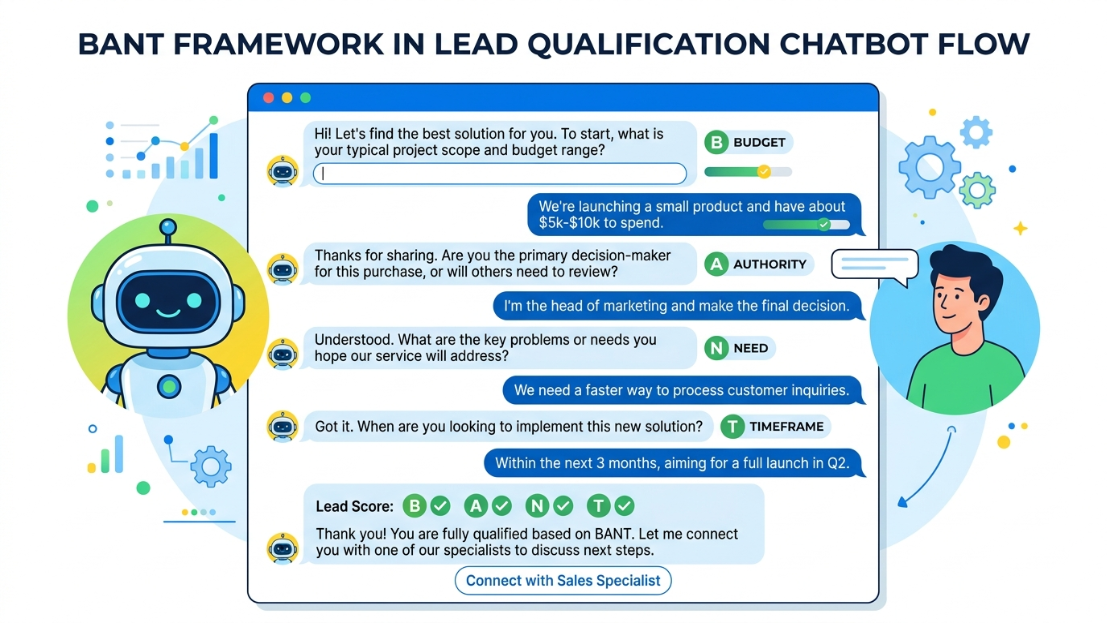
The most widely used qualification framework in B2B sales is BANT Budget, Authority, Need, and Timeline. Translating BANT into a conversational chatbot format is one of the most effective ways to structure your lead qualifier chat flow.
Budget
Instead of bluntly asking "What is your budget?", frame it conversationally:
"Just so I can point you to the right option are you looking for something under ₹50,000/month, between ₹50,000–₹2L, or is budget flexible right now?"
Offering ranges lowers the psychological friction of disclosing financial information.
Authority
Understanding whether you are speaking with the decision-maker or an influencer shapes how the conversation and follow-up should be handled:
"Are you the one who'll be making the final call on this, or will others be involved in the decision?"
Need
Surface the specific pain point that drove them to your site:
"What's the main challenge you're hoping to solve is it getting more leads, converting better, or automating time-consuming tasks?"
Timeline
This signal is one of the strongest indicators of purchase intent:
"How soon are you hoping to get something in place this month, next quarter, or still exploring?"
A prospect who says "this month" is infinitely more valuable than one who says "maybe next year." Your chat flow should treat them differently and it can, automatically, through branching logic.
Other popular qualification frameworks you can adapt to chat flows include MEDDIC (Metrics, Economic Buyer, Decision Criteria, Decision Process, Identify Pain, Champion) for enterprise B2B, and CHAMP (Challenges, Authority, Money, Prioritisation) for SMB-focused businesses.
Designing Your Lead Qualifier Chat Flow: Step-by-Step
Step 1: Define Your Ideal Customer Profile (ICP)
Every qualifying question should map back to your ICP. Before building a single chat node, answer these questions about your best customers: What industry are they in? What company size? What role does the buyer hold? What budget range? What problems are they solving?
Your ICP is the north star that guides which questions to ask and what answers indicate a strong match.
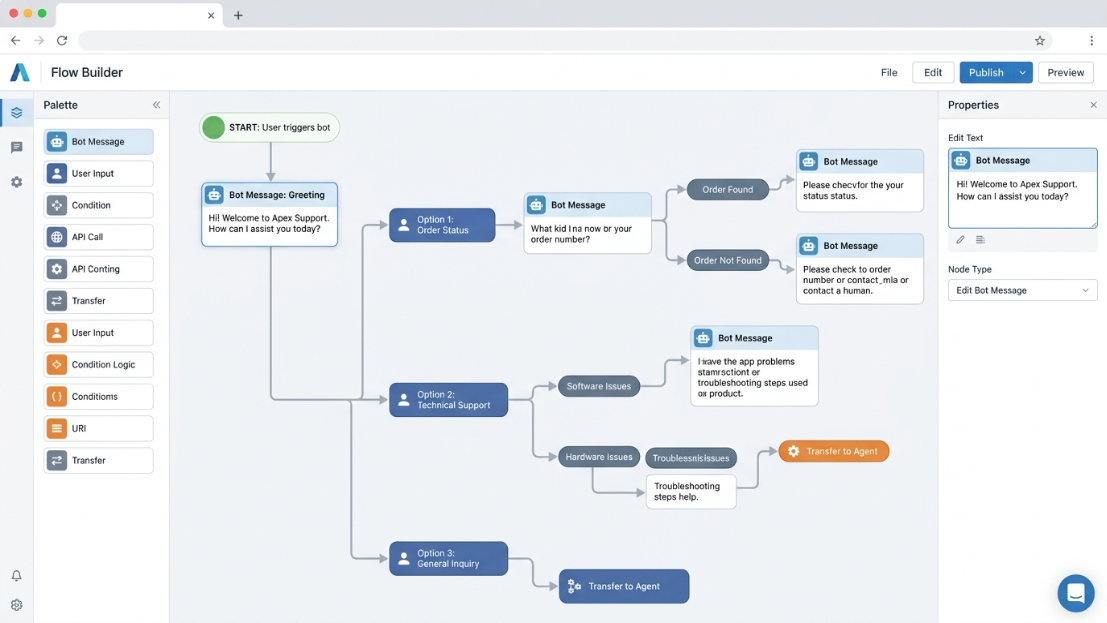
Step 2: Map the Conversation Tree
Sketch your chat flow on paper or in a visual tool before building it. For each question, map out the possible answers and where each answer leads. Keep the flow to a maximum of 5–7 questions. Anything longer creates drop-off. Remember: your goal is qualification, not a full discovery call.
Step 3: Write Natural, Human-Sounding Copy
The language of your chatbot copy is a conversion lever. Robotic, formal language kills engagement. Conversational, warm, and specific copy keeps prospects in the flow. Use contractions ("I'll" not "I will"). Use the prospect's industry language. Avoid jargon.
Step 4: Set Up Scoring Rules
Assign point values to each qualifying answer. For example:
- Budget above ₹1 lakh/month → +30 points
- Decision-maker confirmed → +25 points
- Timeline within 30 days → +30 points
- Specific pain point articulated → +15 points
Leads scoring above 70 are routed to immediate human follow-up. Leads between 40–69 enter a nurture sequence. Below 40 receive educational resources and are re-qualified after 30 days.
Step 5: Connect to Your CRM
This is where your lead qualifier chat flow becomes truly powerful. Every completed conversation should automatically push to your CRM with the full transcript, lead score, tags, and suggested next action. Our AI Workflows & Automations team at Cinute InfoMedia specialises in connecting chatbot platforms to CRMs like HubSpot, Salesforce, Zoho, and custom pipelines, ensuring zero manual data entry.
Step 6: A/B Test and Optimise
Your first chat flow will not be your best. Monitor drop-off rates at each node, test alternative phrasings for high-friction questions, and experiment with different triggers. Treat your lead qualifier chat flow as a living asset that improves over time.
Integrating Lead Qualifier Chat Flows With Your Full Funnel
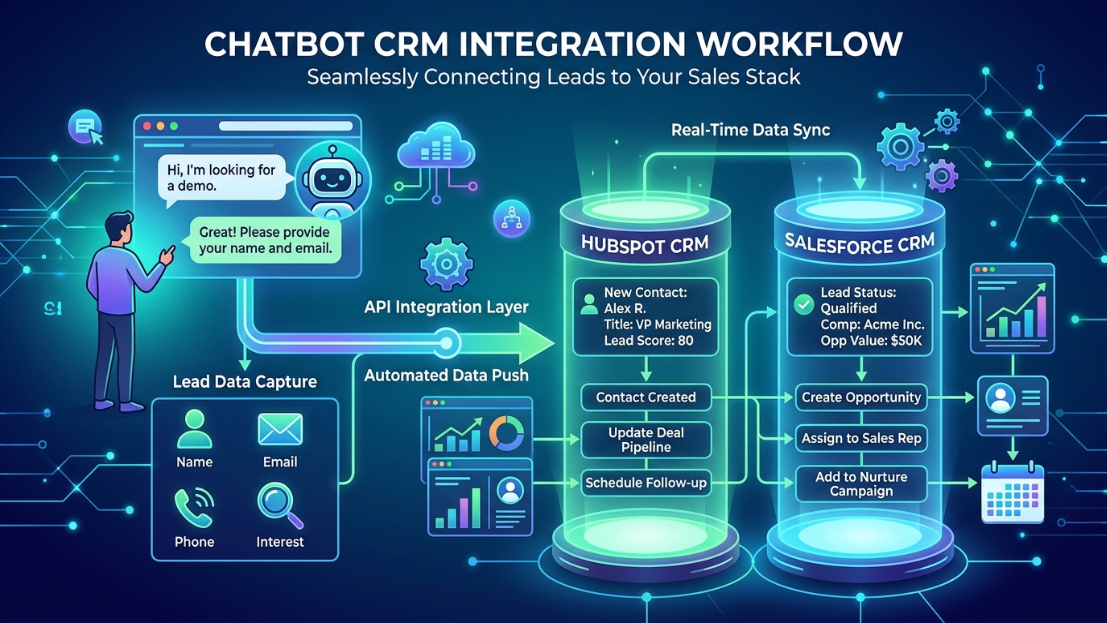
A lead qualifier chat flow does not work in isolation. Its power multiplies when it is deeply integrated with your broader digital marketing and sales infrastructure.
Landing Pages
The highest-ROI placement for a lead qualifier chatbot is on purpose-built landing pages designed specifically for paid traffic. Visitors who arrive from a Google Ad or a Meta campaign are already expressing intent a proactive chat flow intercepts that intent immediately. When your web design and development and chatbot strategies are designed together, conversion rates improve dramatically.
Paid Traffic Campaigns
When running Google Ads or performance marketing campaigns, aligning your ad messaging with your chatbot's opening line creates a cohesive experience that reduces bounce and increases qualified lead volume. For example, if your ad says "Get a free chatbot audit," your chatbot's first message should reference that same offer.
Social Media Marketing
Traffic arriving from social media marketing campaigns often needs a warmer, softer qualification approach. Social audiences are typically earlier in the buyer journey, so your chat flow should lead with education and value before pivoting to qualifying questions.
SEO & Organic Traffic
Organic visitors arriving via blog posts or service pages represent a high-trust audience. For these visitors, a non-intrusive chat trigger appearing only after 60 seconds or 60% scroll depth works best. Our Organic Growth & SEO team at Cinute InfoMedia ensures that the pages attracting organic visitors are structured to support conversational lead capture at the right moment.
Common Mistakes to Avoid in Lead Qualifier Chat Flows
Even well-intentioned chat flows can underperform if they fall into these traps:
Asking too many questions. Every additional question increases drop-off risk. Focus on the 3–5 questions that give you the most signal about lead quality. Save the detailed discovery for the human follow-up call.
Generic, copy-paste copy. A chatbot that says "Hello! How can I help you today?" provides zero differentiation or qualification. Every word should be intentional.
No clear handoff path. Qualifying a lead is only valuable if there is a clear, fast handoff to a human or next step. A lead scorer without a handoff protocol leaves money on the table.
Ignoring mobile experience. More than 60% of web traffic is mobile. Your chatbot interface and conversation length must be optimised for small screens and short attention spans.
One-size-fits-all flows. Different audience segments enterprise vs. SMB, industries, geographies need tailored flows. A single generic flow will inevitably over-qualify some prospects and under-qualify others.
Real-World Use Cases for Lead Qualifier Chat Flows
B2B SaaS: Qualify based on team size, current tools, and integration needs. Route enterprise prospects to an account executive and SMB leads to a self-serve onboarding flow.
Real Estate: Ask about property type, budget range, location preference, and purchase timeline. Route serious buyers to an agent; send listings and guides to early-stage explorers.
Education & EdTech: Qualify by course interest, current qualification level, and start date readiness. Route to an admissions counsellor for high-intent leads; send course guides to early explorers.
Healthcare: Screen for appointment type, insurance status, and urgency level. Route urgent cases to phone booking; general enquiries to online scheduling.
Professional Services (Legal, Finance, Consulting): Qualify by service type needed, company size, and project timeline. Route decision-ready prospects to a senior consultant.
Key Metrics to Track for Your Lead Qualifier Chat Flow
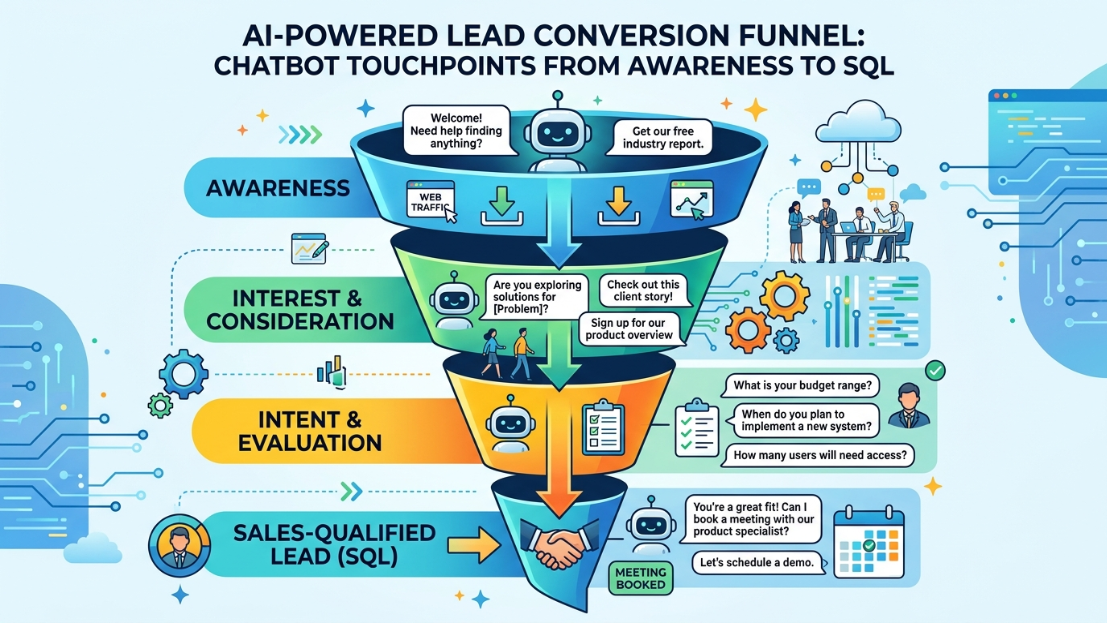
Once your lead qualifier chat flow is live, you need to measure its performance rigorously. The metrics that matter most include:
Chat Engagement Rate- Percentage of visitors who interact with the chatbot (target: 15–25%).
Flow Completion Rate- Percentage of users who complete the full qualification flow (target: 40–60%).
Lead Qualification Rate- Percentage of completed chats that result in a marketing-qualified or sales-qualified lead.
SQL-to-Close Rate- Percentage of chatbot-qualified leads that eventually close. This is the ultimate measure of flow quality.
Average Response Time- Time from completed chat to human follow-up (target: under 5 minutes for hot leads).
Tracking these metrics consistently gives you the data needed to continuously refine your flow and improve ROI. Our team at Cinute InfoMedia builds custom analytics dashboards so you can monitor every stage of your chatbot lead qualification funnel in real time.
Why Choose Cinute InfoMedia for Your Lead Qualifier Chat Flow
Designing, building, and optimising a lead qualifier chat flow requires expertise across conversation design, AI integration, CRM workflows, and digital marketing strategy. At Cinute InfoMedia, we bring all of these disciplines together under one roof.
Our AI-Powered Chatbots Services include custom chatbot development, lead qualification flow design, CRM integration, performance analytics, and ongoing optimisation. We have already helped businesses across EdTech, SaaS, Healthcare, and professional services deploy chatbot systems that save hundreds of hours per month while growing their qualified pipeline.
Combined with our AI Workflows & Automations capabilities, we can ensure your chatbot does not just collect lead data it triggers automated follow-up sequences, updates your CRM, notifies your sales team, books meetings, and initiates personalised email nurture flows, all without a single manual step.
You can explore more insights across our AI, marketing, and web development blog, or get in touch with our team today for a free digital audit and a customised lead qualification chatbot strategy tailored to your business.
Conclusion
Lead qualifier chat flows are no longer a luxury reserved for enterprise companies with massive marketing budgets. In 2026, they are an accessible, high-ROI tool available to businesses of every size and the companies that adopt them early are gaining a significant and compounding competitive advantage.
The key is to design them with intention: grounded in your ICP, built around a proven framework like BANT, written in natural conversational language, integrated with your CRM, and continuously optimised with real performance data. When all of those elements come together, your AI chatbot becomes your most productive, most consistent, and most scalable member of the sales team.
If you are ready to stop losing qualified leads to slow response times and generic contact forms, let Cinute InfoMedia build a lead qualifier chat flow that works for your business automatically, intelligently, and around the clock.
Related Articles
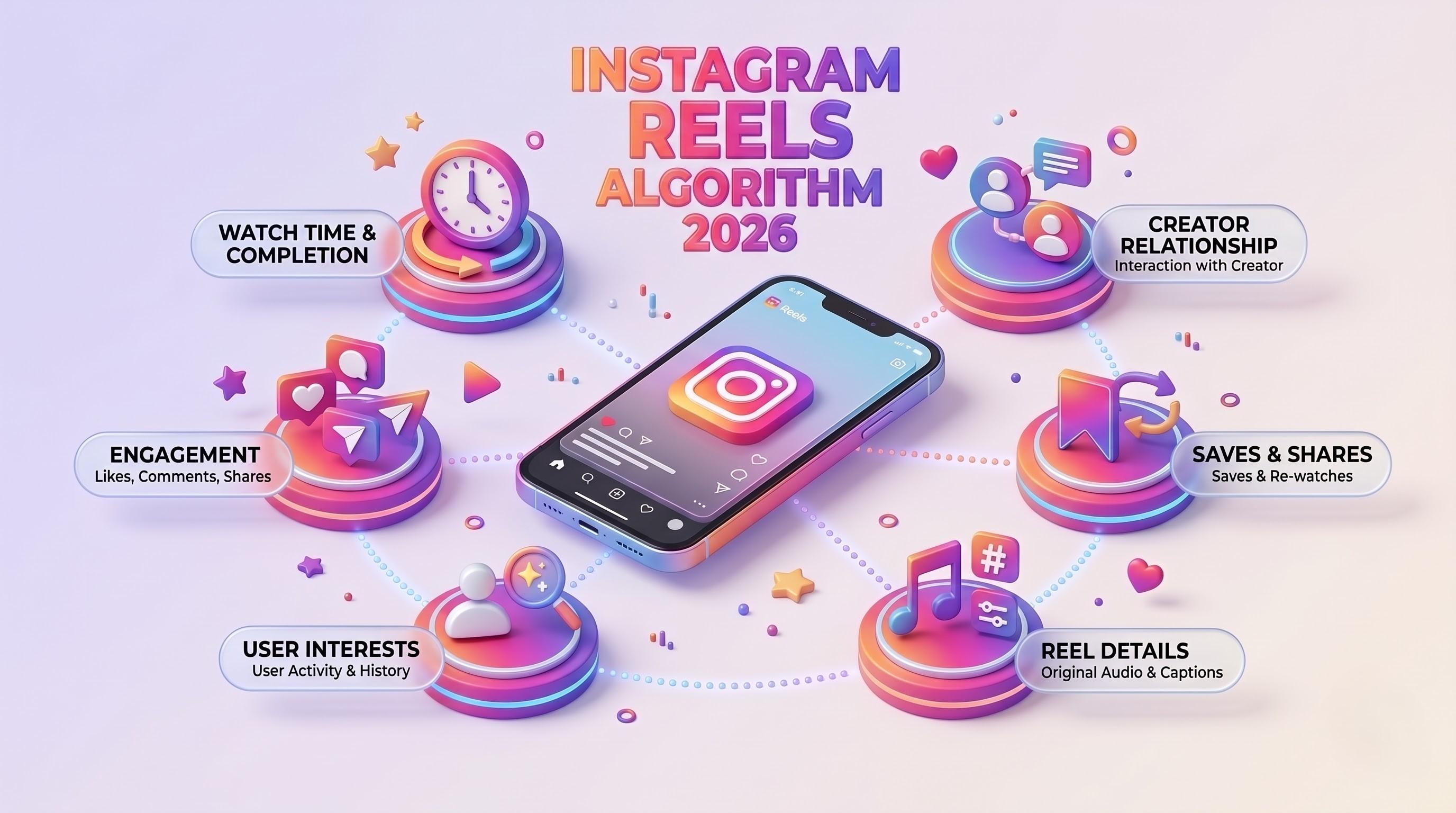
Instagram Reels Algorithm 2026: A Simple Guide for Tech-Savvy Teams
The Instagram Reels algorithm in 2026 ranks videos by watch time, DM sends and likes per reach. This easy guide explains how Reels are tested, what changed recently, and a practical checklist for developers, marketers, CTOs and product teams.

Business Corporate Intranets: A Simple Guide for Tech Teams
Business corporate intranets give every employee one secure place for news, files, people and tools. This easy guide covers features, architecture, security and a step-by-step build plan for CTOs, developers, testers and marketers.
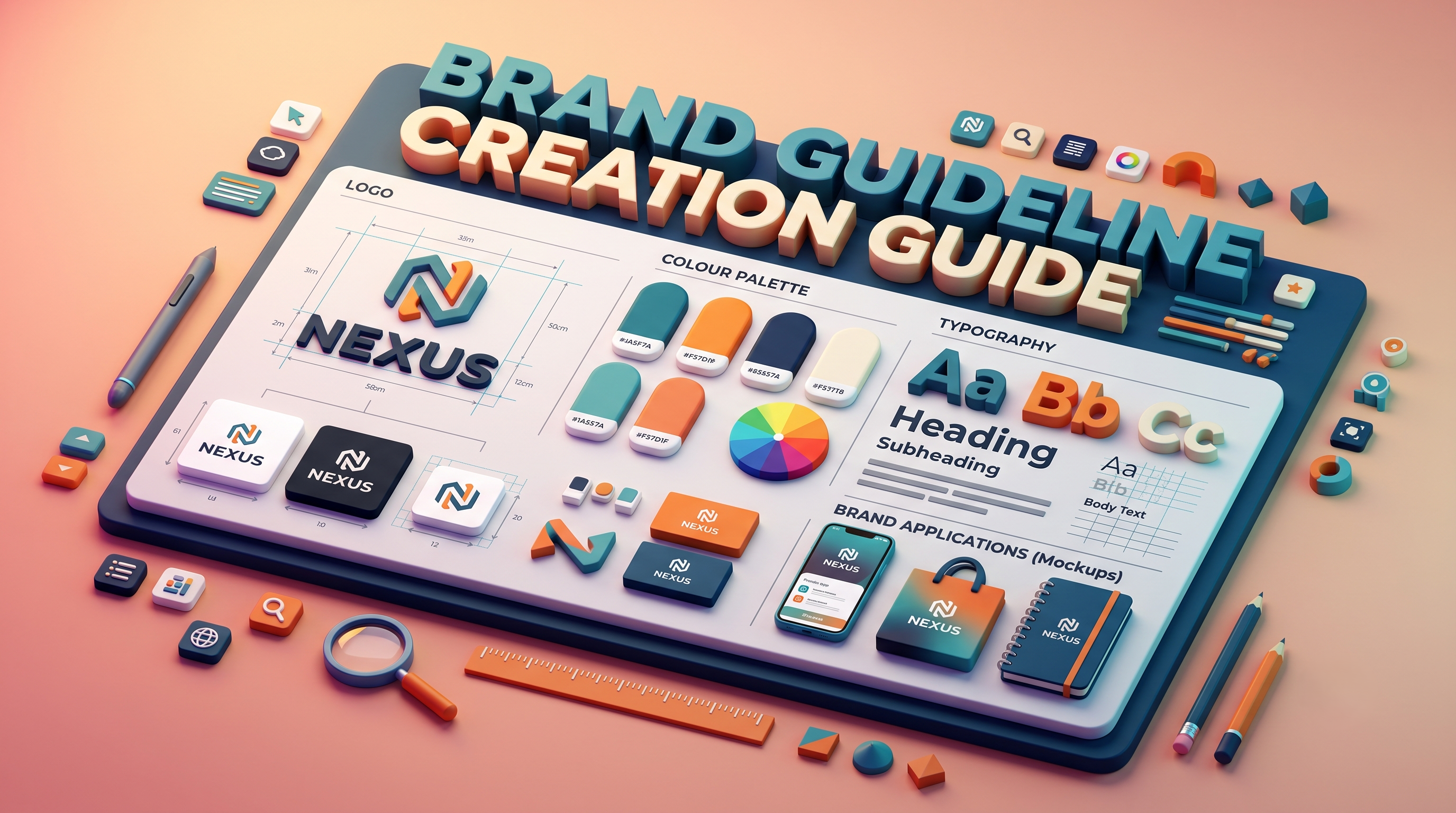
Brand Guideline Creation: A Step-by-Step Guide for Tech Brands
Brand guideline creation turns your logo, colours, fonts and voice into one clear rulebook for designers, developers, testers and marketers. This easy guide covers the core components, an 8-step process, design tokens for code, and how to connect your brand to SEO and AI.