

Table of Contents
In 2026, EdTech LMS Platforms (Learning Management Systems) have moved beyond simple video hosting. They are now the core engines of digital growth for educational institutions and global enterprises alike.
Building a high-ranking blog in this niche requires more than just words; it requires a strategic connection between your content and your core services. For an organization like Cinute Infomedia, the goal is to show that a platform's success is deeply rooted in high-quality Web Design & Development a solid technical foundation, even the best curriculum will fail to rank or retain users.
In this exhaustive guide, we will break down the essential components of a 2026-ready LMS, the technical SEO factors that drive traffic, and how a custom-built solution outperforms generic alternatives. We will explore how user behavior has shifted and why your backend architecture is now a front-facing ranking factor.
The Strategic Importance of EdTech LMS Platforms
The modern learner expects a "consumer-grade" experience. This means your platform must be as fast as a social media feed and as intuitive as a banking app. When we talk about Digital growth, we aren't just talking about traffic; we are talking about view time.
Google’s algorithms in 2026 heavily weight "dwell time" and "interaction depth." A custom-developed LMS creates an ecosystem where students want to stay. To achieve this level of performance, your organization needs the expertise of a team proficient in Software Development to handle complex integrations and high-concurrency traffic.

The Role of Custom Software in SEO
Off-the-shelf LMS solutions often come with "technical debt"-clunky code that slows down your site. A custom approach ensures:
- Lean Code: Better for Google's crawling and indexing.
- Unique UX: Lower bounce rates and higher engagement.
- Security: Essential for protecting sensitive learner data.
Key Features of a High-Ranking EdTech LMS in 2026
1. AI-Powered Personalization
The "one-size-fits-all" approach to learning is dead. Modern platforms use AI to create adaptive learning paths. If a student struggles with a Python loop, the LMS automatically serves a micro-module to bridge that gap. This level of dynamic content requires advanced Software Development to ensure the backend logic is seamless and the learning curves are optimized for every individual user. The AI doesn't just help the student; it helps your SEO. By generating personalized landing pages based on user progress and interests, you create thousands of entry points for long-tail search queries.
2. Mobile-First and Offline Accessibility
With 92% of higher education students using mobile devices as their primary research companions, your platform must be flawless on small screens. Many organizations fail by not treating their mobile site as a priority. This is where dedicated Application Development becomes a game-changer, allowing users to download modules for offline learning-a feature that significantly boosts user retention.
From an SEO perspective, Google uses mobile-first indexing. If your LMS is tucked behind a non-responsive login wall, you lose massive ranking potential. A native app synchronized with your web platform ensures that your brand remains at the fingertips of your audience 24/7.

3. Gamification and Social Learning
Leaderboards, badges, and peer-to-peer discussion boards are no longer "extra" features; they are requirements. These elements keep users coming back, which creates the "returning visitor" signals that Google loves. However, managing these social interactions requires a solid Social Media & Reputation Management strategy to ensure your platform remains a safe and positive environment.
Connecting LMS Content to Your SEO Digital Growth
Many ask: "How does an LMS help my organization show up in top search results?" The answer lies in the Content Hub Strategy. When you build an EdTech platform, you aren't just creating a login-protected portal; you are creating a wealth of indexed content.
Public-facing course previews act as landing pages for specific keywords like "Best Python Course for Beginners" or "Corporate Leadership Training 2026." By interlinking these previews with your core service pages, you build a "web" of authority. Furthermore, utilizing Data Processing Services to transcribe your video lessons provides search engines with text to crawl, significantly boosting your keyword footprint and making your content accessible to a wider audience.

The Interlinking Power of EdTech
To rank effectively, your blog must act as a bridge. For instance, an LMS's visual appeal is directly linked to its success. Investing in professional UI/UX & Creative Services ensures that your educational content is presented in a way that minimizes cognitive load. Similarly, if you are scaling to thousands of users, you cannot ignore the infrastructure. Your platform needs to be backed by reliable Cloud & DevOps to prevent the downtime that can decimate your search rankings.
Long-Tail Keywords for EdTech Dominance
To capture "ready-to-buy" traffic, you must target specific, high-intent phrases. Instead of just "LMS," focus on:
- “Custom EdTech LMS platforms for corporate training”
- “Scalable LMS development for higher education”
- “AI-driven personalized learning systems 2026”
These keywords are the foundation of SEO & Organic Growth. They attract users who have already identified their problem and are looking for your specific solution. By focusing on these long-tail variations, you reduce competition and increase the conversion rate of your traffic.
Technical SEO for EdTech Platforms: A Deep Dive
1. Schema Markup for Courses
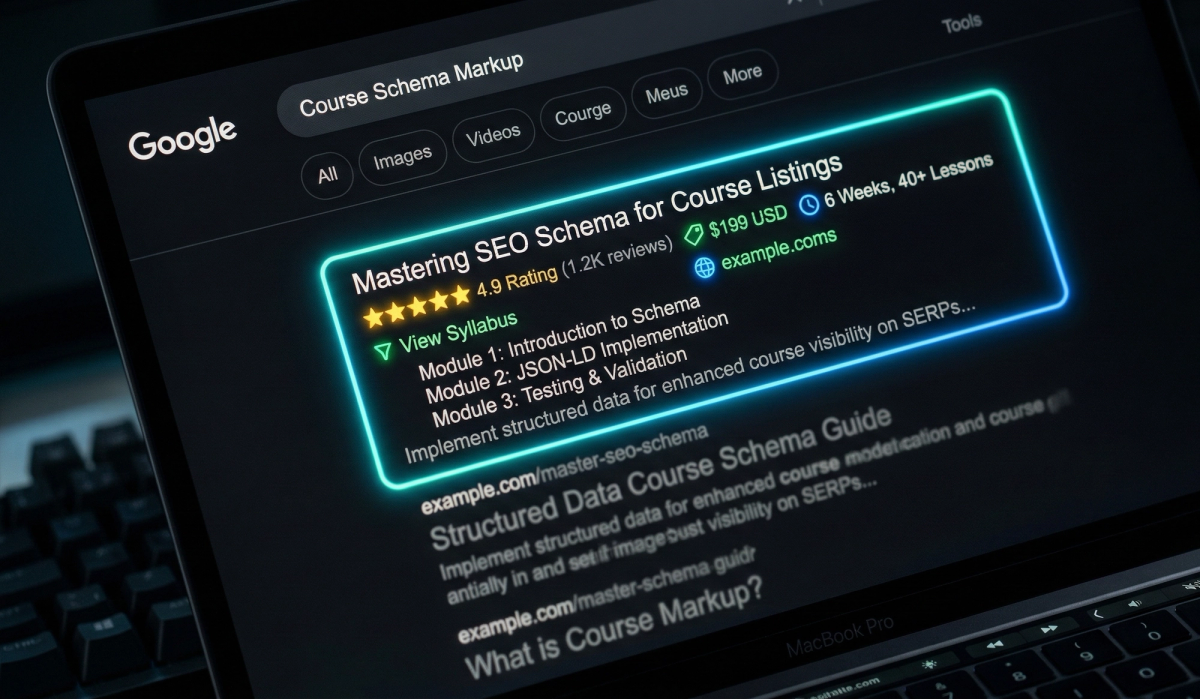
In 2026, rich snippets are the gold standard of search results. By implementing "Course" schema, you allow Google to display price, duration, and ratings directly on the search results page. This increases your Click-Through Rate (CTR) and establishes trust before the user even clicks.
2. Core Web Vitals and Page Experience
Google’s Page Experience signals are harsher than ever. An LMS with slow-loading videos or jerky scrolling will be penalized. This is why Software Development must focus on asynchronous loading and efficient CDN (Content Delivery Network) usage.
FAQ: Expert Answers on EdTech Platforms
1. How does an LMS help in building a brand?
An LMS serves as a "White Label" solution where your branding is front and center. It establishes you as an authority in your niche, especially when supported by a consistent Web & eCommerce Development strategy.
2. What is the most important SEO factor for an LMS?
In 2026, it is Content Depth. Google wants to see that you are providing comprehensive answers. Use your LMS to host public blogs, FAQs, and course previews.
3. Is mobile app development necessary for an LMS?
While a responsive website is good, a native app offers better performance and offline capabilities. Professional Application Development ensures your students can learn anywhere, anytime.
4. How do I protect student data?
Data security is a major ranking factor. Ensure your developers follow SOC 2 and GDPR standards. This is a core part of professional Software Development.
5. Can an LMS be used for eCommerce?
Absolutely many organizations sell their courses. Integrating your LMS with Web & eCommerce Development features allows for seamless payments and user onboarding.
Conclusion: Your Path to the Top of Search Results
EdTech LMS Platforms are no longer just tools they are the heart of your digital identity. To rank at the top of Google, you must treat your platform as a living, breathing SEO asset. By combining high-quality content with the technical excellence of Software Development, you create a system that search engines trust and users love.
At Cinute Infomedia, we don't just build code; we engineer growth. Our multidisciplinary approach ensures that your organization doesn't just appear in search results-it dominates them.

Related Articles
SEO Monitoring Tools: Technical Implementation Guide for Developers
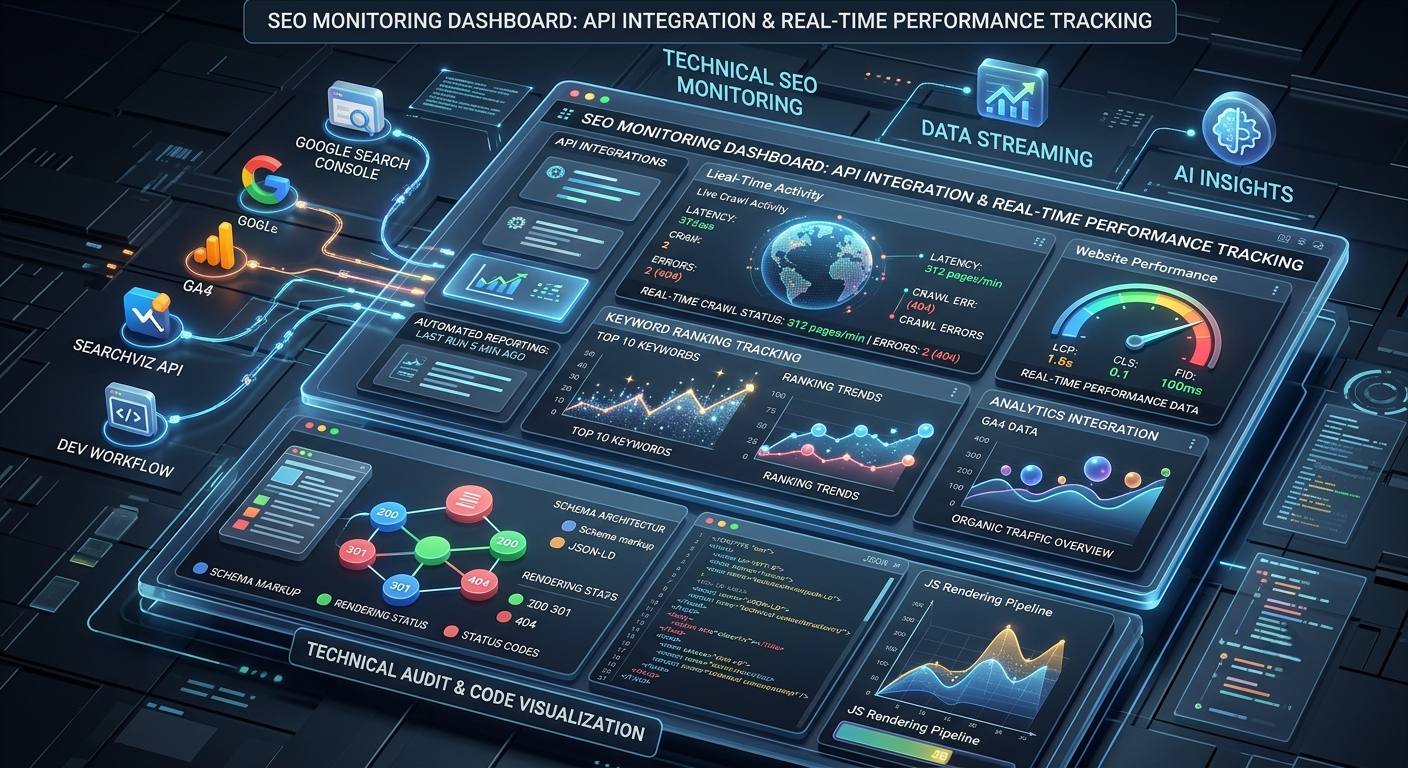
Comprehensive technical guide to SEO monitoring tools designed for software developers and product managers. Learn how to integrate monitoring into development workflows, track technical SEO metrics, and automate performance reporting with modern tools and APIs.
Core Web Vitals Fixes Guide: Complete Technical Implementation for Developers
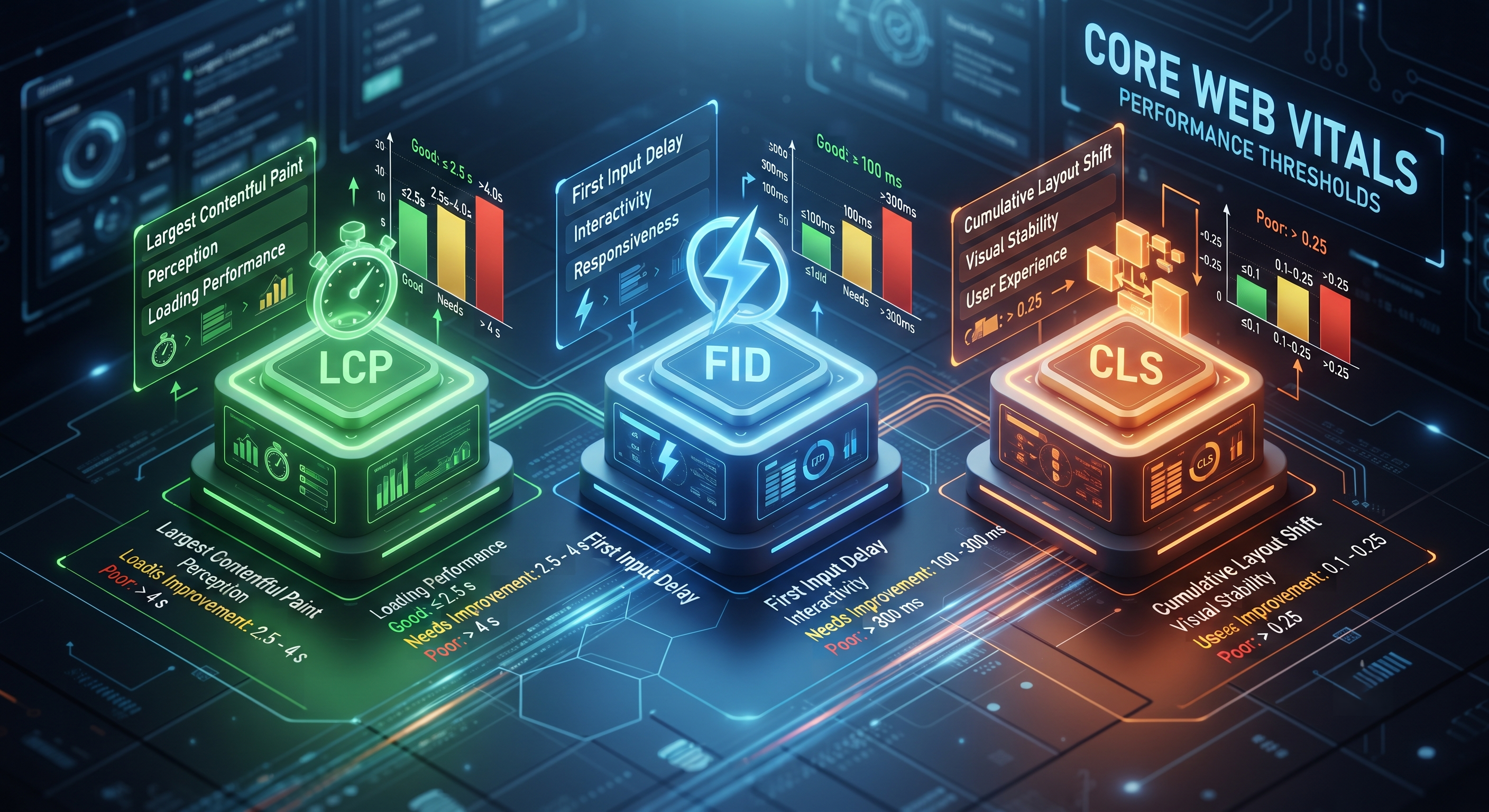
Master Core Web Vitals optimization with our technical implementation guide. Learn LCP, FID, CLS fixes with code examples and strategies tailored for developers and CTOs.

The Ultimate Guide to Performance Marketing in 2026 (Strategy, KPIs & ROI)
Discover how performance marketing drives measurable ROI and learn why high-speed web development and AI automation are the secret weapons to maximizing your return on ad spend in 2026.