

Table of Contents
The web in 2026 is powered by AI-driven search engines that value "Quality of Experience" above all else. When a user clicks a link from an AI Search Overview, they expect the page to be interactive instantly. Gone are the days when a 3-second load time was "acceptable." Today, if your Largest Concertful Paint (LCP) exceeds 1.2 seconds, you are effectively invisible to the algorithms.
Optimizing a Next.js site in 2026 requires a deep understanding of the App Router, Turbopack, and the newly stabilized React 19 features. At Cinute Infomedia, we’ve seen that technical performance is the foundation of every successful digital campaign. You can have the best copy in the world, but if your site lags, your audience will bounce before they read the first sentence.
The Turbopack Revolution: Moving Beyond Webpack
By 2026, Turbopack has fully replaced Webpack as the default bundler for Next.js 16+. For developers, this means cold starts are nearly 6x faster and production builds are up to 7x quicker. But what does this mean for your SEO?
Faster Iteration, Faster Ranks
Turbopack’s incremental computation engine means that only the parts of your code that change are re-built. This allows for:
- Reduced HMR Latency: Developers can see changes in 4ms, leading to cleaner code.
- Optimized Chunking: Turbopack creates smaller, smarter JavaScript chunks, ensuring users only download the code needed for the current route.
This level of efficiency is critical when we talk about Web Design & Development, where a lean codebase directly correlates to better indexing and user retention.
Partial Prerendering (PPR): The Best of Both Worlds
In the past, you had to choose between Static Site Generation (SSG) for speed and Server-Side Rendering (SSR) for dynamic data. In 2026, Partial Prerendering (PPR) has eliminated this trade-off.
PPR allows you to render a static shell for your page instantly while "streaming" in dynamic components as they become ready. This is achieved using React Suspense.
How to Implement PPR for Maximum SEO
- Wrap Dynamic Components: Use
- Enable in Config: Set
ppr: truein yournext.config.ts. - Optimize the Shell: Ensure your "static shell" contains your H1 and primary keywords so search engines can index them immediately.
This architecture is vital for modern AI Workflows & Automations, where data is frequently updated but the initial visual response must be instantaneous.
React 19 and the "use cache" Directive
Caching has historically been one of the biggest "pain points" for Next.js developers. 2026 brings the stable release of the "use cache" directive, a game-changer for data-heavy applications. In the modern landscape of web design & development, the boundary between the server and the client is blurring; React 19's use cache directive bridges this gap by providing a standardized, built-in way to handle data persistence that is both developer-friendly and highly performant.
Granular Caching Control
Instead of worrying about complex fetch tags and revalidation periods, you can now apply the "use cache" directive directly to functions or components. This tells Next.js exactly which parts of the logic should be persisted across requests.
By reducing database round-trips, you significantly lower your Interaction to Next Paint (INP)-a metric that Google heavily weights in its 2026 ranking algorithm. This strategy is a staple in our Performance Marketing efforts, where every millisecond saved leads to a measurable increase in conversion rates.
Advanced Core Web Vitals 2026: The Metrics That Matter
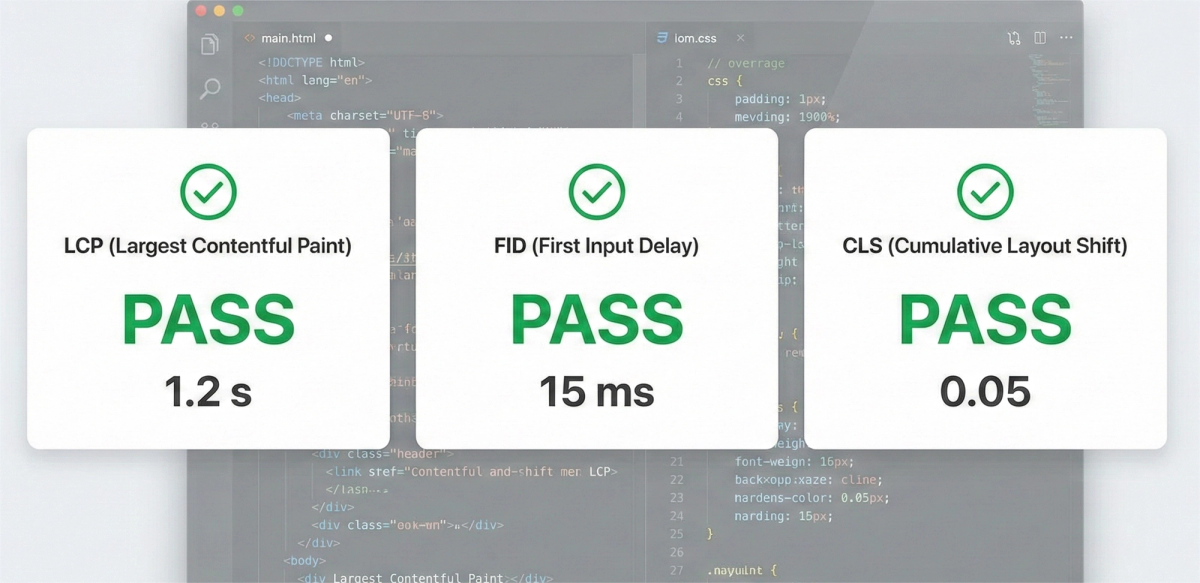
To rank in the top search results, you must optimize for the "Big Three" metrics. Here is how Next.js handles them in 2026:
A. Largest Contentful Paint (LCP)
- Goal: Under 1.2s.
- Next.js Solution: Use the
next/imagecomponent withpriorityfor hero images. In 2026, ensure you are using AVIF format. - Formula for LCP Optimization:$$LCP \approx (Server Response Time) + (Resource Load Delay) + (Resource Load Time) + (Element Render Delay)$$
B. Interaction to Next Paint (INP)
- Goal: Under 200ms.
- Next.js Solution: Minimize the "Main Thread" work. Use Server Actions for form submissions and data mutations to keep the client-side JavaScript bundle lean.
C. Cumulative Layout Shift (CLS)
- Goal: Below 0.1.
- Next.js Solution: Use the
aspect-ratioproperty in CSS and ensure all fonts are preloaded usingnext/font
Next.js Static Pages with Tailwind CSS & TypeScript
Building static pages is the "cheat code" for a 100 Lighthouse score. When you combine Next.js static exports with Tailwind CSS, you eliminate the overhead of traditional CSS-in-JS libraries.
The "Clean Code" Strategy
- Type Safety: Use TypeScript to catch performance-heavy logic errors during development.
- Tailwind JIT: Ensure Tailwind's Just-In-Time compiler is stripping all unused styles. In 2026, the
next-tailwind-pluginhandles this automatically. - Metadata API: Use the built-in Metadata API to generate dynamic SEO tags without needing an external library.
This lean approach to development is a cornerstone of our Mobile App Development services, where we apply the same "performance-first" mindset to hybrid mobile applications.
Reducing Latency at the Edge
The future of Next.js is not on a centralized server; it's at the Edge. By 2026, the Edge Runtime has become the default for Middleware and API routes.
Edge Middleware Optimization
Middleware allows you to run code before a request is completed. However, bulky middleware can destroy your Time to First Byte (TTFB).
- Keep it Light: Use only the necessary imports.
- Conditional Middleware: Run middleware only on specific paths to avoid overhead on static assets.
- Geofencing: Use the Edge to serve localized content instantly, improving the perceived performance for global audiences.
Third-Party Script & Asset Management
Nothing kills a Lighthouse score faster than unoptimized third-party scripts. In 2026, we use the next/script component with the worker strategy to offload scripts to a Web Worker.
AVIF and the Future of Media
Images often account for 60% of a page's weight. By using AVIF as your primary format, you can achieve up to 50% better compression than JPEG without losing quality. Combine this with the placeholder="blur" attribute to eliminate perceived loading lag and prevent CLS.
Connecting Performance to Digital Growth
Why does a "technical" blog about Next.js matter for your business? Because Performance is a Business Strategy. In 2026, user engagement and search rankings are directly tied to the technical health of your site.
When your site is fast, your marketing budget goes further. Your Performance Marketing campaigns will see higher quality scores and lower CPCs because the landing page experience is superior. High performance is the rising tide that lifts all your digital ships.

FAQ: Next.js Performance Optimization in 2026
Q: How do I achieve a 100 Lighthouse score on mobile in 2026?
A: Focus on reducing the main thread work. Shift all non-critical logic to Server Components and use the React Compiler to minimize re-renders.
Q: Is Next.js still the best framework for SEO?
A: Yes. Its ability to serve pre-rendered HTML while maintaining dynamic interactivity makes it the gold standard for SEO.
Q: What is the impact of AVIF on LCP?
A: Using AVIF can reduce image load times by up to 30%, directly improving your LCP score and helping you stay within Google's green zone.
Conclusion: The Path to the Top
Mastering Next.js Performance Optimization in 2026 is not just about writing better code; it's about understanding the synergy between technology and user psychology. By prioritizing speed, you are showing your users-and search engines-that you value their time.
At Cinute Infomedia, we leverage our 25+ years of expertise to build websites that aren't just visually stunning, but technically flawless. From SEO and Organic Growth to Web Design & Development, we ensure your digital presence is built for the future.
Related Articles
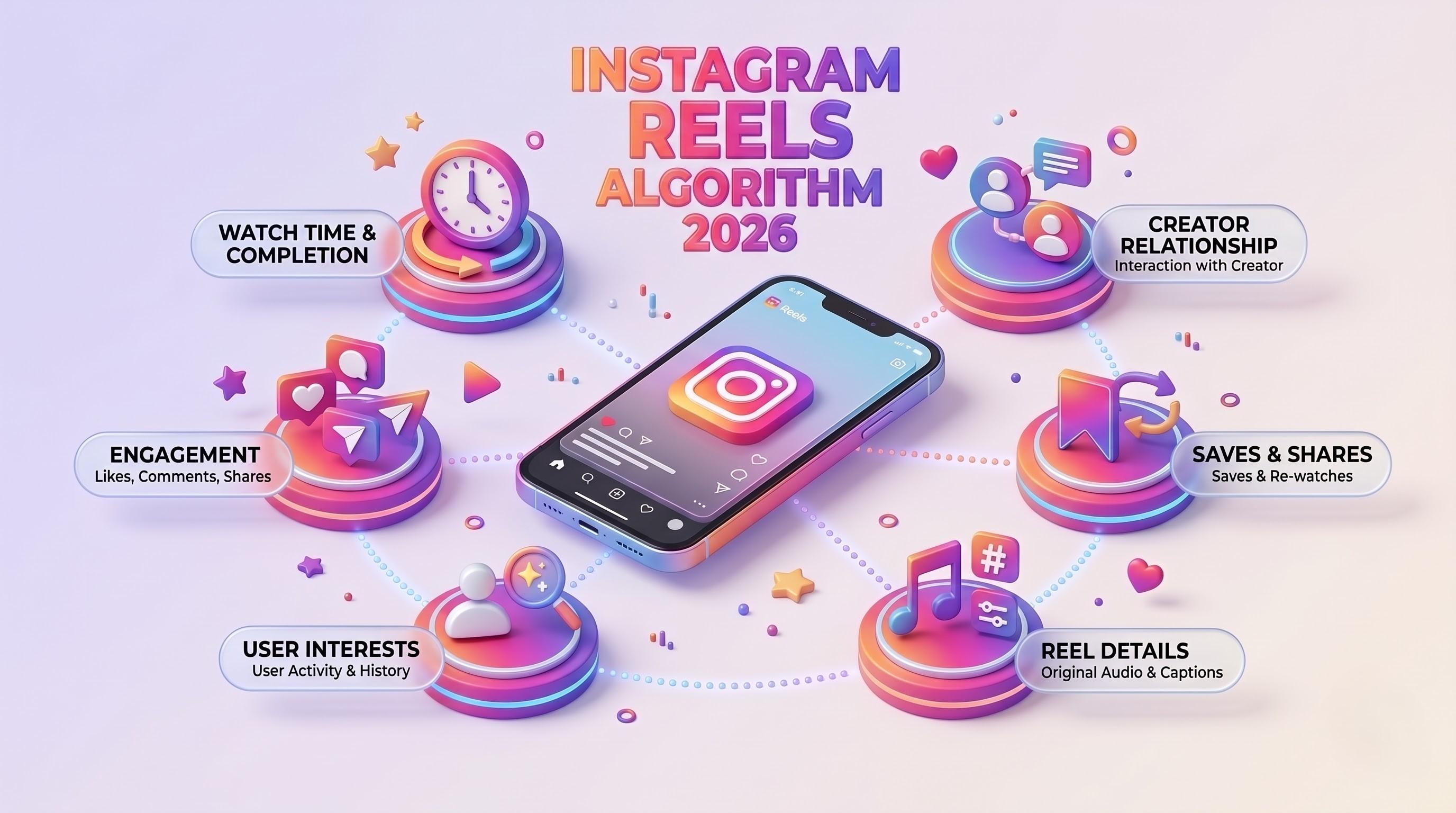
Instagram Reels Algorithm 2026: A Simple Guide for Tech-Savvy Teams
The Instagram Reels algorithm in 2026 ranks videos by watch time, DM sends and likes per reach. This easy guide explains how Reels are tested, what changed recently, and a practical checklist for developers, marketers, CTOs and product teams.
Business Corporate Intranets: A Simple Guide for Tech Teams
Business corporate intranets give every employee one secure place for news, files, people and tools. This easy guide covers features, architecture, security and a step-by-step build plan for CTOs, developers, testers and marketers.

Brand Guideline Creation: A Step-by-Step Guide for Tech Brands
Brand guideline creation turns your logo, colours, fonts and voice into one clear rulebook for designers, developers, testers and marketers. This easy guide covers the core components, an 8-step process, design tokens for code, and how to connect your brand to SEO and AI.