
Table of Contents
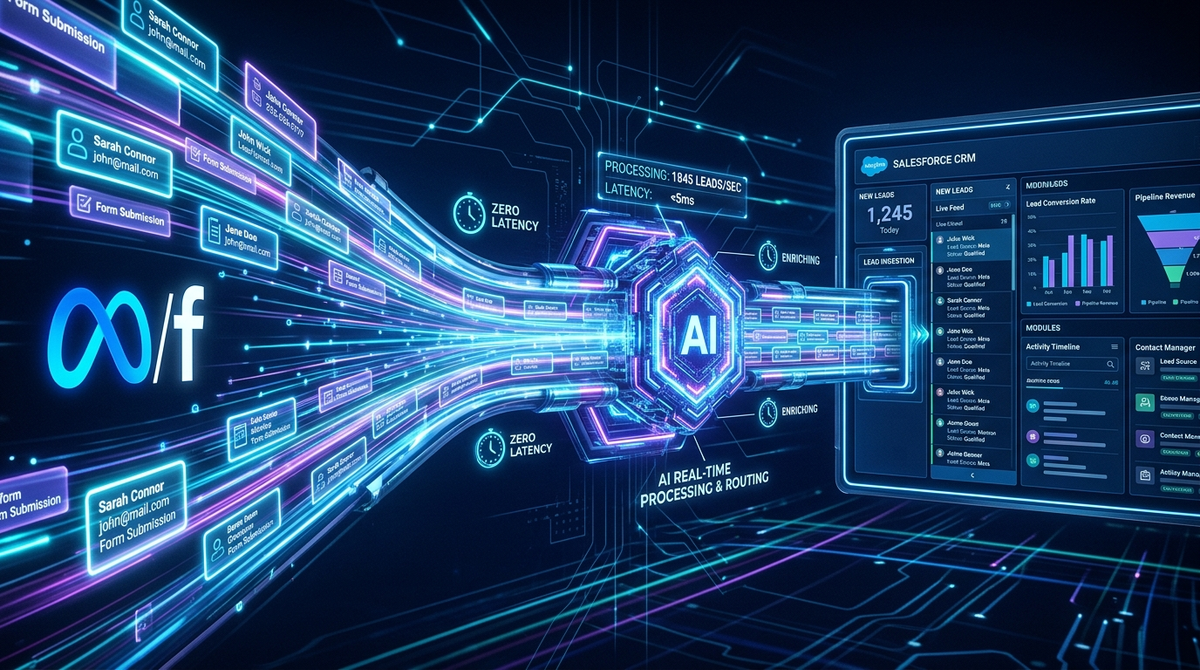
In the modern enterprise data ecosystem, speed-to-lead is the ultimate competitive advantage. When a high-intent B2B prospect submits a Meta Lead Ad, every minute of delay degrades the probability of conversion exponentially. Yet, countless organizations still rely on fragmented, manual data exports that introduce fatal latency and critical human error into the sales pipeline. The strategic imperative for engineering leaders is clear: Automating Facebook Lead Ads to CRM is not merely a marketing task; it is a foundational architectural requirement for scalable revenue generation. By implementing autonomous data routing, companies eliminate friction, bypass technical debt, and ensure that high-value prospects are engaged within milliseconds of intent capture.
The Problem: Data Decay and Regression Bottlenecks
At the enterprise scale, treating lead data as a static export is a critical system vulnerability. When marketing teams manually download CSV files from Meta and upload them into a CRM like Salesforce or HubSpot, they introduce a massive bottleneck.
This manual intervention creates two severe issues. First, data decay. A lead generated at 2:00 AM on a Saturday sits stagnant until Monday morning, by which point the prospect has likely engaged with a competitor whose systems responded instantly. Second, this process creates severe regression bottlenecks. As fields in the Facebook Lead Form change or update, manual mapping frequently fails, resulting in corrupted CRM data, mismatched fields, and lost opportunities. In the realm of software architecture, a manual data transfer of this magnitude is considered unacceptable technical debt.
The Agitation: Bleeding ROI and Surrendering Market Share
The cost of this latency is staggering. If your sales team takes more than five minutes to respond to an inbound digital lead, the odds of qualifying that lead drop by 80%.
While your team is manually parsing spreadsheets, competitors leveraging Agentic AI and autonomous workflows are triggering instant, personalized email sequences, assigning tasks to account executives, and updating deal stages in real-time. The lack of automation doesn't just frustrate your sales floor; it actively hemorrhages your marketing ROI and surrenders your market share to faster, more integrated competitors. You are paying premium Meta Ad prices for data that becomes worthless by the time it reaches your sales team.
The Solution: Architecting a Flawless Automation Pipeline
To solve this, we must build a deterministic, automated data pipeline. Whether you are using middleware like Zapier or Make, or building custom API development via Next.js backend routes, the goal is instantaneous, verified data transmission.
Here is the strategic blueprint for building an impenetrable bridge between Meta and your CRM.
1. Establishing the Webhook Architecture
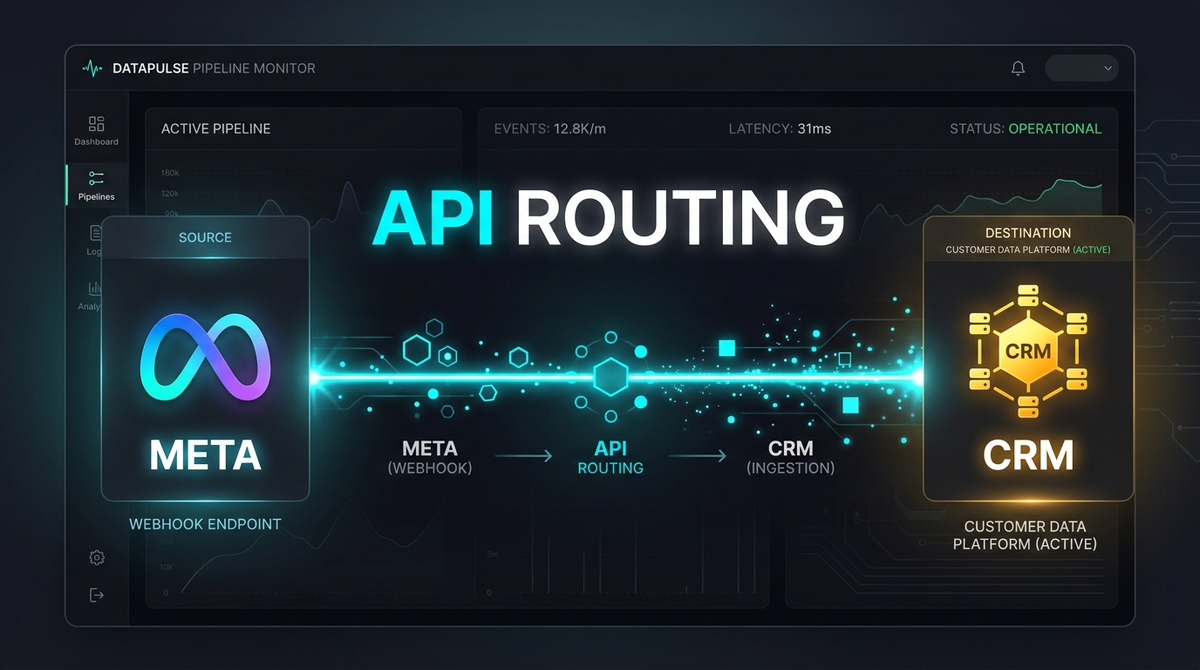
The foundation of Automating Facebook Lead Ads to CRM is the webhook. Instead of polling Meta for new leads, a webhook allows Meta to push a JSON payload to your server the exact millisecond a user clicks "Submit."
- The Technical Edge: For maximum control and security, engineering teams should route these webhooks through a dedicated API endpoint. If you are operating on a modern stack, utilizing serverless edge functions allows for infinite scalability during high-traffic ad campaigns without server throttling.
2. Payload Sanitization and Data Formatting
One of the most common failure points in lead automation is mismatched data types. Meta may send a phone number as a string with country codes (e.g., +91), but your CRM might require a strict 10-digit integer.
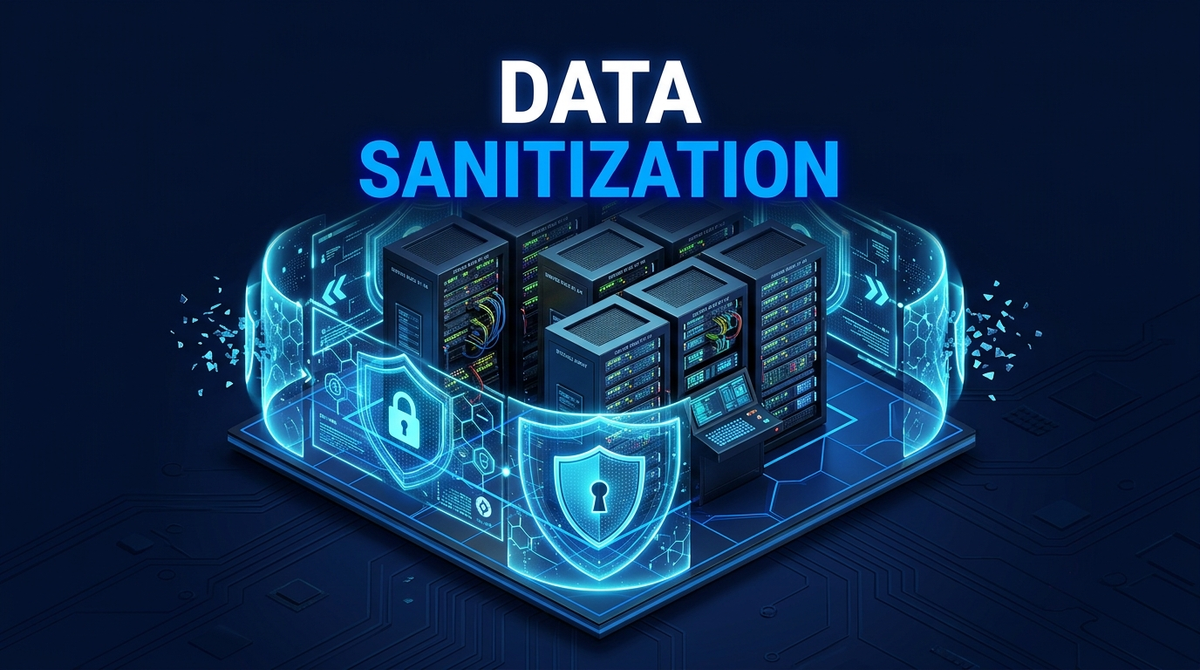
- Pro-Tip: Implement a middleware sanitization layer. Before the payload hits your CRM, run automated scripts to normalize text cases, format dates, and strip invalid characters. This proactive automated quality assurance ensures that your CRM database remains pristine and actionable.
3. Intelligent Routing with Agentic AI
Basic automation simply moves data from Point A to Point B. Advanced Agentic AI workflows analyze the data in transit.
If a prospect selects "Enterprise Plan" on the Meta form, the autonomous workflow shouldn't just create a contact record. It should simultaneously ping the Enterprise Sales Director in Slack, enrich the company data using Clearbit, and trigger a highly specific technical whitepaper delivery via email. This transforms a simple integration into a proactive revenue engine.
4. Continuous Testing and Monitoring
An automation pipeline is only as reliable as its monitoring system. APIs deprecate, tokens expire, and form fields get altered by marketing teams.
Establish robust error handling. If a webhook payload fails to post to the CRM, the system must instantly alert the DevOps team and queue the payload for a retry. By applying rigorous automated quality assurance protocols to your marketing data flow, you eliminate silent failures.

Structuring for Long-Term Scalability
As your enterprise digital strategy matures, the volume of inbound data will scale rapidly. Building a hard-coded integration might work for a small campaign, but it will shatter under enterprise weight.
When scaling, consider decoupling your architecture. Use message brokers or queues to receive the initial Meta payload instantly, returning a 200 OK status to Facebook immediately, and then process the CRM integration asynchronously. This is the cornerstone of our established engineering approach when dealing with high-velocity data environments.

Furthermore, integrating these automated lead flows with comprehensive performance marketing campaigns ensures that your ad spend is protected. Every dollar spent on Meta is immediately backed by a system designed to capture, route, and engage the user without human delay.
The Impact on the Digital Ecosystem
It is important to remember that this automation does not exist in a vacuum. The speed of your website, specifically mobile-first data ecosystems, plays a critical role in user trust before they even fill out the form.
Additionally, the landing pages hosting your integrated forms must be optimized. Strong technical SEO optimization ensures that organic traffic is captured with the same efficiency as paid traffic, routing all data through the same sanitized, automated CRM pipeline.
Frequently Asked Questions (FAQ)
Q: Do I need a third-party tool like Zapier to automate Meta Lead Ads?
While middleware like Zapier or Make is convenient for fast setups, it is not strictly required. Engineering teams can build custom API development directly using Meta's Graph API webhooks to POST data directly to a CRM. This reduces third-party subscription costs and increases data security.
Q: How do we handle duplicate leads from Facebook?
Your CRM or middleware must employ a deduplication step before creating a new contact. Typically, this involves using the prospect's email address as the unique identifier. If the email exists, the system updates the existing record with the new ad engagement data rather than creating a duplicate.
Q: What happens if the CRM API goes down while leads are coming in?
This is why robust architecture is vital. A professional setup will include error-handling that catches failed API requests and queues them (e.g., in a cloud database or a tool like AWS SQS) to automatically retry once the CRM is back online, ensuring zero lead loss.
Conclusion: Future-Proofing Your Lead Architecture
In an era where buyers expect instantaneous responses, relying on manual data entry is a critical failure of system design. By Automating Facebook Lead Ads to CRM, you are doing more than just saving time; you are building a resilient, error-free revenue pipeline.
From implementing secure webhooks and sanitizing payloads to deploying autonomous Agentic AI routing, this integration requires a strategic, engineering-first mindset. When executed correctly, it eliminates the latency tax, empowers your sales team with real-time data, and maximizes the ROI of every advertising dollar spent. If your organization is ready to eliminate technical debt and scale your data infrastructure securely, it is time to consult with our integration architects to build a system that performs flawlessly under enterprise demands.
Related Articles

Competitor Gap Analysis Tools Compared: Semrush, Ahrefs and More
Your competitors are ranking for keywords you have never targeted. Competitor gap analysis tools show you exactly where, and what to do about it. This easy guide explains keyword, content and backlink gaps, compares the best tools, and gives developers, marketers and product teams a 7-step plan to close the gaps.
AI Personalization Engines: A Simple Guide for Tech Teams
AI personalization engines use machine learning to show each user the right content, product or offer in real time. This easy guide covers how they work, core models, a 7-step build plan, testing, privacy and SEO for developers, testers, marketers and CTOs.
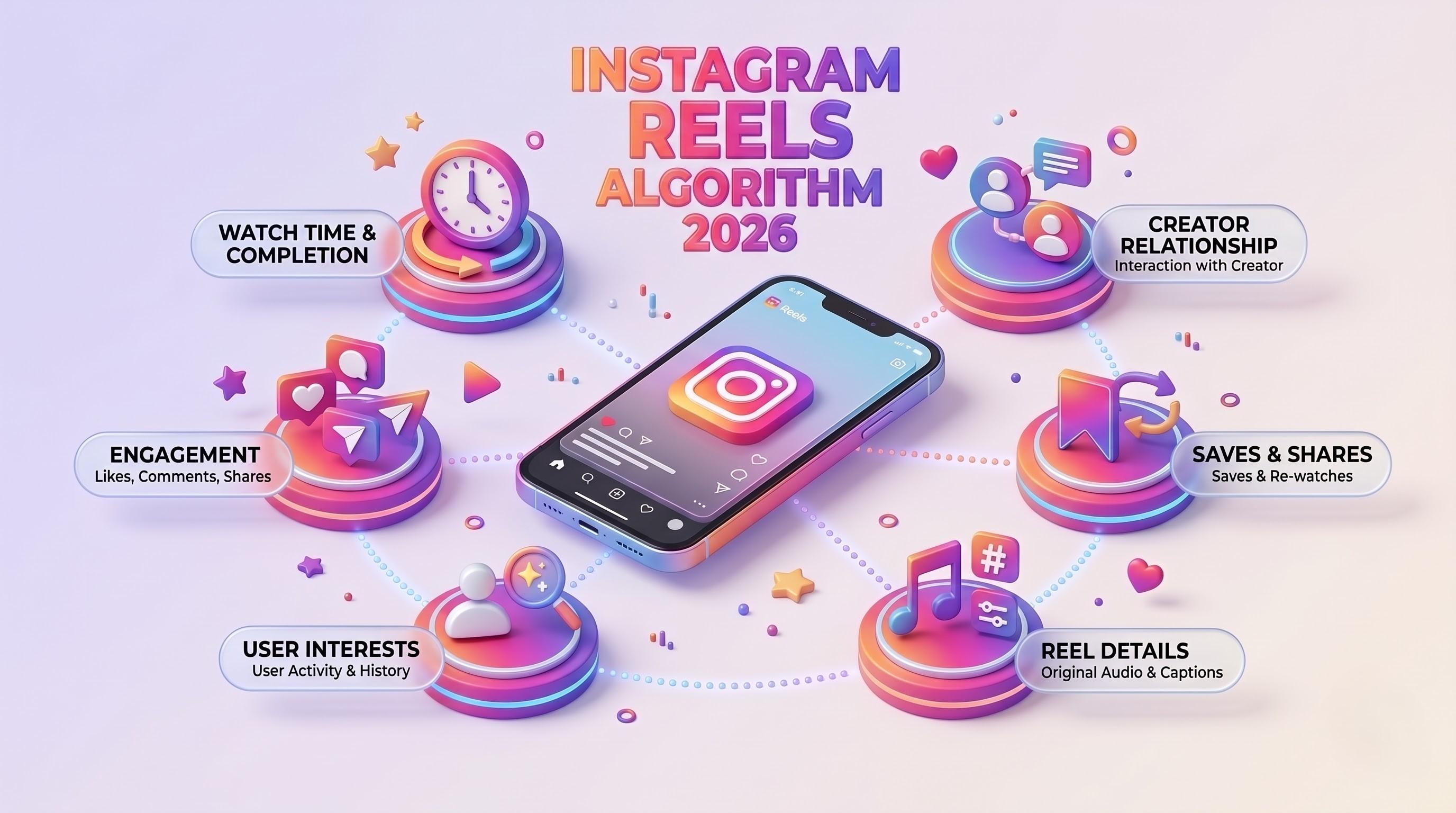
Instagram Reels Algorithm 2026: A Simple Guide for Tech-Savvy Teams
The Instagram Reels algorithm in 2026 ranks videos by watch time, DM sends and likes per reach. This easy guide explains how Reels are tested, what changed recently, and a practical checklist for developers, marketers, CTOs and product teams.