

Table of Contents
In the hyper-connected digital landscape of 2026, the traditional concept of "Customer Support" has been fundamentally disrupted. We have moved past the era of static FAQ pages and entered the age of the Intelligent Agent.
For a premier Digital Marketing Agency in Mumbai, the implementation of AI chatbots for customer service is no longer a peripheral technical upgrade-it is a core business strategy. Today’s consumers exhibit "Zero-Latency Expectations." They don't just demand answers; they demand instantaneous, personalized resolutions. If your website isn't talking back to your customers in real-time, you are essentially leaving your digital storefront unattended. In this comprehensive guide, we will explore how AI-driven automation is not just a tool for cost-cutting, but a primary driver for SEO ranking and organizational scaling.
1. The Shift from Reactive to Proactive Support
Historically, customer service was reactive. A problem occurred, the customer reached out, and a human responded hours later. In 2026, the most successful brands use AI to anticipate needs before the customer even articulates them.
The Role of Generative AI and RAG
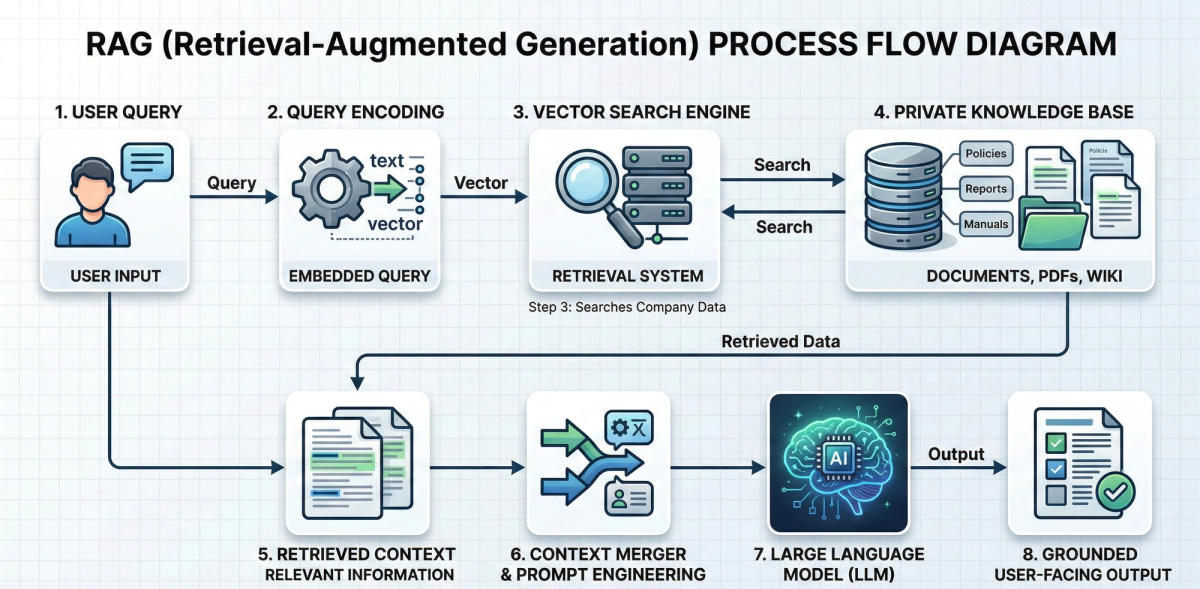
Modern chatbots utilize Retrieval-Augmented Generation (RAG). This allows the AI to "read" your entire website’s service catalogue, technical documentation, and past interactions to provide contextually accurate answers. This level of sophistication ensures that your Web Development efforts are complemented by an interface that understands the nuances of your business.
2. How to Integrate AI Chatbots with CRM for Better ROI and Digital Growth
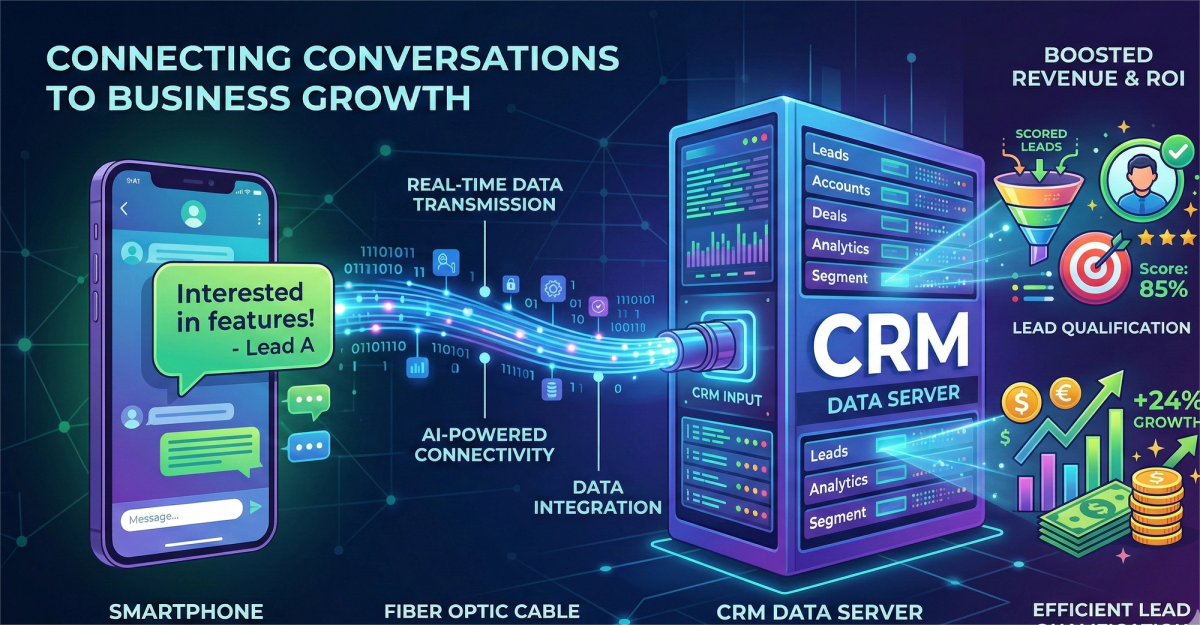
Integration is the bridge between "chatting" and "selling." A standalone chatbot is a silo; an integrated chatbot is a growth engine.
Building the Data Ecosystem
By connecting your conversational AI directly to your CRM (like Salesforce, HubSpot, or Zoho), you create a 360-degree view of the customer:
- Lead Scoring: The AI can qualify a lead based on the conversation and assign a score before a human even sees it.
- Personalized Journeys: If a user has previously visited your SEO Services page, the chatbot can proactively offer a free SEO audit.
- Automated Follow-ups: Once a chat ends, the AI can automatically trigger a personalized email sequence, keeping the brand top-of-mind.
3. The SEO Value: Why AI Chatbots Improve Search Rankings
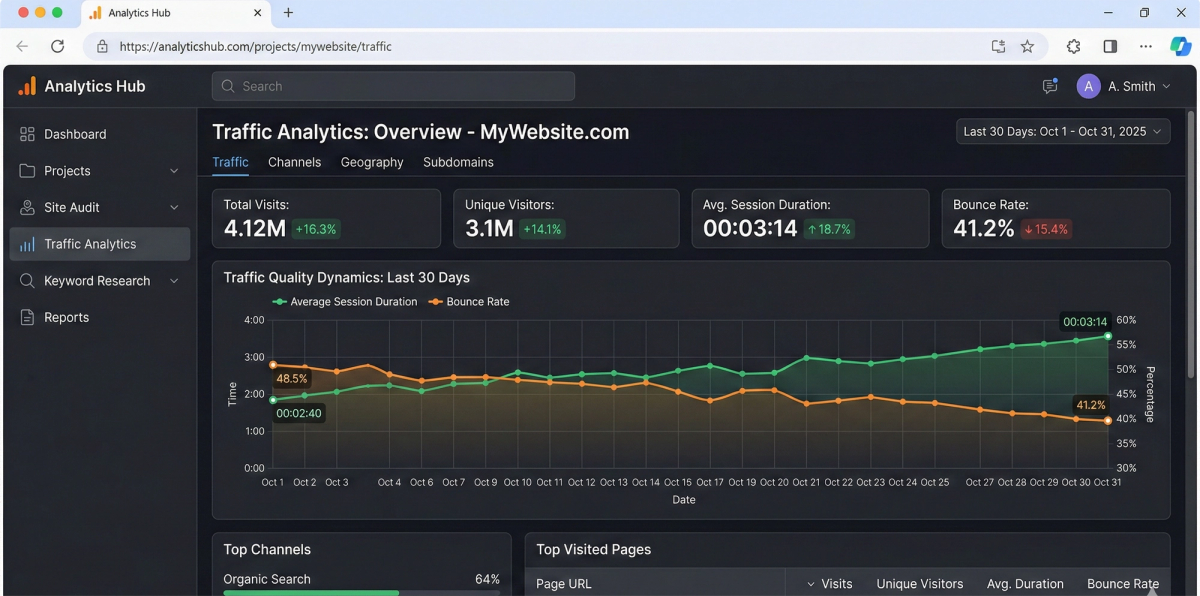
As an SEO analyst, I view chatbots as a secret weapon for on-page optimization. Google’s algorithms in 2026 prioritize User Task Completion and Dwell Time.
Decreasing Bounce Rates
If a user arrives at your site and finds it difficult to navigate, they bounce. A chatbot acts as a digital concierge, immediately asking, "How can I help you find what you need?" This interaction keeps the user on the page, signalizing to Google that your content is relevant and helpful.
Capturing Zero-Volume Search Queries
Users often ask chatbots questions they wouldn't type into a search engine. By Analyzing these "Conversational Keywords," you can update your Content Marketing strategy to cover gaps your competitors are missing.
4. Strategic Synergy with Cinute Infomedia Services
Our goal is to ensure your organization shows up at the top of search results. To do that, your AI strategy must be woven into your digital fabric.
AI and Mobile App Development
In 2026, mobile apps are the primary touchpoint for users. Integrating a native AI assistant into your app ensures that support is always a thumb-tap away. This is a core component of our Mobile App Development philosophy-building apps that aren't just functional, but intelligent.
AI and Social Media Marketing
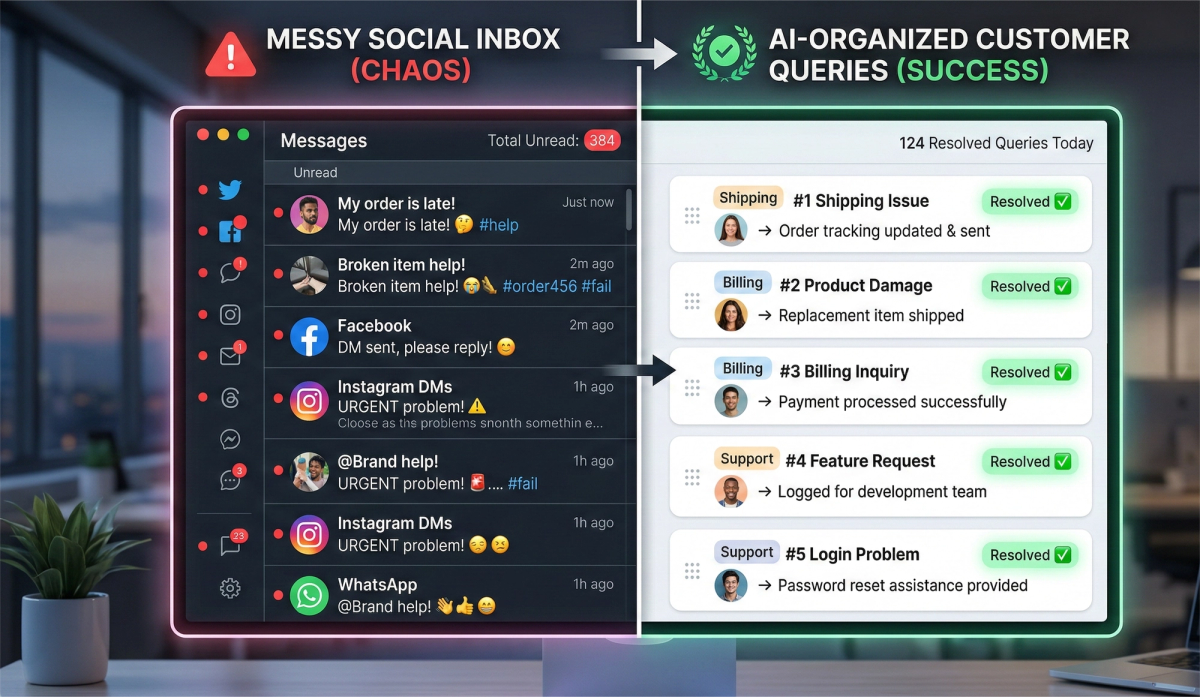
Modern AI can now manage DMs across Instagram, LinkedIn, and Facebook with a unified brand voice. By automating these interactions, your Social Media Marketing efforts become more efficient, ensuring no lead is ever ignored.
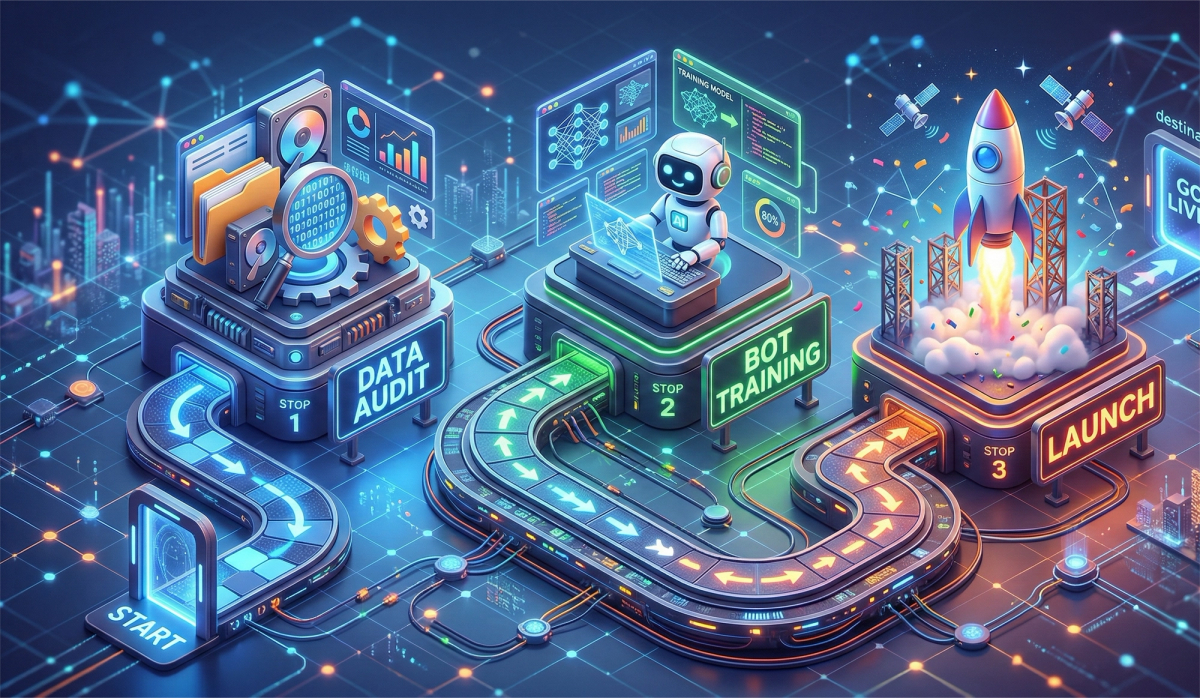
5. Technical Implementation: The 2026 Roadmap
Implementing AI chatbots for customer service requires a structured approach to avoid "AI Hallucinations."
- Step 1: Knowledge Base Curation: Your AI is only as good as the data it eats.
- Step 2: Tone and Voice Design: Your bot should sound like an extension of your brand-authoritative but accessible.
- Step 3: The Multi-Modal Shift: Modern bots accept images (e.g., screenshots of technical errors) and respond via voice.
6. Privacy, Ethics, and Data Security in the AI Era
In 2026, Google’s algorithms have placed a massive premium on "Trust." Data stewardship is non-negotiable.
Zero-Knowledge Architecture
Modern AI systems now employ zero-knowledge proofs, ensuring that personal data remains encrypted and inaccessible to third parties. This is vital for maintaining the integrity of your Web Development projects.
The "Hallucination" Safeguard
We use Fact-Checking Layers that cross-reference every response against your official documentation. This protects the expertise you offer through your SEO Services.

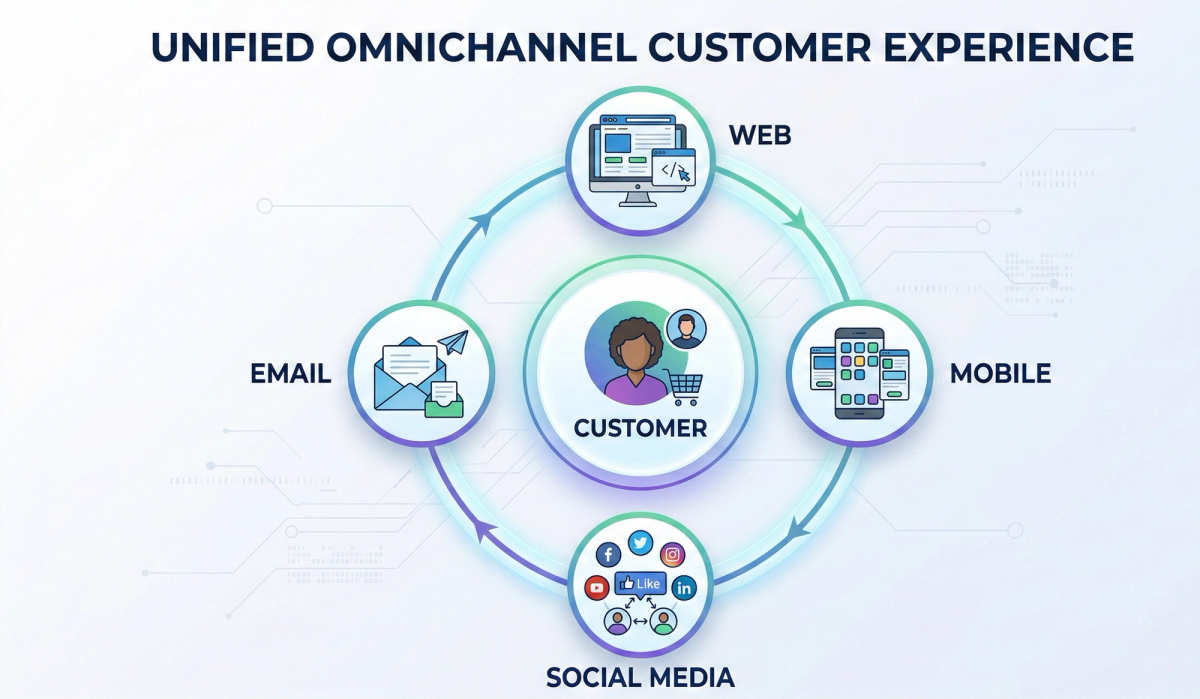
7. Omnichannel Synergy: Beyond the Chat Widget
To truly drive digital growth, your AI must be an "Omnichannel Orchestrator."
- Unified Conversations: If a customer starts a chat on Social Media and concludes it on your website, the AI should recognize them instantly.
- Bridging the Gap to Mobile: A responsive AI interface is a cornerstone of effective Mobile App Development, ensuring the transition from a search result to an active chat is frictionless.
8. Predictive Behavioral Support: Solving Problems Before They Occur
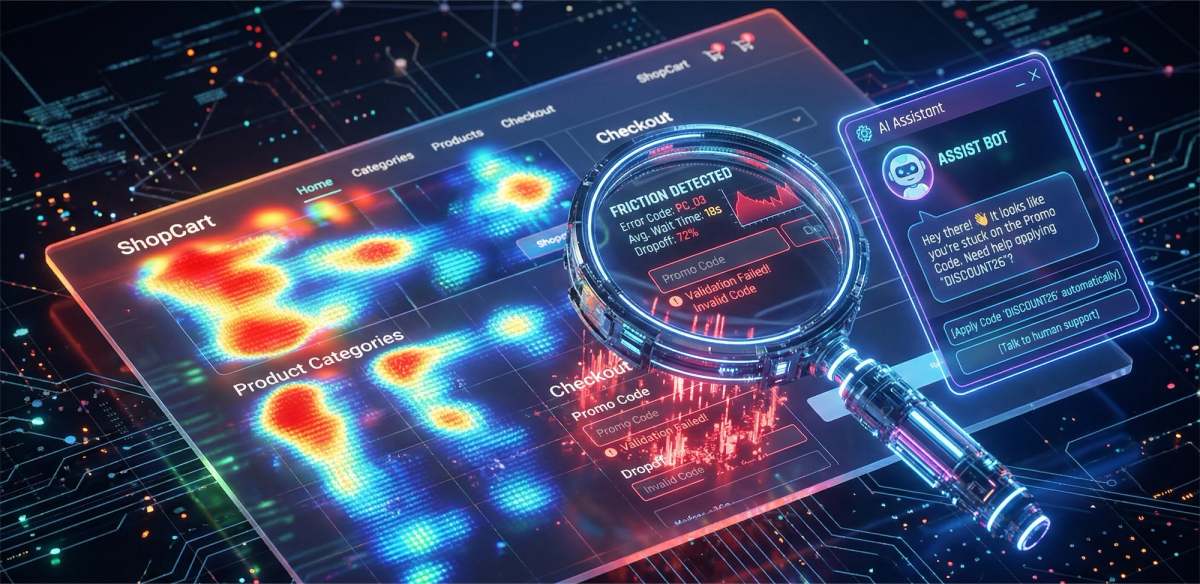
In 2026, the gold standard of Web Development is no longer just "responsive design"- it is "Predictive Support." This involves using AI to Analyze user mouse movements, dwell time on specific service blocks, and historical data to intervene before a customer even realizes they have a hurdle.
Anticipating Friction Points
If a user lingers on the pricing section of your SEO Services page for more than 45 seconds without clicking, the AI chatbot can trigger a "nudge." Instead of a generic "How can I help?", it offers a specific value proposition: "I see you're looking at our growth packages; would you like a 2-minute video case study on how we achieved a 200% ROI for a similar brand.
Impact on Digital Growth
Predictive support reduces "Cart Abandonment" and "Form Drop-offs" by nearly 60%. By providing the right information at the exact moment of hesitation, you maximize the efficiency of your Brand Identity and Design.
9. Voice-First Conversational AI: Optimizing for the "Eyes-Free" Era
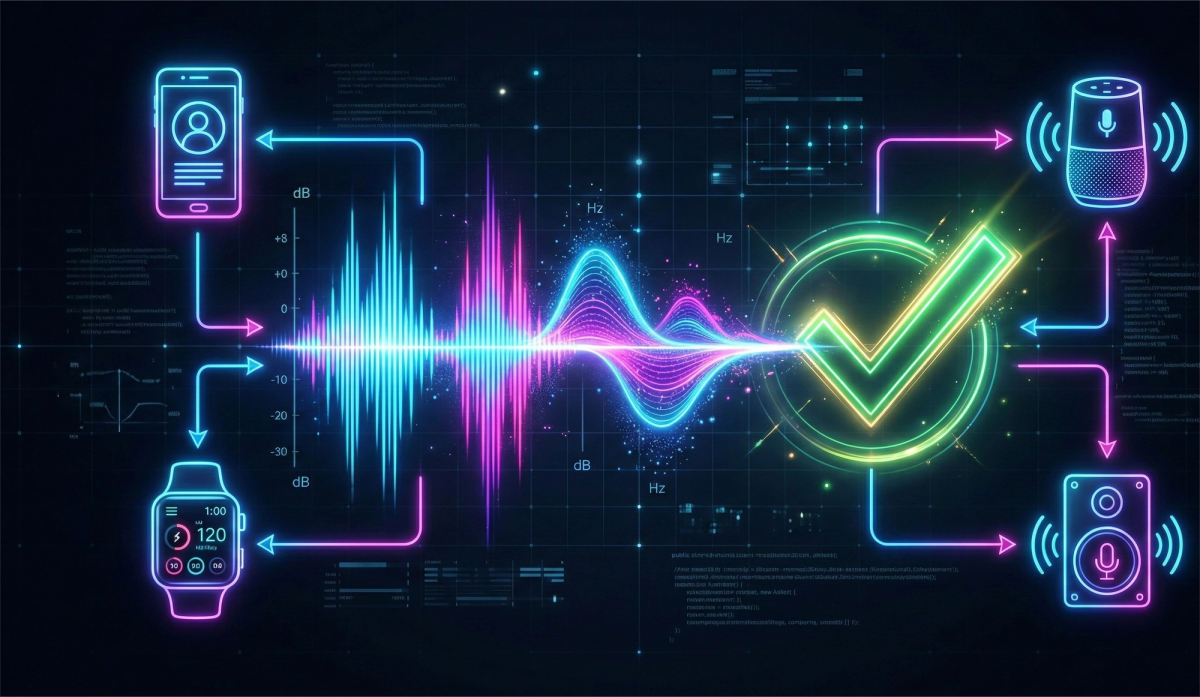
With the explosion of smart wearables and voice-activated devices in 2026, AI chatbots for customer service must be voice-optimized. We are moving away from "typing" toward "talking."
The Semantic Voice Search Revolution
Voice queries are naturally longer and more conversational. When a user asks their smart watch, "Who is the best company for mobile app development near me that uses AI?", your chatbot’s backend data must be structured to answer that query directly. This is why our Mobile App Development includes Voice-UI (VUI) integration as a standard.
Frequently Asked Questions (FAQ)
Q1: Will AI Chatbots make my customer service feel cold?
Q2: How does this specifically help my organization rank higher on Google.
Q3: Can small businesses afford this level of automation?
Q4: Is the data shared with the chatbot secure?
Q5: How long does it take to see results?

Conclusion: Elevate Your Digital Footprint with Cinute Infomedia
The future of the web is conversational. AI chatbots for customer service are the vehicle that will carry your brand to the top of the SERPs. By focusing on deep integration and user-centric design, you aren't just "updating your website"-you are evolving your entire business model.
At Cinute Infomedia, we specialize in this exact intersection of technology and growth. Whether through SEO Services or bespoke Web Development, we ensure your organization is equipped to lead.
Related Articles
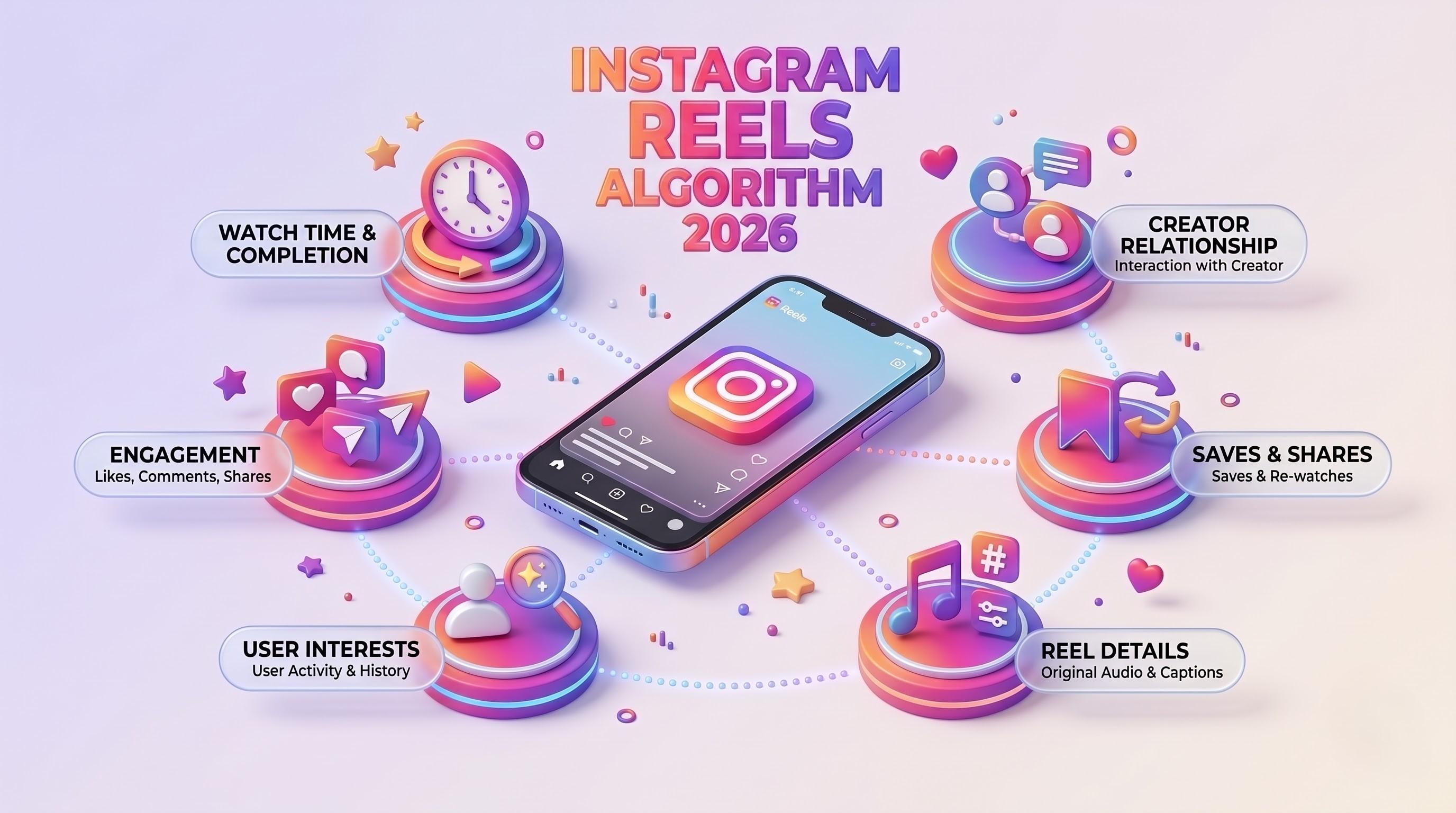
Instagram Reels Algorithm 2026: A Simple Guide for Tech-Savvy Teams
The Instagram Reels algorithm in 2026 ranks videos by watch time, DM sends and likes per reach. This easy guide explains how Reels are tested, what changed recently, and a practical checklist for developers, marketers, CTOs and product teams.

Business Corporate Intranets: A Simple Guide for Tech Teams
Business corporate intranets give every employee one secure place for news, files, people and tools. This easy guide covers features, architecture, security and a step-by-step build plan for CTOs, developers, testers and marketers.
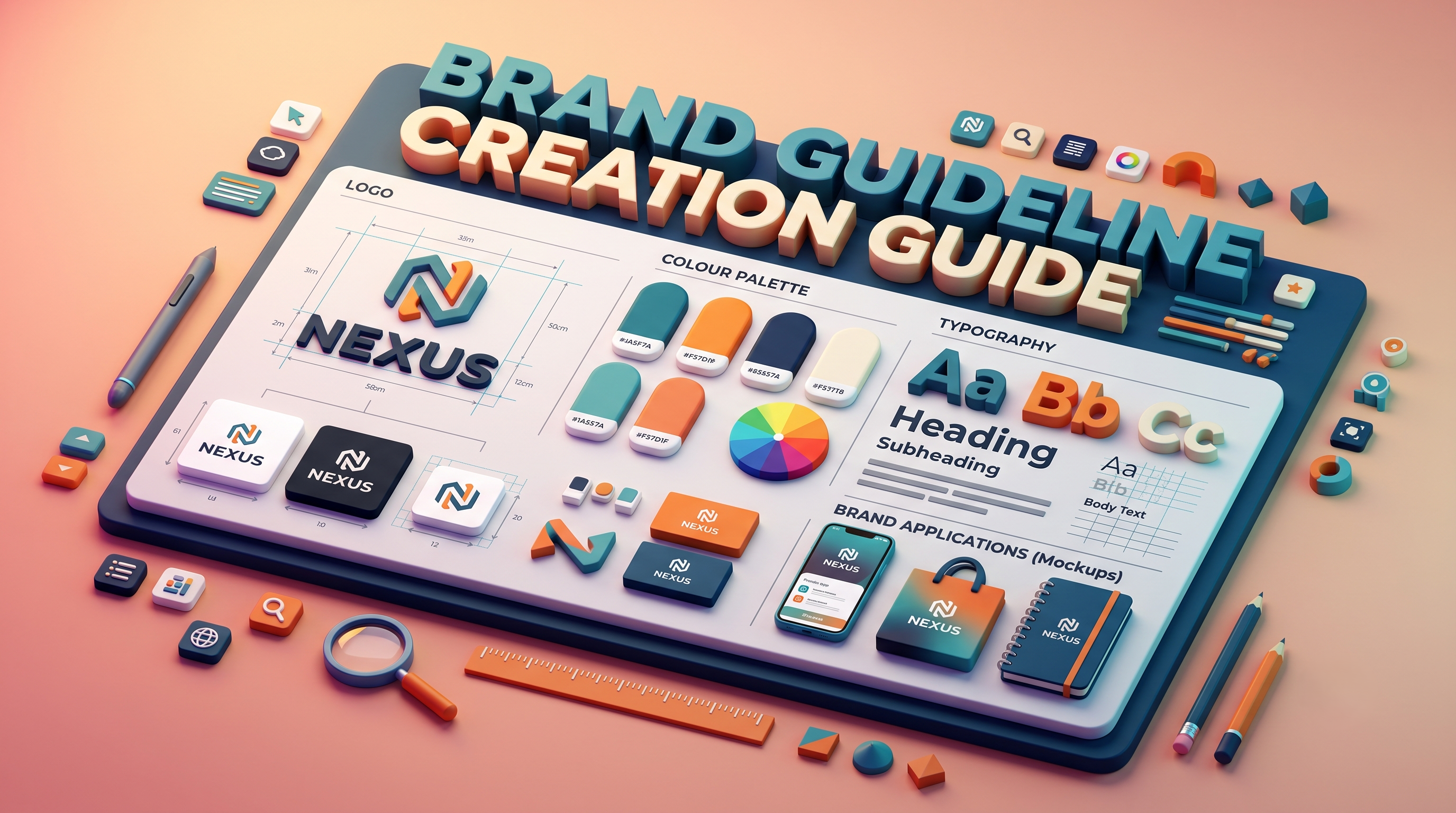
Brand Guideline Creation: A Step-by-Step Guide for Tech Brands
Brand guideline creation turns your logo, colours, fonts and voice into one clear rulebook for designers, developers, testers and marketers. This easy guide covers the core components, an 8-step process, design tokens for code, and how to connect your brand to SEO and AI.