

Table of Contents
The explosion of Generative AI has created an unprecedented gold rush in the Android ecosystem. Developers are launching innovative Android AI Apps that can generate art, write code, and act as personalized assistants. However, this innovation comes with a unique and brutal cost structure: inference fees. Every time a user interacts with your model, you pay for API calls and server compute. This financial reality makes robust app monetization not optional, but essential for survival.

The dilemma facing modern developers is that aggressive monetization usually destroys User Experience (UX), leading to a spike in churn rate that kills long-term viability. As an analyst with 25+ years in SEO and digital strategy, I have analysed countless apps that prioritized immediate ad revenue over user retention, only to collapse within months. This guide provides a sophisticated blueprint for funding your advanced AI features through clever, user-centric models that protect and enhance your app's core UX flow.
The Economics of Android AI: Why We Need a New Approach
Before we dive into how to monetize, we must understand why AI is different. Traditional apps (like a notepad or a simple game) have minimal ongoing server costs after development. Android AI Apps, particularly those leveraging Large Language Models (LLMs) or diffusion models, incur significant variable costs per user action. If 10,000 users ask your AI to generate a 1-minute video daily, your server costs will plummet into the red faster than traditional monetization can recover.
This cost structure demands that your revenue model must scale quadratically with usage, rather than linearly. Passive, interruptive banner ads, which generate low eCPM (effective Cost Per Mille), cannot keep pace with high-compute inference costs. Furthermore, the modern Android user, increasingly privacy-conscious and fatigue-prone in 2026, will not tolerate a fragmented UX interrupted by compulsory video ads just to use a basic chat feature.
Our strategy must shift from "extracting value from the user" to "exchanging value with the user."
Top Non-Intrusive Strategies to Monetize Android AI Apps
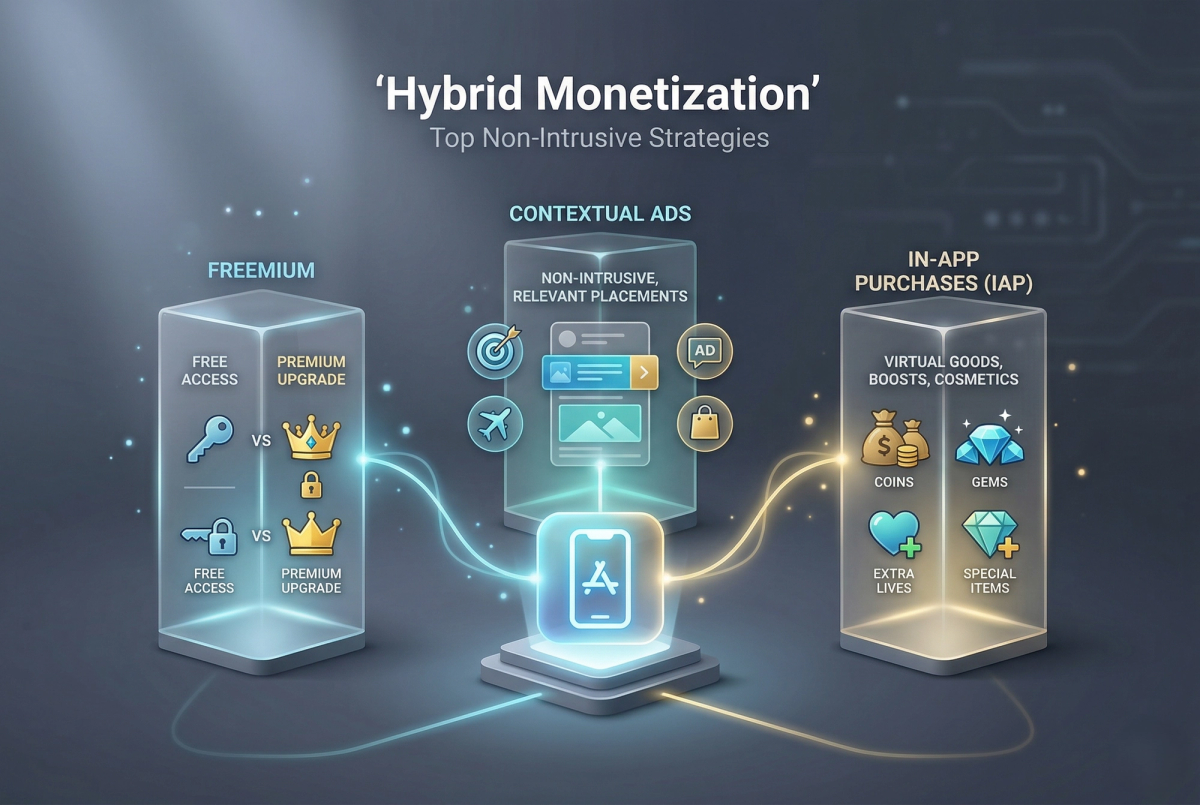
The key to balance is hybrid monetization. Relying on a single revenue stream is a high-risk strategy. By layering different models, you can capture revenue from various user segments without overwhelming any single one.
Strategy 1: Freemium 2.0 Feature-Based, Not Utility-Based
The simplest entry point is the freemium model, but AI requires a "Freemium 2.0" approach. Traditional freemium limits usage (e.g., "5 free messages per day"). AI freemium must limit compute cost or feature depth.
How to Implement without Ruining UX:
Do not gate the core utility of your app. If you have an AI photo editor, the basic "enhance" function must be fast, free, and ad-lite.
- Free Tier (Core Utility): Uses an older, cheaper model (like GPT-3.5) or a quantized on-device model for basic tasks. This keeps your operating costs low while satisfying the user's primary need.
- Premium Tier (Advanced AI Features): Gates high-cost features. Examples: "HD Generation," "Access to GPT-4o," "Priority Inference Queues," or "Agentic Autonomous Workflows."
This model keeps the general audience engaged while encouraging power users those incurring the highest costs to upgrade. When users upgrade, their subscription covers the advanced inference costs they generate. We specialize in structuring these complex feature gates using native Mobile App Development Services, ensuring a seamless payment flow that feels natural within the app's structure.
Strategy 2: Consumable 'AI Tokens' with UX Transparency
If your app offers creative generation (like video, music, or high-res 3D assets), subscriptions alone might not cover heavy users. The answer is a consumable model based on "In-App Purchases (IAP)" of "tokens" or "compute credits."
How to Implement without Ruining UX:
This is where UX usually fails. Do not wait until the user clicks "Generate" to tell them they are out of credits.
- Pre-Inference Visibility: Always display the token cost of an action before the user commits. Instead of a vague "Generate" button, use "Generate (5 Credits)."
- A Balance Display: Keep the user's token balance subtly visible within the creative workspace (e.g., top right corner), not hidden deep in a profile menu.
- Graceful Limitations: When a user is low, offer a low-cost "refill pack" or the option to watch a rewarded video for a few credits, ensuring their flow isn't entirely broken.
Transparency builds trust. When users understand why a feature costs credits, they are far less likely to abandon the app in frustration.
Strategy 3: Contextual, User-Triggered Ad Placements
We must move past the concept of the interruptive interstitial ad that pops up randomly. In a high-quality AI app, all ad inventory must be contextually relevant or entirely user-controlled.
How to Implement without Ruining UX:
- Rewarded Video as Utility: This is the only interruptive ad format acceptable in 2026 AI UX. If a user runs out of free generations or tokens, offer them Rewarded Ads (e.g., "Watch a video for 3 free generations"). This turns the ad into a positive Value Exchange.

- Contextual Native Ads: Use AI itself to determine when to show a native ad. If the user is chatting with your AI assistant about booking travel, you can subtly integrate a native ad from a travel partner within the chat feed, provided it’s clearly labelled as an ad. This implementation requires deep native expertise; we guide clients through this exact process in our dedicated Android App Development division to ensure stability and compatibility.
Strategy 4: The 2026 Privacy-First Data Solution
Data monetization has a poor reputation, but in 2026, privacy-first implementation is a viable, high-eCPM alternative. This does not mean selling PII (Personally Identifiable Information). It means leveraging aggregate data trends.
How to Implement without Ruining UX:
- Transparency & Opt-In: You must use an explicit GDPR/CCPA-compliant Opt-In flow. Explain that anonymized usage data helps fund the free tier. Never bury this in T&Cs.
- On-Device Aggregation: If your Android AI App analyses large datasets, can you aggregate trends (e.g., "50% of users are interested in renewable energy topics") without sending raw conversation data to a server? Modern advertisers pay a premium for high-quality contextual signals. Our expertise in Software Development Services allows us to build these ethical, anonymized data aggregation layers that satisfy regulatory bodies and privacy-conscious users alike.
Implementing Monetization: A Developer's Technical Guide
Knowing the strategies is only half the battle. Successful implementation requires precise execution in Android Studio to protect user flow.
1. Where to Place Ads (The UX Safe Zones)
- Safe Zone: The Inference Waiting Screen: When a user clicks "Generate" for an image or video, there is often a 5-15 second delay as the server processes the request. This is the ideal ad placement. Show a non-intrusive ad during this necessary wait time. The user's flow is already paused, so the ad does not fragment their experience.
- Danger Zone: The Input Phase: Never, under any circumstance, show an ad while the user is typing their prompt, selecting images, or actively setting up their AI agent. This is the peak moment of user friction, and an interruption here will spike your bounce rate.
The Mechanics of Seamless Payment Flows
Payment flows must be instantaneous. If a user decides to upgrade to Premium, the premium features must unlock immediately. This requires a robust state management system using tools like Jetpack Compose for the UI and Google Play Billing Library. Any latency or "Check Receipt" errors during this flow will destroy the user's trust and decrease your LTV.
Agents & Autonomous Workflows: The Future of UX and Revenue
(H1 for agentic section as requested - The prompt asked for "Agentic AI & Autonomous Workflows" to be the featured image, indicating this is a high-interest trend that can lower competition if targeted as a sub-topic).
Looking toward late 2026 and 2027, monetization will pivot from passive payment to agentic autonomous workflows.
As AI apps evolve from assistants that give advice into agents that take action, new monetization opportunities arise. If your AI travel agent successfully finds and books a hotel, you could integrate a conventional affiliate revenue model (receiving a commission from the booking engine) or even handle a micro-transaction fee for the automated service itself.
In this scenario, the UX is the monetization. The user pays because the agent autonomously completed a complex, time-consuming task. Funding these Autonomous Workflows requires significant R&D, and this is why optimizing your current revenue structure is essential today—to finance the architecture of tomorrow.
Measuring Success: UX Metrics vs. Revenue Metrics
As an analyst, I see many developers obsessed with ARPDAU (Average Revenue Per Daily Active User) while ignoring the metrics that predict long-term collapse. To balance UX and revenue, you must monitor both sets of KPIs.

The Balancing Act KPIs
| Metric Type | Key Performance Indicator (KPI) | SEO Relevance (Ranking Signal) |
|---|---|---|
| UX Metric | Retention Rate (Day 1, 7, 30) | Crucial for LTV and organic growth. Google algorithm prioritizes apps users return to. |
| UX Metric | Session Length & Frequency | High dwell time and engagement are signals of utility and quality content. |
| UX Metric | Churn Rate (especially after an ad) | The ultimate negative UX signal. A spike here indicates aggressive monetization |
| Revenue Metric | ARPDAU / ARPU | Essential for understanding how effectively you are covering inference costs. |
| Revenue Metric | Conversion Rate (Free to Paid) | Measures the effectiveness of your Freemium 2.0 feature gating. |
If you see ARPDAU increasing while Day 7 retention decreasing, your monetization is too aggressive, and you are sacrificing your future user base.
FAQ Section (Answer Engine Optimization)
This section targets "Position Zero" (Featured Snippets) and voice search queries like those used in Gemini or Google Search GPT.
How can I monetize my AI app without ads?
The best alternatives to ads are subscriptions (Freemium 2.0) and consumable in-app purchases of "credits" or "tokens." subscriptions gate advanced features (high-compute LLMs), while tokens are used for specific, resource-heavy actions like image or video generation. These models protect the core user experience by ensuring active users, rather than generic ad-viewers, fund the advanced inference costs.
Which monetization model is best for AI apps in 2026?
The most sustainable model is a hybrid approach. Combine a free tier for basic utility (using efficient models) with tiered subscriptions for advanced AI features (like GPTo or high priority queues). For apps with fluctuating server costs, layer this with a token-based IAP system, allowing users to pay precisely for the computation they consume. This maximizes revenue while maximizing user retention.
How do I protect user retention when adding revenue features?
To protect retention, you must prioritize transparency. Always tell users the cost of an action before they perform it (Pre-Inference Visibility). Never use interruptive interstitials like banner or compulsory video ads during active user input. The only exception is voluntary Rewarded Video, which users choose to watch in exchange for immediate in-app value (like free credits).
How do I implement rewarded ads in an AI app?
Place voluntary Rewarded Video opportunities at natural friction points in the UX flow. If a user runs out of free credits or attempts to access a locked feature, present a clear, optional choice: "Watch a short video to get 3 credits." This flow turns the ad into a positive value exchange and utility, rather than an unwanted interruption.
Conclusion: The Senior SEO Summary
(Overall Summary and Conclusion)
Monetizing Android AI Apps in 2026 is an exercise in strategic balance. Because AI carries high ongoing inference costs, passive, low eCPM monetization strategies like banner ads are no longer sufficient to build a sustainable business. To succeed, developers must embrace a hybrid monetization structure—combining Freemium 2.0 feature-gating with transparent, consumable In-App Purchases of tokens or credits for heavy resource usage.
The key to unlocking high User Retention and LTV is integrating these revenue streams into safe UX zones, such as the inference waiting screen, and entirely avoiding interruptive ads during the critical user input phase. When monetization is structured as a transparent Value Exchange, users trust the app more and are far more likely to convert into paid subscribers. Building these sophisticated, low-friction technical integrations and data layers requires expert engineering; we actively specialize in helping clients achieve this balance through our native Software Development Services.
A focus on UX is not just about being nice to users; it is a critical SEO factor that drives dwell time, user satisfaction, and favorable ranking signals. By implementing the hybrid, user-centric models outlined in this guide, you can ensure your innovative AI solution is both highly profitable and a joy to use.
Related Articles
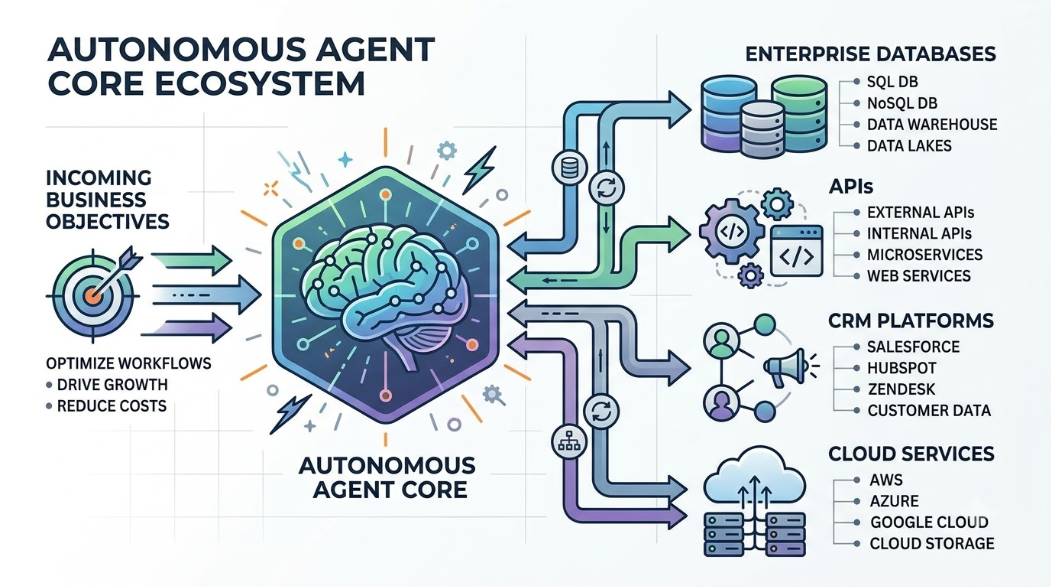
What Are AI Agents? How They Work, Benefits, Architecture, and Enterprise Adoption
A comprehensive guide for technology leaders exploring the shift from conversational chatbots to autonomous AI agents. Learn the core architecture, 8-stage operational lifecycle, high-impact enterprise use cases, integration patterns, security risks, and multi-layered testing frameworks required to deploy agentic automation responsibly.
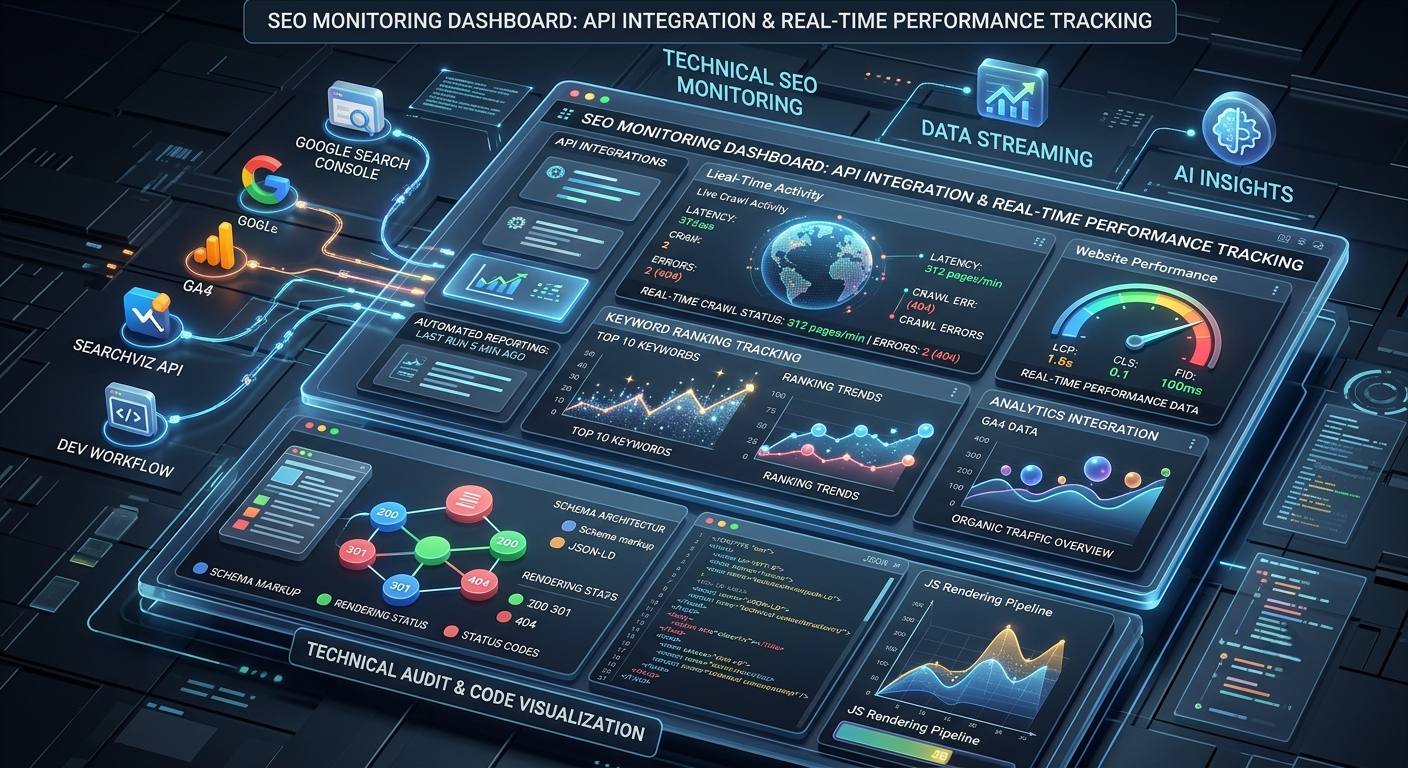
SEO Monitoring Tools: Technical Implementation Guide for Developers
Comprehensive technical guide to SEO monitoring tools designed for software developers and product managers. Learn how to integrate monitoring into development workflows, track technical SEO metrics, and automate performance reporting with modern tools and APIs.

Core Web Vitals Fixes Guide: Complete Technical Implementation for Developers
Master Core Web Vitals optimization with our technical implementation guide. Learn LCP, FID, CLS fixes with code examples and strategies tailored for developers and CTOs.