

Table of Contents
In today's fast-paced digital world, web development demands speed, scalability, and seamless user experiences. Frameworks like Next.js have emerged as game-changers, enabling developers to create high-performance apps that rank well on search engines and delight users. Built on React, Next.js combines server-side rendering, static generation, and full-stack capabilities into one powerful package.
At Cinute InfoMedia, we've leveraged Next.js for numerous client projects, significantly boosting load times and improving Core Web Vitals scores. This guide dives deep into why Next.js matters, its standout features, comparisons with rivals, best practices, and real-world use cases. Whether you're a solo developer or running a digital agency, discover how Next.js can elevate your projects.
What Makes Next.js the Go-To React Framework?
Next.js isn't just another React framework-it's a production-ready ecosystem designed for modern web apps. Created by Vercel, it solves common pain points like complex configurations, slow rendering, and poor SEO. As Guillermo Rauch, Vercel CEO, puts it: "Next.js bridges developer experience and end-user performance."
Core Benefits for Developers and Businesses
- Zero-Config Setup: Jump straight into coding with built-in tools for routing, optimization, and deployment. No more wrestling with Webpack or Babel.
- Performance-First: Achieves top Lighthouse scores out-of-the-box, crucial for Google's ranking algorithm.
- Scalability: Powers sites from blogs to enterprise platforms like TikTok and Hulu.
- SEO Advantages: Server-side rendering ensures search engines index dynamic content instantly.
For agencies like ours, Next.js streamlines web development services, reducing development time by 30% while delivering pixel-perfect, mobile-first apps.
In 2026, with AI-driven personalization and edge computing on the rise, Next.js positions your site for the future. Teams focusing on React development save hours on boilerplate, channeling energy into unique features.
Key Features That Set Next.js Apart from Traditional React Apps
Next.js packs "batteries included" for full-stack development. Let's break down its powerhouse features.
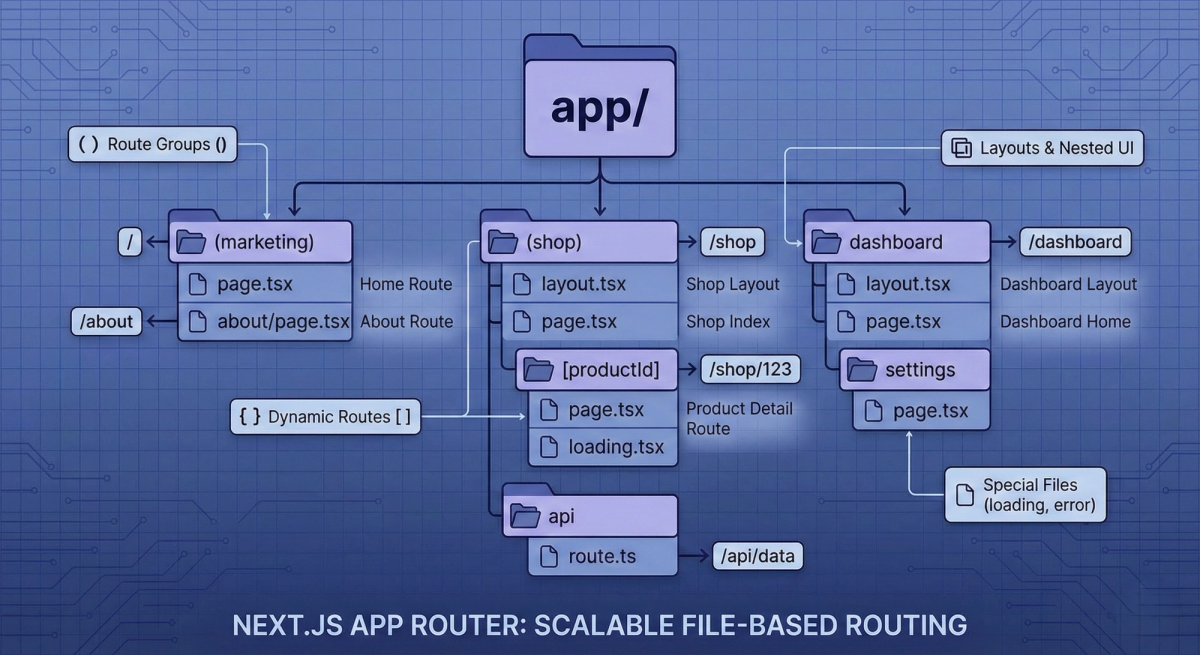
1. File-Based Routing: Simplify Your App Structure
Gone are the days of manual route definitions. In the App Router (introduced in Next.js 13+), your folder structure dictates URLs. Create /app/blog/post/[slug]/page.tsx, and you've got dynamic routing for blog posts.
This intuitive system shines in large projects. New team members onboard faster, and maintenance becomes effortless.
Pro Tip: Pair with dynamic segments for e-commerce product pages, ensuring clean URLs like /products/shoes/nike-air.
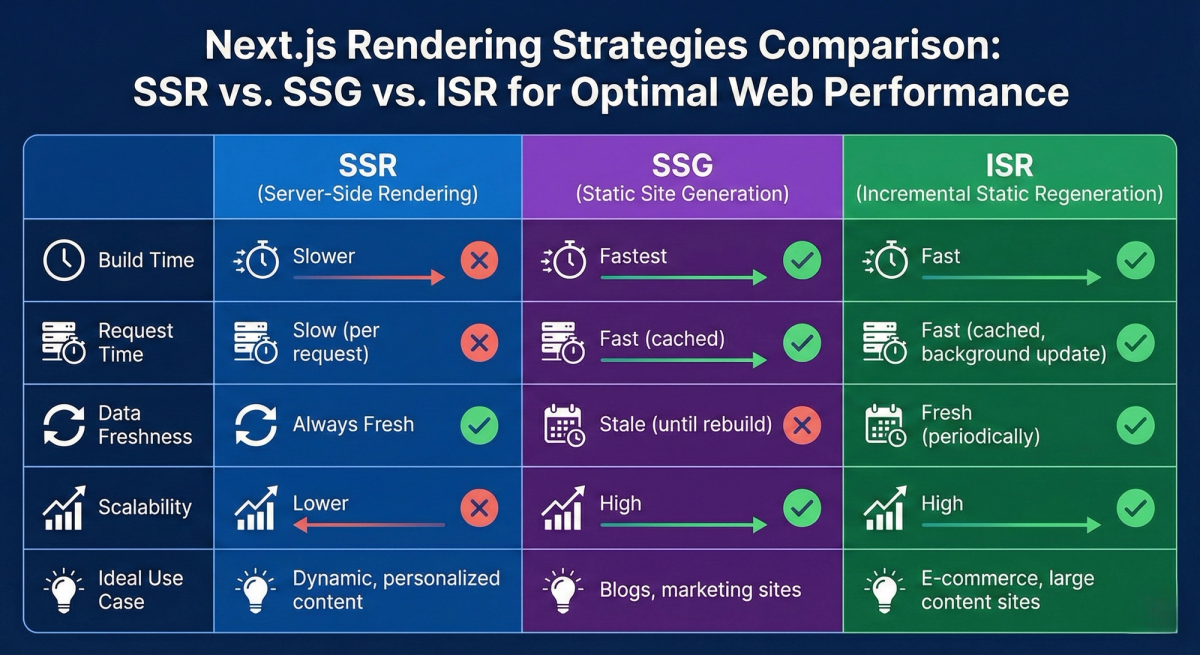
2. Server-Side Rendering (SSR) and Static Site Generation (SSG)
- SSR: Renders pages on each request, ideal for personalized dashboards or real-time data.
- SSG: Pre-builds pages at deploy time, serving them via CDN for sub-second loads.
Both enhance SEO by delivering crawlable HTML. For content sites, SSG crushes competitors-think instant page loads that keep bounce rates under 20%.
3. Incremental Static Regeneration (ISR): Fresh Content Without Rebuilds
ISR lets you update static pages post-build. Set a revalidation interval (e.g., revalidate: 60 for hourly refreshes), and Next.js regenerates on-demand.
E-commerce sites love this: Product prices update without downtime. Blogs fix typos instantly. It's the sweet spot between static speed and dynamic flexibility.
tsxexport const revalidate = 3600; // Revalidate every hour export default async function Page() { const data = await fetch('https://api.example.com/posts', { next: { revalidate: 3600 } }); return <div>{/* Render data */}</div>; }4. API Routes and Edge Functions: Go Full-Stack
Build backend endpoints in /app/api/-handle forms, auth, or database calls without Express.js. Edge Functions run globally on Vercel's network, slashing latency for A/B tests or geo-personalization.
Reduce data travel distance: A user in Mumbai gets logic executed nearby, not from a U.S. server.
5. Built-in Image Optimization and Styling
Next.js auto-converts images to WebP/AVIF, lazy-loads them, and prevents layout shifts. CSS? Seamless support for Tailwind, Sass, or Modules.
Middleware Example (for auth/geo-redirects):
typescriptimport { NextResponse } from 'next/server'; import type { NextRequest } from 'next/server'; export function middleware(request: NextRequest) { const token = request.cookies.get('auth-token'); if (!token) { return NextResponse.redirect(new URL('/login', request.url)); } return NextResponse.next(); }
These features make Next.js ideal for performance optimization services at our agency.
Next.js vs. Other Frameworks: A Head-to-Head Comparison
How does Next.js stack up? Here's a quick table:
| Feature | Next.js | Plain React (CRA/Vite) | Gatsby | Remix |
|---|---|---|---|---|
| Primary Rendering | Hybrid (SSR, SSG, ISR) | Client-Side (CSR) | Static (SSG) | Server-Side (SSR) |
| Data Handling | Very Flexible | Client-side fetch | GraphQL heavy | Web Standards based |
| Learning Curve | Medium | Low to Medium | Medium to High | Medium |
| Best Use Case | Most scalable web apps, e-commerce, marketing sites | Simple dashboards, internal tools | Static blogs, simple brochure sites | Highly dynamic, personalized apps |
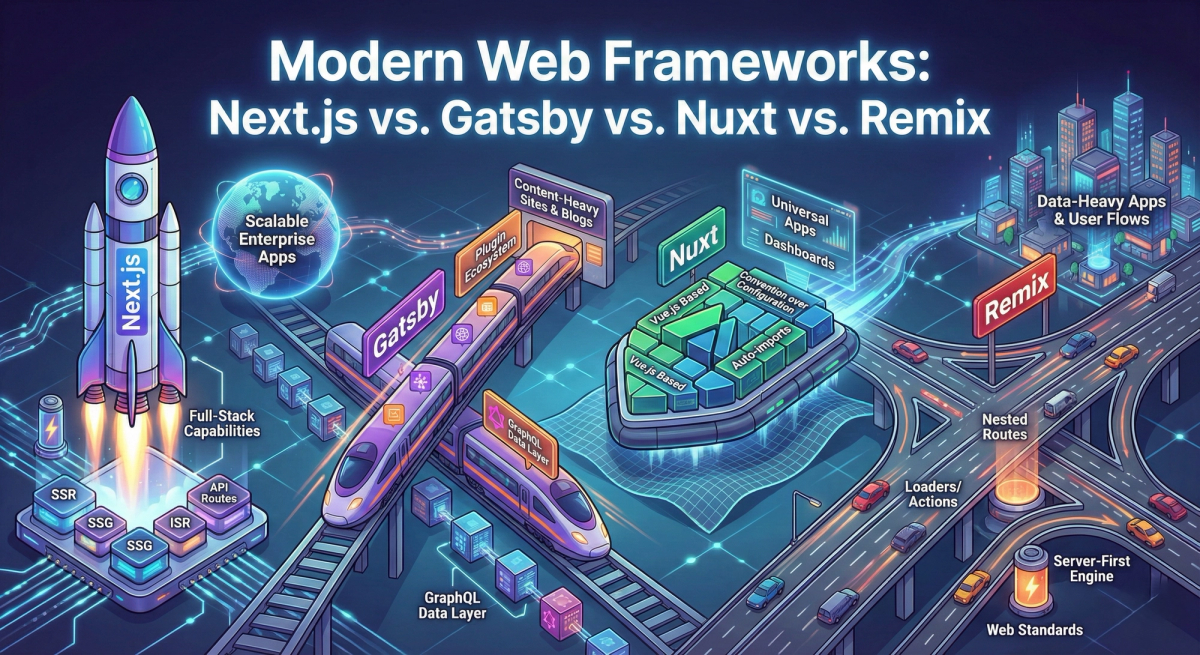
Next.js wins for React devs needing full-stack power. Gatsby excels in static JAMstack but lags on dynamic data. Nuxt suits Vue fans, while Remix focuses on web standards.
Best Practices for Next.js Development in Production
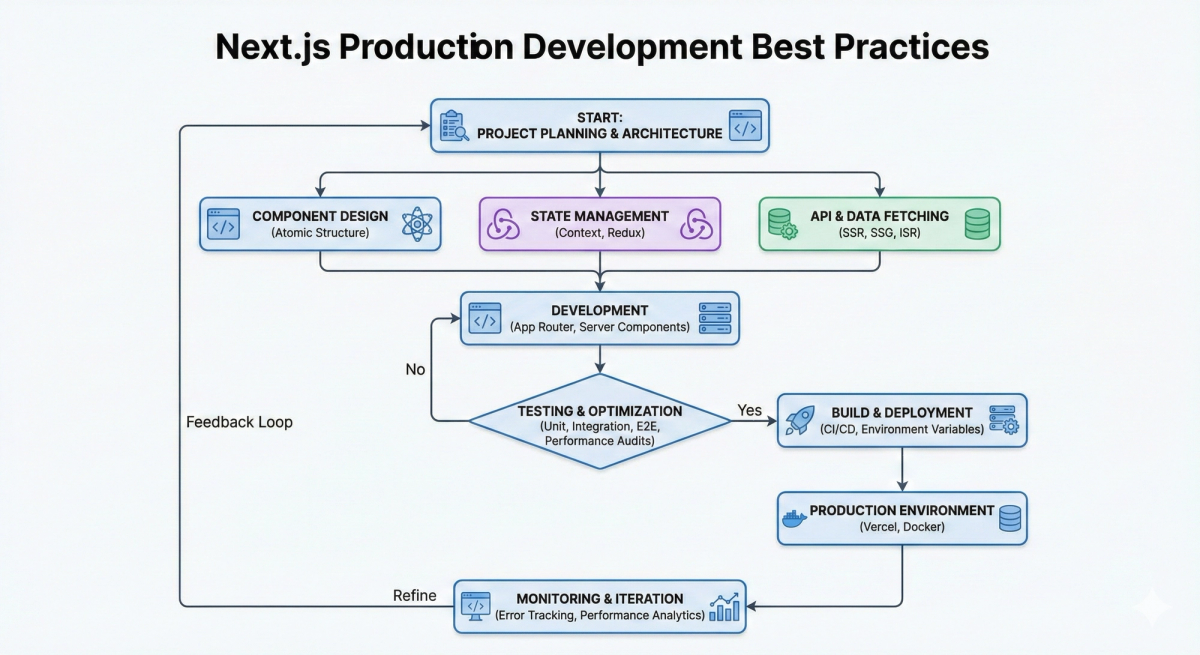
Maximize Next.js with these proven strategies:
Code Splitting and Bundle Optimization
Use dynamic imports:
tsxconst HeavyComponent = dynamic(() => import('../components/HeavyChart'), { ssr: false });
This loads JS only when needed, trimming initial payloads by 50%.
Server Components: The Default Choice
Next.js 13+ defaults to Server Components, keeping JS client-side minimal. Fetch data on the server, render HTML, and hydrate interactively.
Error Handling and Loading States
Add error.tsx and loading.tsx in route segments for resilient UIs:
- Graceful fallbacks during API failures.
- Skeleton screens for perceived speed.
TypeScript Integration
Adopt TypeScript from day one. Catch errors early:
tsxinterface Post { id: string; title: string; } async function getPosts(): Promise
Did You Know? Next.js 14's Partial Prerendering (PPR) blends static shells with streaming dynamic content-one request, best-of-both-worlds performance.
Testing and Deployment
- Testing: Integrate QA and automation testing services like ours for end-to-end coverage with Playwright or Cypress.
- Deploy: Vercel for one-click, or self-host on AWS/Netlify.
- Monitor: Use real-user metrics (RUM) to benchmark Core Web Vitals.
Always simulate slow networks-tools like Lighthouse flag issues pre-launch.
Real-World Next.js Case Studies and Use Cases
E-Commerce: Fast, SEO-Optimized Stores
A client in Mumbai scaled their fashion site with ISR for inventory and SSR for carts. Result: 25% conversion uplift, PageSpeed scores >95.
SaaS Dashboards: Secure and Personalized
Build auth middleware + Edge Functions for role-based access. Personalize via user location-logic runs at the edge.
Content Platforms: Blogs and Portfolios
SSG + ISR powers sites like this one. Integrate headless CMS like Contentful for dynamic updates.
We've applied these at Cinute InfoMedia for mobile app development hybrids, blending PWAs with native performance.
The Future of Next.js: What's Next in 2026?
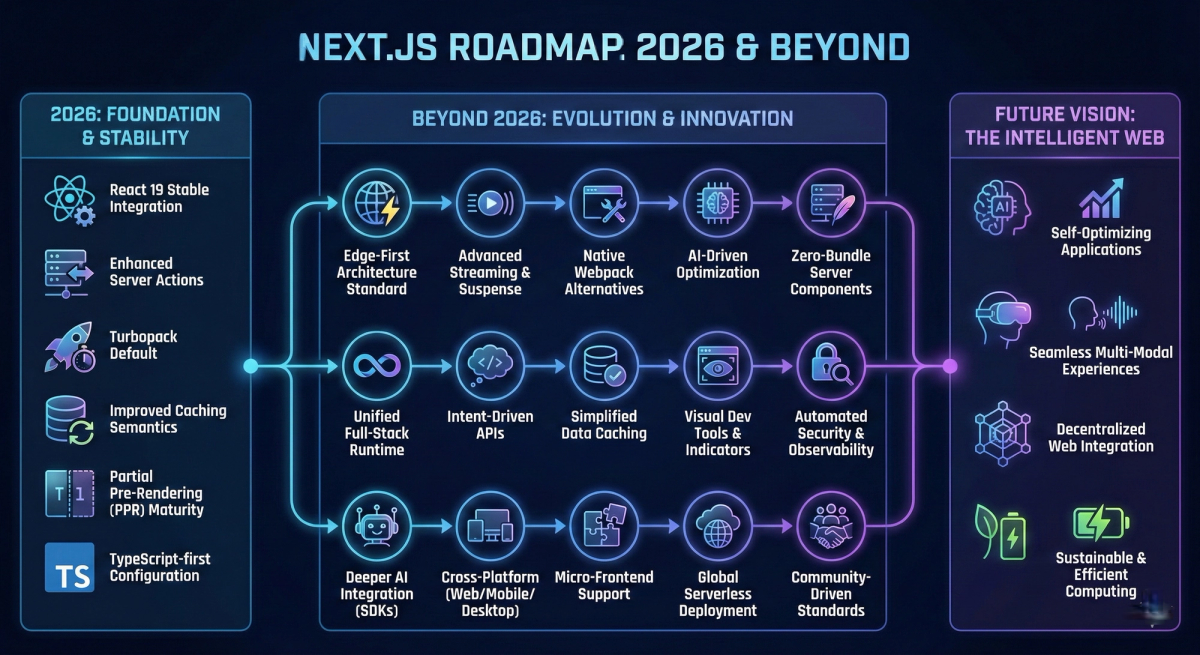
Next.js 15 rumors hint at deeper Turbopack integration (faster HMR), AI-assisted codegen, and enhanced PPR. With WebGPU and HTTP/3 adoption, expect even snappier apps.
Challenges? Bundle bloat in legacy code-migrate gradually. Learning curve for App Router? Start small with docs.
Conclusion: Build the Future with Next.js
Next.js sets the benchmark for React-based web development, blending DX, performance, and scalability. From solo devs to enterprises, it delivers measurable wins: faster sites, better SEO, happier users.
Ready to supercharge your project? Contact Cinute InfoMedia for expert Next.js implementation, backed by our QA prowess.
Related Articles

Instagram Reels Algorithm 2026: A Simple Guide for Tech-Savvy Teams
The Instagram Reels algorithm in 2026 ranks videos by watch time, DM sends and likes per reach. This easy guide explains how Reels are tested, what changed recently, and a practical checklist for developers, marketers, CTOs and product teams.

Business Corporate Intranets: A Simple Guide for Tech Teams
Business corporate intranets give every employee one secure place for news, files, people and tools. This easy guide covers features, architecture, security and a step-by-step build plan for CTOs, developers, testers and marketers.

Brand Guideline Creation: A Step-by-Step Guide for Tech Brands
Brand guideline creation turns your logo, colours, fonts and voice into one clear rulebook for designers, developers, testers and marketers. This easy guide covers the core components, an 8-step process, design tokens for code, and how to connect your brand to SEO and AI.