

Table of Contents
AI Workflows: Automating Your Business Processes
Artificial Intelligence is transforming how businesses operate. In this article, we'll explore how AI workflows can automate processes and drive efficiency.

What Are AI Workflows?
AI workflows combine artificial intelligence with business process automation. They enable:
- Intelligent task automation
- Data processing and analysis
- Decision-making support
- Customer service automation
AI will not replace managers, but managers who use AI will replace those who don't.
- Rob Thomas, IBM
Common Use Cases
| Use Case | Benefit | Time Saved |
|---|---|---|
| Customer Service | 24/7 support | 70% |
| Data Entry | Error reduction | 80% |
| Document Processing | Faster classification | 60% |
| Marketing | Personalization | 50% |
Customer Service
AI chatbots handle routine inquiries, reducing support costs and improving response times.
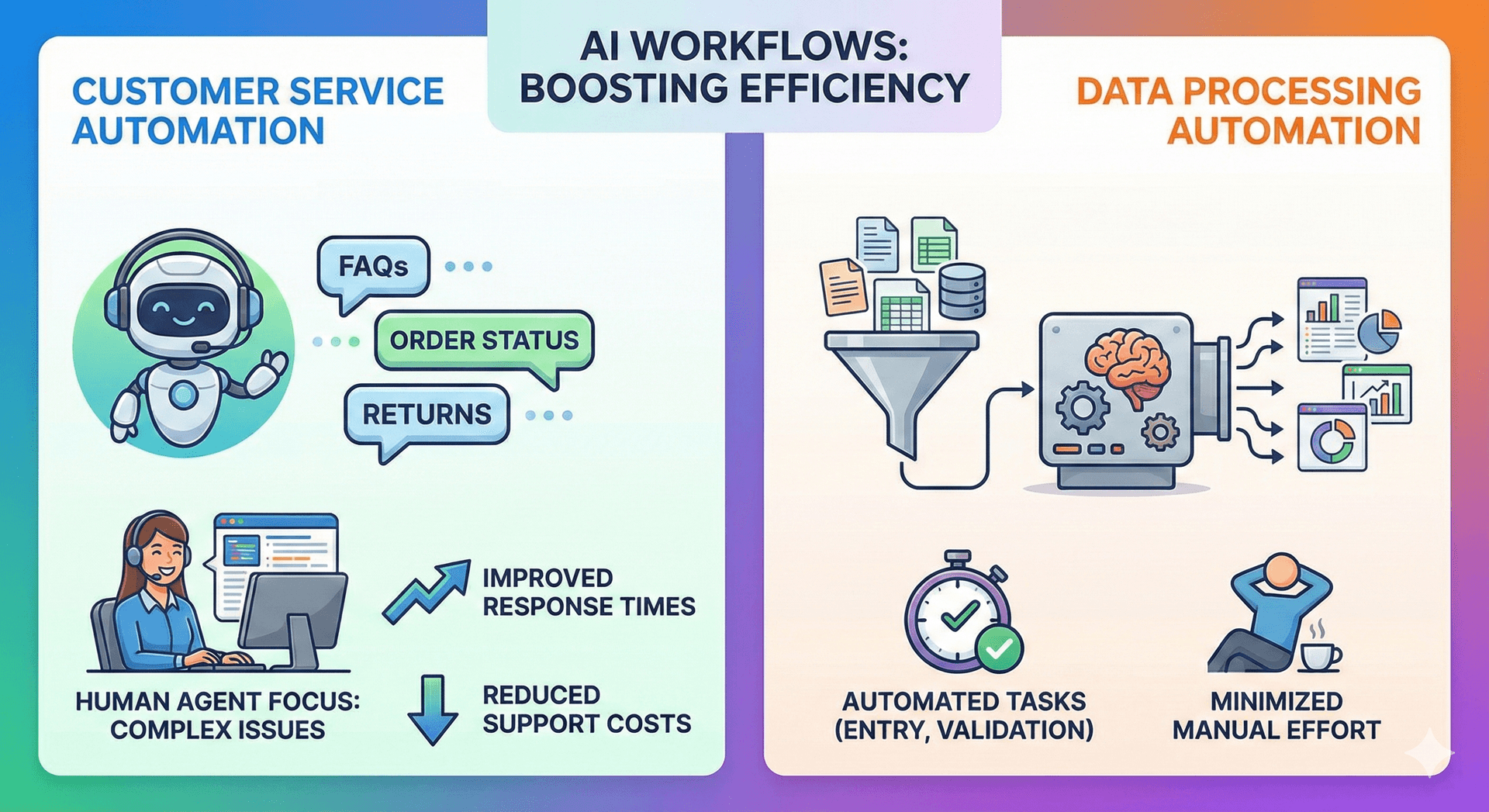
Data Processing
Automate data entry, validation, and analysis tasks that would otherwise require manual effort.
# Simple AI workflow example
from ai_engine import classify, extract

def process_document(doc):
    category = classify(doc)
    data = extract(doc, category)
    return {
        'category': category,
        'data': data,
        'confidence': 0.95
    }
ROI Insight
Companies using AI automation report an average 40% reduction in processing time and 25% cost savings.
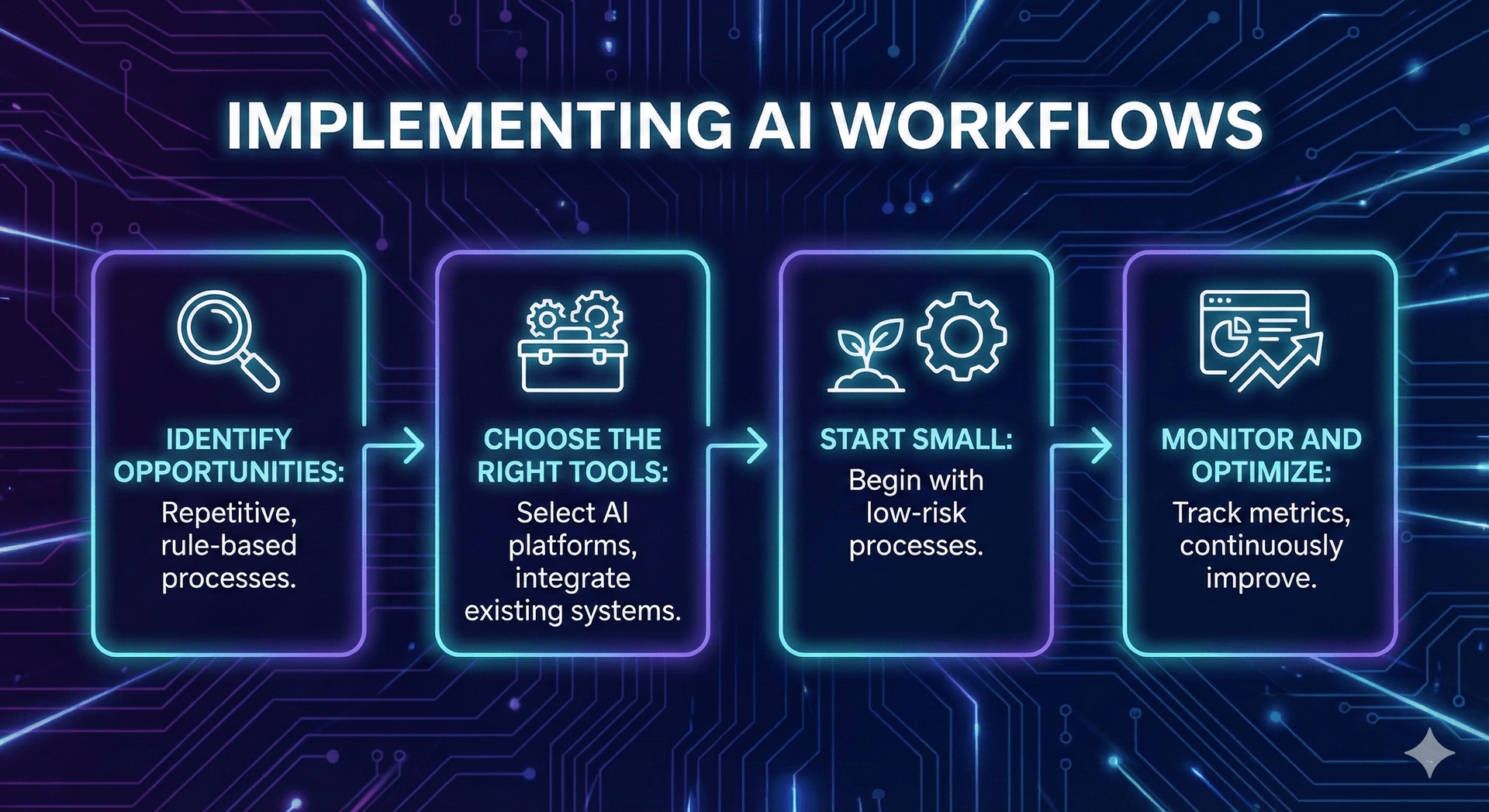
Implementing AI Workflows
- Identify Opportunities - Look for repetitive, rule-based processes
- Choose the Right Tools - Select AI platforms that integrate with existing systems
- Start Small - Begin with low-risk processes
- Monitor and Optimize - Track metrics and continuously improve
Benefits of AI Workflows
- Cost Reduction: Automate repetitive tasks
- Improved Accuracy: AI makes fewer errors
- Faster Processing: Automate tasks in seconds
- Better Insights: Analyze data at scale
Important
Always ensure AI systems are transparent. Employees should understand how automated decisions are made.
Conclusion
AI workflows are no longer a luxury—they're a necessity for competitive businesses. By strategically implementing AI automation, you can focus on high-value activities while AI handles routine tasks.